8 Best Mobile App Consent Management Tools, Judged on App-to-Web Sync
Mobile app consent tools compared on iOS and Android SDKs, sync with your website, purpose-level consent, DPDP fit and 2026 pricing.

Your users move between your app and your website all week, and they expect a "no" given in one place to hold in the other. In most setups I look at, it doesn't. The app runs an SDK with its own consent store, the website runs a banner with another, and nobody owns the join. So someone switches off marketing in the app and still gets the retargeting email that the website's record allowed.
And Indian apps already get privacy choices wrong at scale. When ASCI Academy and Parallel HQ studied 53 of India's most popular apps, they found privacy deception in 79% of them, the most frequent deceptive pattern in the whole study (ASCI Academy press release, 1 August 2024).

You're probably here for a shortlist: the mobile app consent tools that keep one consent record across iOS, Android and the web, purpose by purpose, and what they cost. I'll give you eight, with what each costs, where users get stuck and how each one links a person's app choices to their web choices. Read to the end for the six questions that expose a vendor whose "cross-device sync" is a paid add-on you'll still have to build yourself.
TL;DR: the verdict
Every tool below can show a consent prompt inside an app. Far fewer keep that choice in step with your website, and the ones that do all need the same thing from you: a logged-in user and an identifier your backend controls.
- Redacto: Best for Indian companies that collect consent in apps, on the web, by phone and on paper and need to prove withdrawals reached every system. (Our product; see the disclosure in How we chose.)
- OneTrust: Best for enterprises already on OneTrust for web consent that want app consent on the same contract.
- Didomi: Best for teams that want documented cross-device sync with a signed user ID, and can ask for it to be switched on.
- Usercentrics: Best for app and game publishers that want a published starting price and a Unity SDK.
- Sourcepoint (part of Didomi since July 2025): Best for publishers already using it on the web who need the same consent on logged-in app sessions.
- Ketch: Best for mid-sized brands that want prices in the open and identity-based consent across web and app.
- Securiti (a Veeam company): Best for large firms buying consent alongside data discovery and security.
- TrustArc: Best for teams already on TrustArc that need an SDK for iOS, Android, React Native or Flutter.
The 8 best tools for mobile app consent management in 2026, compared
These are the best tools for mobile app consent management I'd shortlist in 2026, whether you call it an SDK or a mobile app consent management platform, set side by side on what matters when one person uses both your app and your site.
| Tool | Mobile SDKs | App and web on one record? | How sync knows it's the same person | India and DPDP material | Pricing (Nov 2026) |
|---|---|---|---|---|---|
| Redacto | Web and mobile SDKs plus APIs | Yes: app, web, phone and paper on one record per person | Ask to see the matching flow in the demo | Built for DPDP: 22 scheduled languages, Consent Manager relay, Rule 10 parental consent | Quote ("Talk to Sales") |
| OneTrust | iOS and Android (plus TV platforms) | Yes, with Cross Device Consent | A user ID plus a JWT your backend issues | India (DPDPA) cookie template | Quote; consent priced on average daily visitors across all channels |
| Didomi | iOS, Android, Flutter, React Native, Unity | Yes, a premium feature switched on by request | A hashed organisation user ID, signed with a secret | Thin: a DPDP blog explainer, and DPDP isn't among its supported regulations | Quote ("Contact us" on every plan) |
| Usercentrics | iOS, Android, Flutter, React Native, Unity | Yes, on the custom-priced Premium (app) and Corporate (web) plans | A Controller ID you store against the user's account | You'd set up DPDP notices yourself | App plan from EUR 50 a month up to 6,000 daily active users |
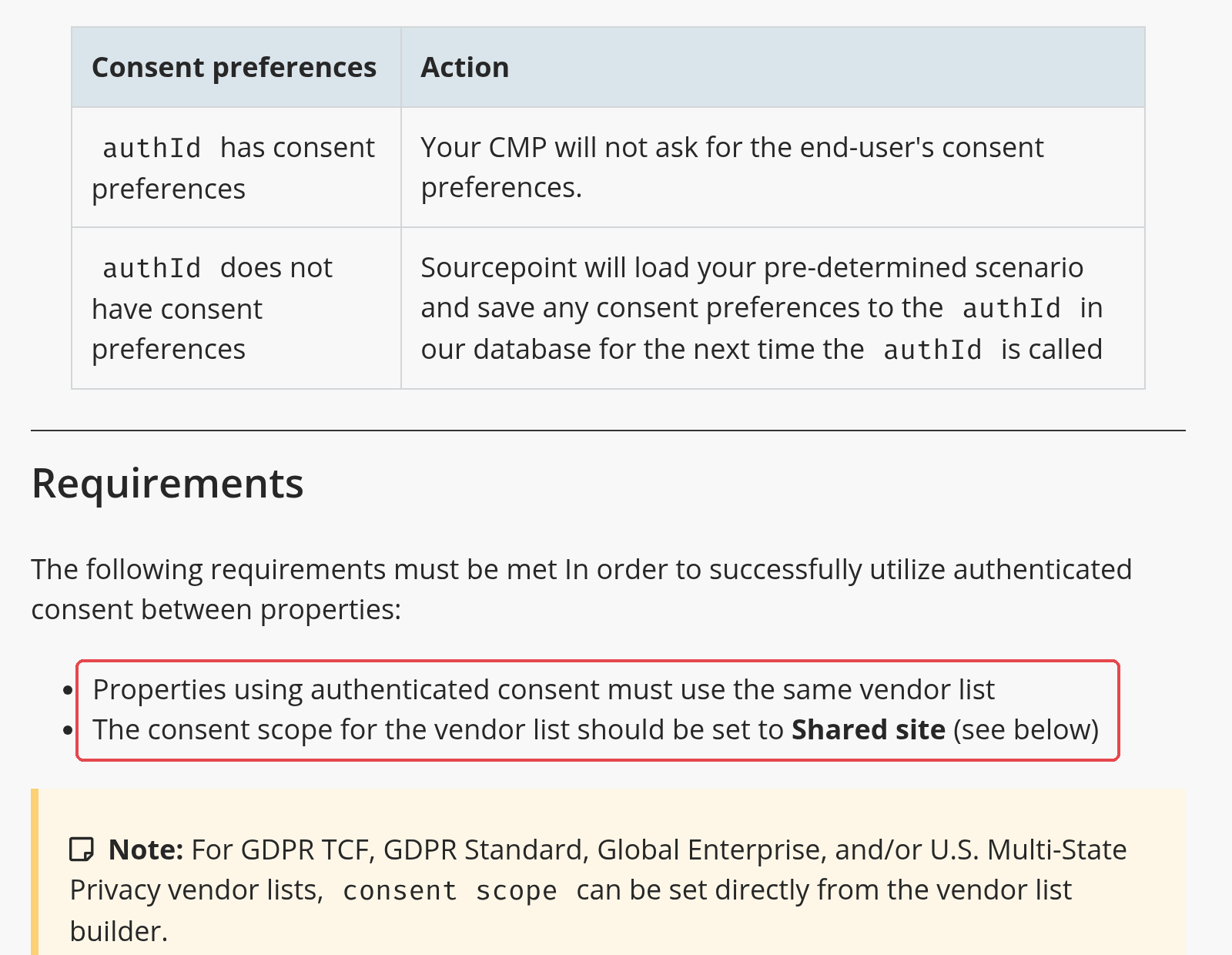
| Sourcepoint | iOS, Android, React Native, Unity | Yes, "authenticated consent" | An authId (your user ID, or a hashed email if you identify users by email); properties share one vendor list | You'd set up DPDP notices yourself | Quote |
| Ketch | iOS 15+, Android API 26+, React Native | Yes, identity-based consent | Identifiers you pass (account ID, hashed email, ad ID), linked only on exact matches | You'd set up DPDP notices yourself | Free to 5,000 users; Starter USD 150 a month; Plus from USD 499 a month billed annually |
| Securiti (Veeam) | SDK library with Flutter and React Native | Syncs in-app choices to a central store; ask how that links to web records | A subjectId (user identifier) you pass when the SDK starts | Maps its features to the DPDP Act and Rules | Quote |
| TrustArc | iOS, Android, React Native, Flutter | Yes, "Unified Consent" for logged-in users | Your user ID plus an HMAC your backend signs with a TrustArc secret | India DPDP Act explainer | Quote |
Prices are the vendors' published figures in their own currency, before tax. "Quote" means there's no public number.
How we chose
If you searched for the best tools for mobile app consent management in 2025 or 2026, most lists you'll find are out of date in one way that matters: two of the names on them changed hands. Veeam completed its purchase of Securiti AI on 11 December 2025, and Didomi announced on 8 July 2025 that it was combining with Sourcepoint. Both still sell under their own names, but ask who decides the product plan before you sign a multi-year deal.
Each tool had to pass four checks:
- It ships its own mobile SDKs, native iOS and Android at minimum, and a web consent product on the same account.
- It documents how a choice made in the app reaches the website, either through cross-device sync or one central consent record. A sales deck with "omnichannel" on it doesn't count; if the developer docs can't tell your engineers how the match works, the vendor won't do better after you sign.
- It records choices per purpose, not just one accept-all flag.
- It's on sale today under a stated owner.
Google's User Messaging Platform SDK didn't make the list. It's free and fine for AdMob consent messages, but it shows messages you build in your AdMob account and keeps no web record, so it can't keep app and web in step.
I've judged these tools the way I'd judge them for my own team: demos, developer docs, published pricing and what teams running them report, read against how consent breaks in production. User opinions come from G2 reviews. Nothing here is a paid placement, and no vendor saw the draft.
Disclosure: Redacto is our product. It's listed first and gets the same five sections as everyone else, including its gaps.
Why app and web consent drift apart
A consent web application is not an app SDK
A consent web application, the banner and preference centre on your site, stores the choice in the browser. Clear cookies or switch browsers and it's gone. An app SDK stores the choice on the device. Neither knows the other exists. The only thing that can link them is something both surfaces know about the person, which in practice means a login.
That's why I tell teams to stop asking "does it have a mobile SDK?" Almost every vendor here does. Ask instead: "When my user withdraws in the app, how and how fast does my website find out?"
Apple and Google add their own layer
Apple has required apps to use App Tracking Transparency before tracking users across other companies' apps and websites since iOS 14.5 (Apple Developer news, 20 April 2021). App Store Review Guideline 5.1.2(i) also requires permission before you use, transmit or share personal data, and explicit permission before sharing it with third parties (App Review Guidelines).

The ATT prompt is not your consent record. It answers one question, cross-company tracking, with one system dialog. It doesn't cover your own analytics, your marketing emails or the purposes DPDP asks you to list, and it lives only on that iPhone. You still need your own purpose-level consent, and the two have to agree.
Google Play asks every developer to fill in the Data safety form, covering data collected through third-party SDKs too, and shows the answers on your store listing. On the measurement side, Google's consent mode for apps passes the user's choice to the Firebase SDK. It gained two parameters for ad data and ad personalisation on 30 October 2023.

Since March 2024 Google has also kept EEA users out of ad audiences unless consent signals arrive (Google Analytics Help), so pass a "denied" signal to Firebase when someone says no.
Login is what makes sync possible
Every vendor in this list that syncs app and web consent does it the same way: you give the SDK and the web banner the same user identifier after login, and the vendor's server stores the choice against it.

That has two effects. Choices made before login stay tied to that browser or device. And whoever controls the identifier controls whose record gets read and written, so the good tools make your backend sign it. OneTrust asks for a JWT; Didomi asks for a hash digest computed with a secret. If a vendor lets anyone read or change a person's consent with nothing but their plain email address, ask how it stops that before you go further.
What granular consent tracking software for web and mobile apps should do
Granular consent tracking software for web and mobile apps records each purpose separately, on every surface, against one person. Which software offers granular consent tracking for web and mobile apps? All eight tools in this list record consent per purpose, so that alone won't separate them. If you're comparing software for granular consent tracking across web and mobile apps, these are the five tests I'd run in a demo:
- One choice per purpose. Marketing, analytics, personalisation and sharing with partners each get their own switch, with the data each one uses listed next to it.
- A receipt per change. Every grant and withdrawal has a timestamp, the channel it came from and the notice version it was given against.
- Both directions. A withdrawal in the app shows on the website after login, and the reverse. Ask how long it takes: Didomi's sync, for example, runs once every 24 hours by default.
- Downstream reach. A withdrawal reaches your CRM, email tool, CDP and ad platforms by webhook or API, so they stop too, along with the banner.
- A clean logout. On logout the app drops the identifier and reverts to device-only consent, so the next person on a shared phone doesn't inherit someone else's choices.
Most tools pass the first two. The third and fourth are where the price jumps and where most vendors hand the work back to your engineers.
What DPDP changes for app consent, and when
If you're asking about app consent under DPDP, the dates are set. The DPDP Rules were notified on 13 November 2025 (G.S.R. 846(E)). Consent Manager registration under Rule 4 opens on 13 November 2026. The notice, consent, children's data and rights duties in Rules 3, 5 to 16, 22 and 23 apply from 13 May 2027. Our post on DPDP Act compliance requirements walks through each one.
Two lines in the law decide how your app and website must behave together. Section 6(4) of the Act lets the user withdraw consent at any time, "with the ease of doing so being comparable to the ease with which such consent was given". Under Rule 3(c), your notice must give the link to your "website or app, or both", plus any other means, through which the user can withdraw consent, exercise their rights and complain to the Board.

The law doesn't use the words "cross-device sync". My reading: if a logged-in user says yes in your app and you then can't honour their no on your website, you'll struggle to show that withdrawing was comparable in ease to consenting. That's an interpretation, not settled law, so check it with your counsel.
Three more things matter for apps. Rule 10 needs verifiable consent from a parent before you process a child's data, which hits edtech, gaming and any app without an age gate. Users can also give and withdraw consent through a registered Consent Manager, so ask whether a choice that arrives that way lands on the same record as your app and web choices. And a Consent Manager is not the same thing as your consent tool; our guide to cookie consent managers vs DPDP Consent Managers explains the difference. If your app has users across India, check languages too: the Act lets a notice be offered in English or any of the 22 Eighth Schedule languages (Section 5(3)), so ask each vendor which of those its app notices support.
1. Redacto

Redacto is built around the half of withdrawal most consent tools leave to you: checking that every system using the data stopped. That's the part an auditor asks about, and the part a spreadsheet can't prove.
Features
- One record across channels. Capture runs through web and mobile SDKs and APIs, and app, web, phone and paper choices land on the same record. Each route keeps its own notice version.
- Purposes and receipts. One choice per purpose with the data listed, and a timestamped receipt linked to the notice version.
- Withdrawal checking. Each withdrawal goes to every system and processor mapped to that purpose; Redacto follows up on any that didn't act and records the result in a Consent Reconciliation Statement.
- DPDP specifics. Notices in English and the 22 Eighth Schedule languages, parental consent with the verification method recorded (Rule 10), legitimate uses under Section 7 recorded with the ground, and choices relayed by registered Consent Managers on the same record.
- Deployment. SaaS, private cloud or on-prem. Most teams go live on their first channel in one week.
One thing to pin down early: how a logged-in app user is matched to their web record. Get that flow in writing before you sign.
Pricing
Pricing follows volume, and each module counts it in its own way. For consent, the thumb rules are your data principal count and how many data processors you have, since every processor adds API calls for each withdrawal and each new user. Industry matters too: a plain B2B flow hitting two API endpoints is far simpler than physical-to-digital flows where company agents access data. I walk through it in this short video Redacto posted on LinkedIn:
Reviews
Three customers, in their own words:
Surya N, Director, Product Management, TimePay: "As a product team, we had one worry: would privacy compliance hurt the onboarding journey? It didn't. Redacto's consent flows fit into our app with very little engineering effort, and we change notices from the console instead of shipping a new build. Our users get a clear choice at every step, and we get a consent record we can stand behind."
Prem Kumar, Data Protection Officer, Pine Labs Group: "Privacy across a group of businesses is hard because every team has its own systems and its own idea of what personal data it holds. Redacto gave us one view of where personal data is collected, why we collect it and where it goes. When a customer request or an audit question comes in, I answer it with evidence, not a round of emails."
Saif, Head, Infosec Compliance & Privacy, Razorpay: "Our vendor security and privacy reviews used to live in spreadsheets and long email threads. With Redacto, every assessment, every piece of evidence and every follow-up sits in one place. When a customer sends us a security questionnaire, we answer it from that same record. We focus on the vendors that actually carry risk, and the paperwork no longer runs the week."
Clients
By our own count we've done "40+ successful implementations". TimePay, Pine Labs Group and Razorpay are quoted above; for a mobile consent reference in your sector, ask in the demo.
Summary
Pick Redacto if your consent arrives through an app, a website, a call centre and paper forms, and your auditor will ask you to prove withdrawals reached your downstream systems. Skip it if all you need is an ad consent prompt in a game; Usercentrics or Sourcepoint fit that better. The limit to plan for: withdrawal checking is only as good as the system map behind it, so budget your first month for fixing the data inventory.
2. OneTrust

OneTrust sells Mobile App Consent inside its Consent & Preferences suite. If your website already runs OneTrust, this is the low-friction choice: one vendor, one set of purposes, one contract. If it doesn't, I wouldn't start here for app consent alone.
Features
- App scanning for privacy permissions, the advertising identifier (IDFA), code libraries and third-party SDKs, matched against a pre-sorted database.
- Cross Device Consent in the iOS and Android SDKs. You pass a user identifier and a JWT when the SDK starts, and on logout you reset the identifier to empty so consent reverts to anonymous.
- Consent receipts and consent-rate monitoring over time.
The catch: you build the JWT service yourself. OneTrust leaves token generation to your backend, and your web and mobile properties have to share the same purposes. Budget engineering time for that before you promise the business a sync date.

Pricing
Quote-based. Consent packages are priced on average daily visitors across all channels and properties, and the preference product on total data-subject profiles. Ask whether app sessions count as visitors and what happens in a month when a sale doubles traffic.
Reviews
Users on G2 like the cookie controls and global coverage of its consent product, and complain about complex setup, a clunky interface and steep price rises at renewal, one reviewer reporting rises of 275% and then 468% at short notice (G2, August 2025). I'd put a cap on renewal increases in the contract.
Clients
OneTrust has 14,000+ customers. For mobile consent, ask for a reference that runs the SDK alongside OneTrust on the web.
Summary
Pick OneTrust if your web consent already runs on it and you want the app on the same purposes. Skip it if you're a mid-sized team without engineers to build the JWT service, or if you need DPDP-specific processes designed around Indian channels. See our OneTrust alternatives if you're weighing a switch.
3. Didomi

Didomi is a French consent platform with SDKs for iOS, Android and hybrid apps. The pitch is "One consent decision. Every screen.", and its docs are among the few that show exactly what that takes.
Features
- SDKs for Android (Java, Kotlin), iOS (Swift and Objective-C), Flutter, React Native and Unity.
- Cross-device sync across websites and apps in the same organisation. You set a hashed organisation user ID before the SDK starts, and the SDK loads the stored choices from Didomi's Consents API.
- Signed IDs. Your backend computes a hash digest of the user ID plus a secret, so nobody can read or write another person's consent from the browser.
- Sync timing. Once every 24 hours by default, never more often than every 6 hours. For a withdrawal, that gap matters; ask whether a withdrawal can push immediately.
- Standards including IAB TCF, Google Consent Mode and Global Privacy Control, with notices in 45+ languages.
Pricing
Quote-based. All three consent plans are "Contact us", and cross-device consent is "Upon Request" on every one. Treat sync as a line item to negotiate, not a default.
Reviews
Users on G2 like Didomi's reliability, simple setup, fair pricing and support, and complain that the app integration and its documentation are unclear (G2, May 2026). That's the weak spot for this job, even though its cross-device sync guide is the clearest in this list. Test the SDK in your own app during the trial, not just the web banner.
Clients
Didomi has 2,000+ clients, Europcar among them.
Summary
Pick Didomi if you want the clearest public docs on cross-device sync and a security model that signs the user ID. Skip it if India is your main market: DPDP isn't among the regulations it supports, and its India material is a blog explainer, so you'd be setting India up by hand.
4. Usercentrics

Usercentrics sells a separate App CMP with a published starting price. It's the easiest tool here to start on and one of the hardest to get cross-device sync from.
Features
- Native SDKs for iOS and Android, plus Flutter, React Native and Unity, and a separate CMP for TV apps.
- App Scanner and 2,200+ legal templates to list the SDKs in your app.
- Google Consent Mode v2 for Firebase, A/B testing of consent prompts and geolocation rules.
- Cross-Device Consent Sharing. Each device gets a random Controller ID. To carry consent from web to app you store that ID against the user's account in your own backend and pass it back on the other device, after Usercentrics switches the feature on for you.
Pricing
The App CMP starts at EUR 50 a month for up to 6,000 daily active users, across unlimited apps. Cross-Device Consent Sharing sits on Premium, custom-priced from 500K daily active users. On the web side, it's on Corporate, from 1 million sessions a month. Watch the overage rule: plans upgrade automatically when you exceed limits, so one big month can move you up a tier.
Reviews
Users on G2 like how easy it is to start on, the help articles and the flexible pricing, and complain about hard ruleset and integration configuration and slow support replies that often just link to articles (G2, November 2026). That fits a tool built for a quick start: the friction comes later, in configuration and in support.
Clients
The in-app testimonial that fits this job comes from a senior digital analytics manager, employer unnamed, who uses it to manage consent "in one place across our website and mobile apps". For a named reference, ask in the sales call.
Summary
Pick Usercentrics if you run ad-funded apps or games and want a known price and a Unity SDK. Skip it if cross-device sync is the reason you're buying and you're nowhere near 500K daily users; you'll pay for a tier you don't otherwise need.
5. Sourcepoint (part of Didomi since July 2025)
Sourcepoint is strong with news publishers: all 10 of the UK's top 10 news publishers use it. Didomi announced the acquisition on 8 July 2025, and Sourcepoint told customers their access, pricing plan and contact would stay the same.
Features
- SDKs for iOS, Android, React Native and Unity, plus a CMP for connected TV.
- Authenticated consent. Pass an authId (a username or user ID, or a hashed email) on the page or in the app. If that ID already has stored choices, the consent message isn't shown again on the user's other logged-in devices.
- Google-certified CMP for apps that serve ads in the UK and EEA, with IAB TCF v2.2 support.
The requirement to plan around: every property using authenticated consent must share one vendor list. If your app and website use different ad partners, you'll have to merge them first.
Pricing
Custom pricing, with a free trial (G2). On a new contract, ask whether you're quoted on Sourcepoint's terms or Didomi's; existing customers were told their plan stays the same.
Reviews
Users on G2 like the reporting and account management, and complain that the interface is complex: the settings sections are hard to relate to each other, and campaign settings get hard to manage across many sites and messages (G2, October 2025). That's the cost of a tool built for large publisher networks.
Clients
Beyond the UK publishers, Sourcepoint had over 200 enterprise customers when the Didomi deal was announced (July 2025).
Summary
Pick Sourcepoint if you're a publisher already on it for the web and need logged-in app sessions to carry the same consent. For a new purchase, ask how its product plans and Didomi's will merge before you sign.
6. Ketch

Ketch is the only vendor here that puts web and app consent prices in the open, and it builds sync around the person rather than the device. For consent, that's the right model.
Features
- SDKs for iOS (15 and later), Android (API 26 and later) and React Native.
- Identity-based consent. You pass identifiers such as the account ID, a hashed email or the advertising ID, and Ketch links them into one profile.
- Exact matches only. Identifiers are linked by deterministic connections only, with no probabilistic guessing. For consent that's the right call: a wrong match means applying one person's choice to someone else.
- Conflict rules. When a user opts out on desktop but not on mobile, the most protective choice wins.

Pricing
Free up to 5,000 users, Starter at USD 150 a month for 30,000, Plus from USD 499 a month billed annually for 100,000, and Pro custom-priced beyond that. Ask which plan includes identity sync before you budget.
Reviews
Users on G2 like the easy setup, the time-saving automation and the connections to other tools (G2, May 2026). Where they complain is styling: matching banners to your brand often needs a developer, and new users face a learning curve.
Clients
3,500+ brands use Ketch.
Summary
Pick Ketch if you're a mid-sized brand that wants to see the price before a sales call and treat consent as a property of the person, not the phone. Its India and DPDP material is thin, so plan Indian notices yourself.
7. Securiti (a Veeam company)

Securiti's consent products sit inside a much larger data security and governance platform. That's its strength if you're buying the platform, and its weakness if you only need consent.
Features
- In-app consent tracking that records opt-ins and opt-outs in real time and syncs them to a "central depository".
- SDK library covering Apple's and Google's in-app advertising consent needs, with Flutter and React Native for hybrid apps.
- Region-specific choices shown by the user's location, plus a consent dashboard with per-event reports.
The SDK takes a user identifier, a subjectId, when it starts (Flutter package docs), but the full developer guide comes with a subscription to the mobile consent module. Ask for it before the demo, not after, and have the sales engineer show how that ID links an app user to their web record.
Pricing
Quote-based: you buy modules by use case and get a custom quote. Expect consent to be priced as one module among several.
Reviews
Users on G2 like the support and the connections to systems like SAP and Salesforce, and complain about unclear error messages, an interface that takes getting used to and features that come and go quickly (G2, May 2026). For a consent rollout, that last one worries me most: a consent flow your legal team has signed off shouldn't change under you.
Clients
Ask Securiti for a reference that runs its SDK in a live app.
Summary
Pick Securiti if you're also buying data discovery and security and want consent from the same vendor. It's heavy for consent alone. More options in our Securiti AI alternatives.
8. TrustArc

TrustArc is one of the older privacy software vendors, and Mobile App Consent is one module in a wide suite.
Features
- SDKs for Android and iOS, with React Native and Flutter.
- App scanning to see which third parties collect data from the app.
- In-app notice and preference centre, shown by the user's location and language.
App-to-web sync exists as Unified Consent: after login you pass the user ID and an HMAC your backend generates with a secret from your TrustArc account manager, and you clear both on logout. Two things would slow me down for India. Updates to an existing choice reach other devices within 24 hours, which is a long gap for a withdrawal, and the feature is built mainly for CCPA/CPRA, so check DPDP use with your counsel. Those two are why it sits last on this list.
Pricing
Quote-based; TrustArc doesn't publish prices.
Reviews
Users on G2 like TrustArc's cookie geo-fencing and single privacy workspace, and complain about heavy data-mapping work, a confusing portal, the price and a tag-manager conflict that took three months to fix (G2, October 2026). With the biggest review base in this list, that pattern is hard to dismiss.
Clients
Ask TrustArc for a reference that runs the SDK alongside a web banner.
Summary
Pick TrustArc if you already use it for privacy management and want app consent in the same suite. If app-to-web sync is the requirement, ask TrustArc to switch on Unified Consent for your trial and test a withdrawal end to end before you sign.
How to choose, by situation
You're an app-first fintech, bank or NBFC in India
Your consent arrives in the app, at account opening, over the phone and sometimes on paper, and your regulator and the DPDP Board will both ask for proof. Shortlist Redacto, or OneTrust if you already run it. Our guide to automating consent collection for fintech apps covers the flows.
You're a web-first D2C brand adding an app
Start with what you run on the website. If it's on this list, ask that vendor for its SDK and its cross-device tier before you switch. If you're starting fresh, Ketch shows prices up front; Usercentrics is cheaper to start but gates sync behind its top plans.
You're a game or ad-funded app
You need a Google-certified CMP and a Unity SDK. Usercentrics and Sourcepoint both offer them. Cross-device matters less here, because most players never log in on the web.
Questions to ask any vendor
- Which plan includes cross-device or app-to-web sync, and what does it cost on our volumes?
- Who issues and signs the user identifier, and what do we have to build?
- How long does a withdrawal in the app take to reach the website?
- What happens to consent on logout?
- Can a withdrawal reach our CRM, CDP and ad platforms by webhook or API?
- Show us one user's record with an app entry and a web entry, in the demo, on our test account.
Final thoughts
My advice is to decide what identifier links your app user to your web user before you shortlist anyone. Once that's settled, the vendor question gets much shorter.
If you're an Indian company that has to prove withdrawals across apps, web, phone and paper, Redacto Consent Management is built for that. For the website side, see our guide to cookie consent banners that people actually accept.
Related reading
- 7 best consent management platforms in India: the wider shortlist, judged on DPDP.
- Consent management for mobile apps on iOS and Android: the how-to companion to this list.
- Cookie consent banners that convert: getting the web banner right.
- Best Consent Manager tools in India: for the registered Consent Manager side of DPDP.
- Dark patterns in cookie banners: what regulators are restricting.