8 Best Didomi Alternatives for Preference and Consent (2026)
Eight alternatives to Didomi for preference centres and consent, compared on purpose controls, downstream enforcement, DPDP fit, price and dated reviews.

I keep meeting teams whose preference centre is already live, yet a channel or purpose change still dies in the email tool, and the DPO cannot show a notice that would satisfy a later withdrawal. The Digital Personal Data Protection Rules, 2025 put Rule 3, on the notice and on withdrawal that is as easy as the grant, into force from about 13 May 2027. Section 6(4) of the Act already sets that same ease-of-withdrawal test. A well-designed centre is not, on its own, proof that the choice left the website. I have in mind teams that already operate a preference centre or an enterprise consent stack, or are about to buy one, and now have to decide whether to keep that centre, add a DPDP-shaped record, or move both. I compare eight options on purpose and channel controls, whether a withdrawal reaches campaign tools, Indian-language notices, and the public price.
TL;DR
Didomi is a strong preference and consent buy when marketing wants a designed centre, widget or form, and a named cloud connector. Teams look past it when they need a published price, when a mid-market buyer finds the quote high, when styling still depends on custom CSS, or when a DPDP notice has to be proven in India.
- Redacto. Best when a preference change has to share a record with the DPDP notice. Quote-based. No public review corpus.
- Usercentrics Preference Manager. Best when you already pay for Usercentrics or Cookiebot. It is a separate product from the Essential CMP plan. Confirm connectors and a DPDP notice in a trial.
- OneTrust Universal Consent & Preference Management (UCPM). Best when OneTrust is already in the estate. Quote-based. Confirm a worked opt-down and a DPDP notice in a trial.
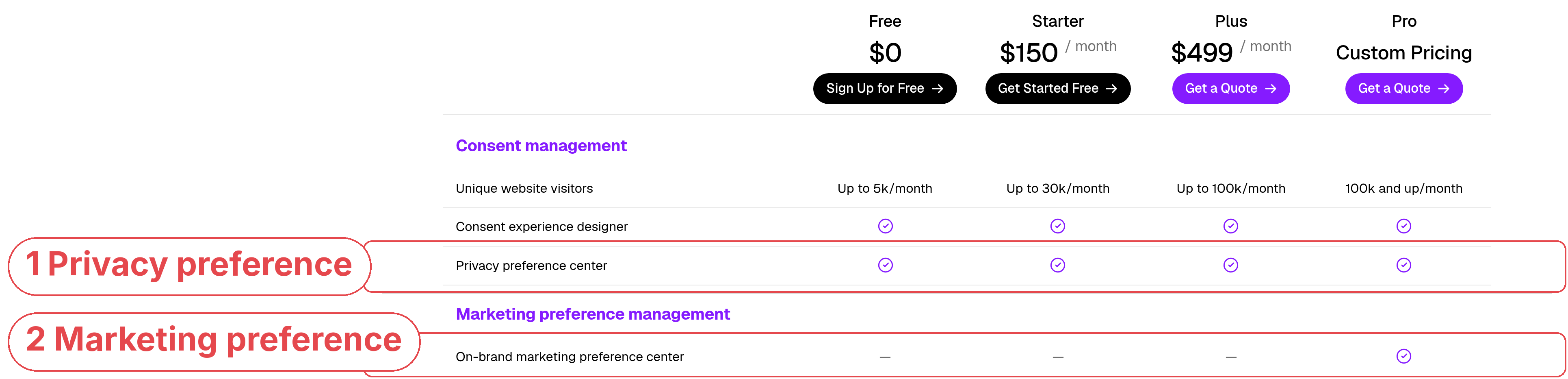
- Ketch. Best when a published price matters on day one, and the first job is a privacy-preference centre. Free covers 5,000 unique users a month and includes that privacy centre. The on-brand marketing centre waits until Pro.
- Osano. Best as a lighter mid-market preference product. The Unified Consent & Preference Hub is sold through a demo. Prove reach and a DPDP-shaped record in a trial.
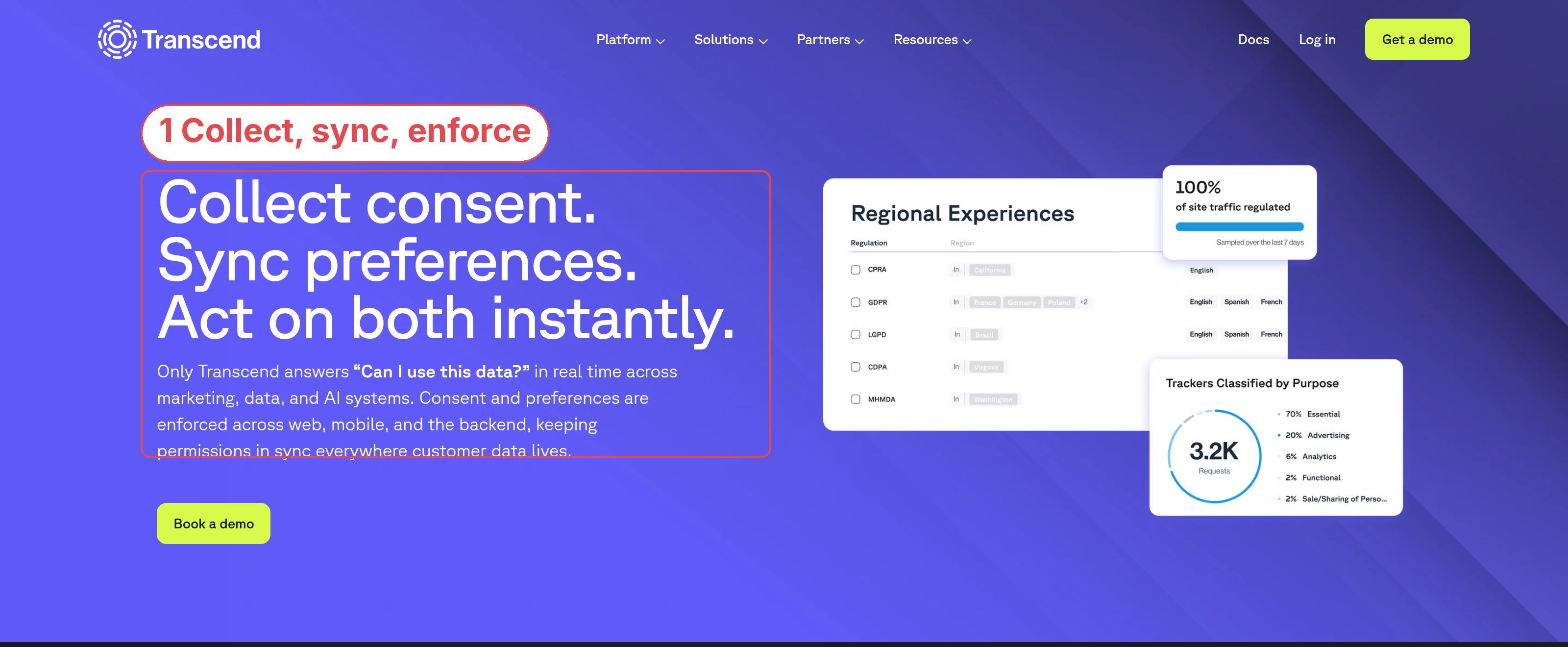
- Transcend. Best when engineering will own purpose and preference enforcement across the stack. Quote-based, and pricing starts with a sales form.
- Consentin (by Leegality). Best when Indian enterprises want notices, artefacts and a privacy centre, and can start on a published Starter Pack: 3,000 consent collections a month at Rs. 0.
- Privy by IDfy. Best when a self-serve portal has to sit inside an India-built suite. Quote-based. No public review corpus.
Why teams look past Didomi
As of 13 November 2026, Didomi's G2 profile carries a 4.5 out of 5 score across 182 reviews. Users on G2 like lightning-fast human support, and complain about the custom CSS needed for deeper styling, a clunky UI, and a price some mid-market buyers find high (G2, October 2026). The recent comments I would take into a sales call, if the job is a preference centre, are mixed. Hywel T., on 14 October 2026, titled a review "Lightning-Fast Human Support" and noted "the custom CSS needed for advanced styling". Sushmeet S., on 26 October 2026, wrote: "The UI feels very clunky, and it isn't especially intuitive to use." A mid-market review, last updated 14 October 2026, said "Price is a bit high compared to the market". Those are dated reports, mostly about the wider product and support, so I would still ask for a walkthrough of the preference centre itself.
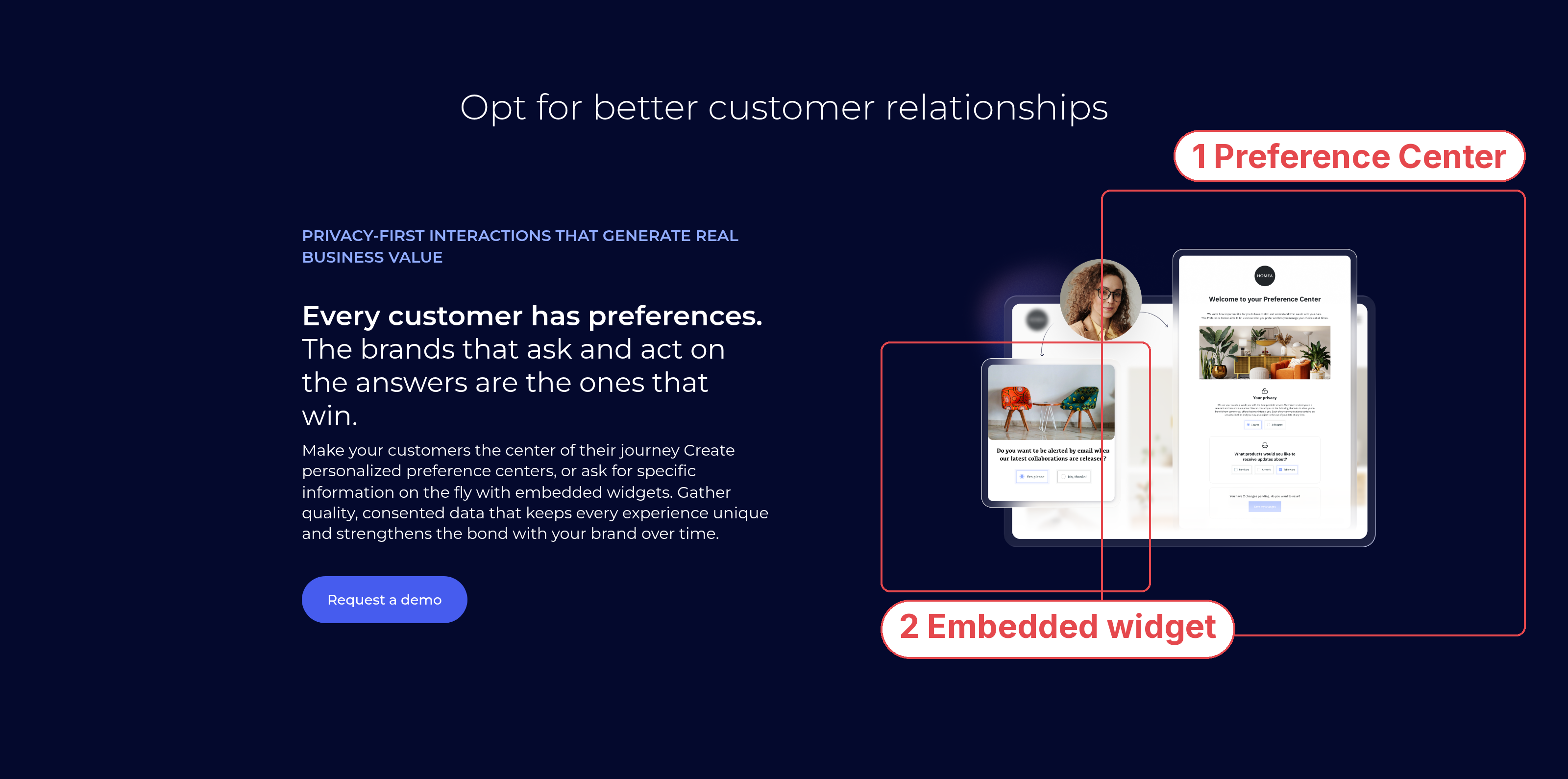
A second reason to look around is commercial. didomi.io/pricing still returns HTTP 404, so a buyer who wants a self-serve tariff will not see one there. The Preference Management Platform is a designed centre: a full page, an embedded form, or a single-purpose widget, offered when the choice is made. That product is real. The gap, for a team that already has a centre, is whether a purpose or channel change leaves it and reaches the CRM, the ESP and the Indian systems that still hold the data, and whether the notice on file would satisfy Rule 3 when it applies.
Didomi also acquired Sourcepoint on 8 July 2025. Existing Sourcepoint customers keep their current access, price and contact, per that announcement, and sourcepoint.com still runs. I have not split Sourcepoint into its own set of rows. Treat the group as one vendor family with two live brands, and ask which contract you would actually sign.
The public CMP and PMP story is built around GDPR work and IAB TCF notices. That does not disqualify Didomi for an Indian programme. It does mean a DPDP-shaped notice, in the language the Data Principal uses, still has to be proven in a trial, not inferred from a European banner.

Comparison table
| Tool | Best for | Preference / purpose / channel | Withdrawal enforcement | DPDP / Indian-language notices | Public price |
|---|---|---|---|---|---|
| Redacto | Indian teams that want a preference centre on the same record as the notice | Preference and withdrawal on the same consent record | Watch a withdrawal reach mapped systems in a trial | English plus 22 scheduled languages | Quote-based |
| Usercentrics Preference Manager | Teams already paying for Usercentrics or Cookiebot | Granular capture, widgets, Mailchimp and Zapier connectors | Prove a change arrives in campaign tools | Prove a DPDP notice in a trial | Quote; Essential €7 is the CMP only |
| OneTrust UCPM | Organisations already on OneTrust | Preference portal; sync claims to Salesforce, Marketo, Snowflake, Adobe | Confirm a worked opt-down in a trial | Confirm a DPDP notice in a trial | Quote-based |
| Ketch | Teams that need a listed price for a privacy-preference centre, and can wait for a Pro marketing centre | Privacy centre on every plan; marketing centre on Pro | Prove reach in a trial | Prove a DPDP-shaped record in a trial | Free $0 (5k unique users/month); Starter $150 a month, billed monthly; Plus from $499 a month, billed annually |
| Osano | Mid-market teams looking for a lighter preference product | Unified Consent & Preference Hub | Prove reach in a trial | Prove a DPDP-shaped record in a trial | Sold through a demo |
| Transcend | Engineering-led purpose and preference enforcement | Purpose and preference enforcement across the stack | Downstream update claimed in real time | Confirm a DPDP notice in a trial | Quote-based; pricing goes to contact |
| Consentin | Indian enterprises that want notices, artefacts and a privacy centre | Notices, artefacts and a privacy centre | Confirm withdrawal reach in a trial | India-built; 22 scheduled languages | Starter Pack: 3,000 collects/month at Rs. 0 |
| Privy by IDfy | Indian enterprises that need a self-serve portal inside an India-built suite | Self-serve portal inside an India-built suite | Withdrawal routing to internal systems | India-built; prove a DPDP notice in a trial | Quote-based |

How we chose these alternatives
I shortlisted tools that can run a preference or purpose centre, or a consent record that a preference change can sit on, and that a team leaving Didomi would actually consider. Cookie-banner specialists such as CookieYes and iubenda belong on the Usercentrics and Cookiebot switcher, so they are not in this table.
Each row had to show a sourced fact on four jobs: purpose or channel controls, whether a withdrawal is claimed to reach another system, a DPDP or Indian-language position I can actually read, and a public price or a clear quote path. G2 lines use the writing-day score and count, and any review I quote is dated. Reviews older than 12 months are flagged. I did not run lab tests. A "best for" line is a starting condition, not a guarantee.
I also weighed whether the preference layer is a stand-alone product, a module inside a wider estate, or part of an India-built record. That packaging changes the invoice, and it changes what you have to prove in a trial.
The 8 best Didomi alternatives for preference and consent
1. Redacto
Full disclosure: we build Redacto, so I won't score it beside the others.
Three customers, in their own words:
Surya N, Director, Product Management, TimePay: "As a product team, we had one worry: would privacy compliance hurt the onboarding journey? It didn't. Redacto's consent flows fit into our app with very little engineering effort, and we change notices from the console instead of shipping a new build. Our users get a clear choice at every step, and we get a consent record we can stand behind."
Prem Kumar, Data Protection Officer, Pine Labs Group: "Privacy across a group of businesses is hard because every team has its own systems and its own idea of what personal data it holds. Redacto gave us one view of where personal data is collected, why we collect it and where it goes. When a customer request or an audit question comes in, I answer it with evidence, not a round of emails."
Saif, Head, Infosec Compliance & Privacy, Razorpay: "Our vendor security and privacy reviews used to live in spreadsheets and long email threads. With Redacto, every assessment, every piece of evidence and every follow-up sits in one place. When a customer sends us a security questionnaire, we answer it from that same record. We focus on the vendors that actually carry risk, and the paperwork no longer runs the week."
These are our customers speaking, so weigh them that way and ask for a reference call.
By our own count we've done 40+ successful implementations.
Features
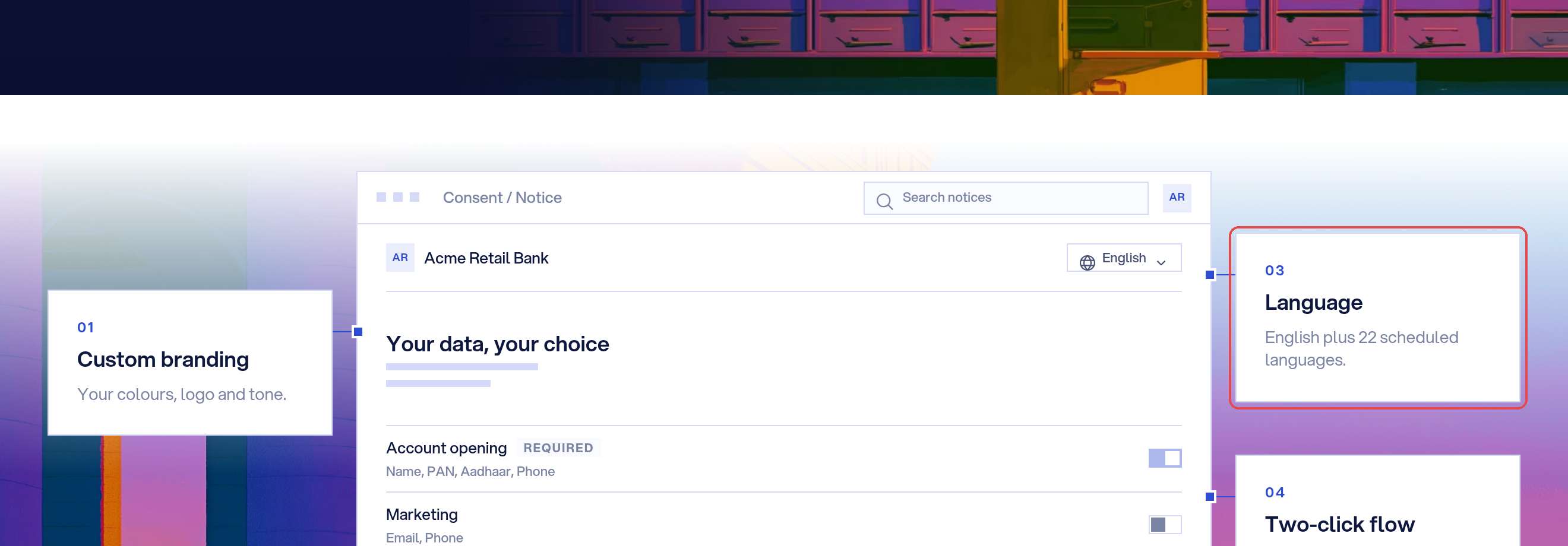
Redacto Consent Management is the product I would trial when a preference change has to share a record with the notice. The notice can run in English and in each of the 22 Eighth Schedule languages. A withdrawal is meant to travel to the systems you have mapped, so a purpose or channel change made in one place is honoured in the others.
The preference centre is part of this consent product. It is not offered as its own marketing preference platform with a published plan. During a trial I would follow a single withdrawal into every mapped system, and I would open the notice version attached to that receipt.
Didomi's PMP claims connectors such as Braze, Marketo, Pardot and HubSpot. Ketch has a marketing-preference path of its own. I would not count on a pre-built Redacto connector for those clouds. Treat that as a real gap if your first job is a pre-built marketing-cloud connector, and ask us for the current list before you decide.
Pricing
Quote-based.
Volume in the quote depends on how many Data Principals you cover and on how many processors must be told about each withdrawal or each new grant, since every processor adds API calls. List every channel, and every system that has to honour a preference change, before you ask for a number. Those metering rules also appear in this LinkedIn post from Redacto:
Reviews
There isn't a public review base yet.
Clients
The three quotes above are the public references I am using for this row. Ask for a reference whose stack looks like yours, and bring one live notice plus one system that must honour a withdrawal.
Summary
Pick Redacto if the preference centre has to share a DPDP-shaped record, and you can work from a quote and a reference call. The cons are real. There is no public self-serve price. There isn't a public review corpus. Fewer marketing-cloud connectors are published on our page than on Didomi's PMP page or on Ketch's, and the preference centre is part of the consent product, not a stand-alone marketing PMP with a published plan.
Against Didomi: the preference change is meant to sit with the notice, in Indian languages, on one programme record. What you give up is a designed PMP with named cloud connectors and a large G2 corpus.
2. Usercentrics Preference Manager
Features
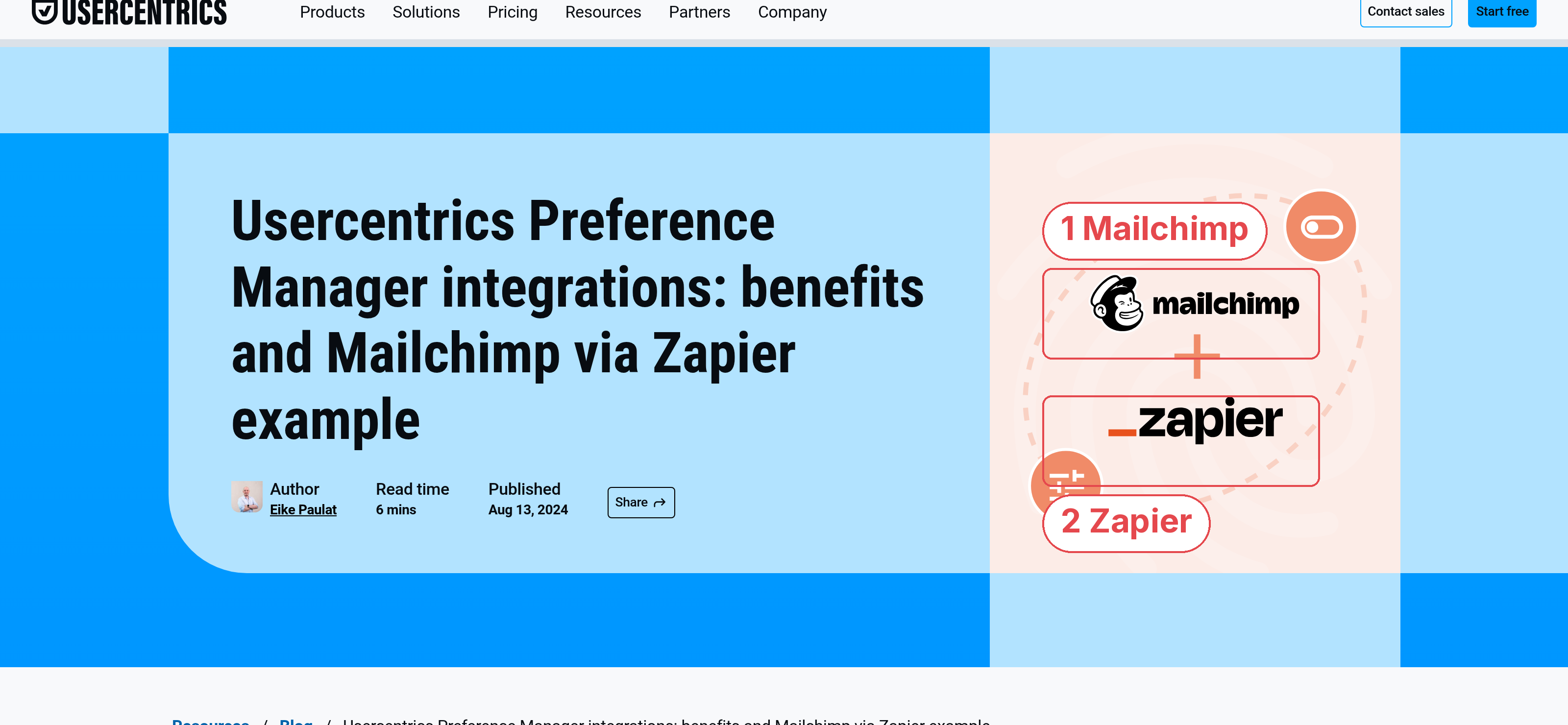
Usercentrics Preference Manager is the add-on I would trial first if the estate already runs Usercentrics or Cookiebot. Granular preference capture and widgets you can adjust are the two claims I would test, along with the Mailchimp and Zapier connectors in this help article. Do not treat the Essential Web CMP rate of €7 monthly, covering 1,500 sessions, as the Preference Manager price. Essential is a CMP plan on usercentrics.com/pricing. Preference Manager is billed on its own. The Web CMP cards do not carry a self-serve price for it.
Cookiebot is Usercentrics A/S's trademark, registered in Denmark. The two stacks use different technology, so Cookiebot Core cannot be upgraded to Usercentrics Advanced inside the same product. If you already pay for one of those stacks, start the preference trial there, and only open a net-new shortlist if the trial cannot show a change that reaches campaign tools.
Pricing
Quote-based for Preference Manager. The Essential plan at €7 a month is the Web CMP only, and I would not use it as a proxy for the preference product.
Reviews
The platform-wide Usercentrics G2 profile, dated 13 November 2026, carries 4.3 out of 5 across 270 reviews. No Preference Manager-only G2 profile appears. A 28 October 2026 review scored 3.0 out of 5 and said "the documentation could be improved". A 23 October 2026 review said "The initial implementation process can be time-consuming". I would take both as dated reports on the wider Usercentrics product, not as Preference Manager reviews.
Clients
Usercentrics publishes case studies on its own site. I would ask for a reference that already uses Preference Manager, not only the Web CMP, and I would ask how a preference change reaches the ESP.
Summary
Pick Preference Manager if Usercentrics or Cookiebot is already on the invoice and you want a preference layer without adding a second vendor. Confirm the connectors you need, and confirm a DPDP notice, in a trial. If you are leaving the Usercentrics family altogether, I compare that field in Usercentrics and Cookiebot alternatives.
Against Didomi: you stay inside an estate you already pay for, and you get Mailchimp and Zapier as published connector examples. What you give up is a purpose-built PMP that Didomi sells as a first-class product, and you still have to prove a DPDP-shaped notice.
3. OneTrust Universal Consent & Preference Management
Features
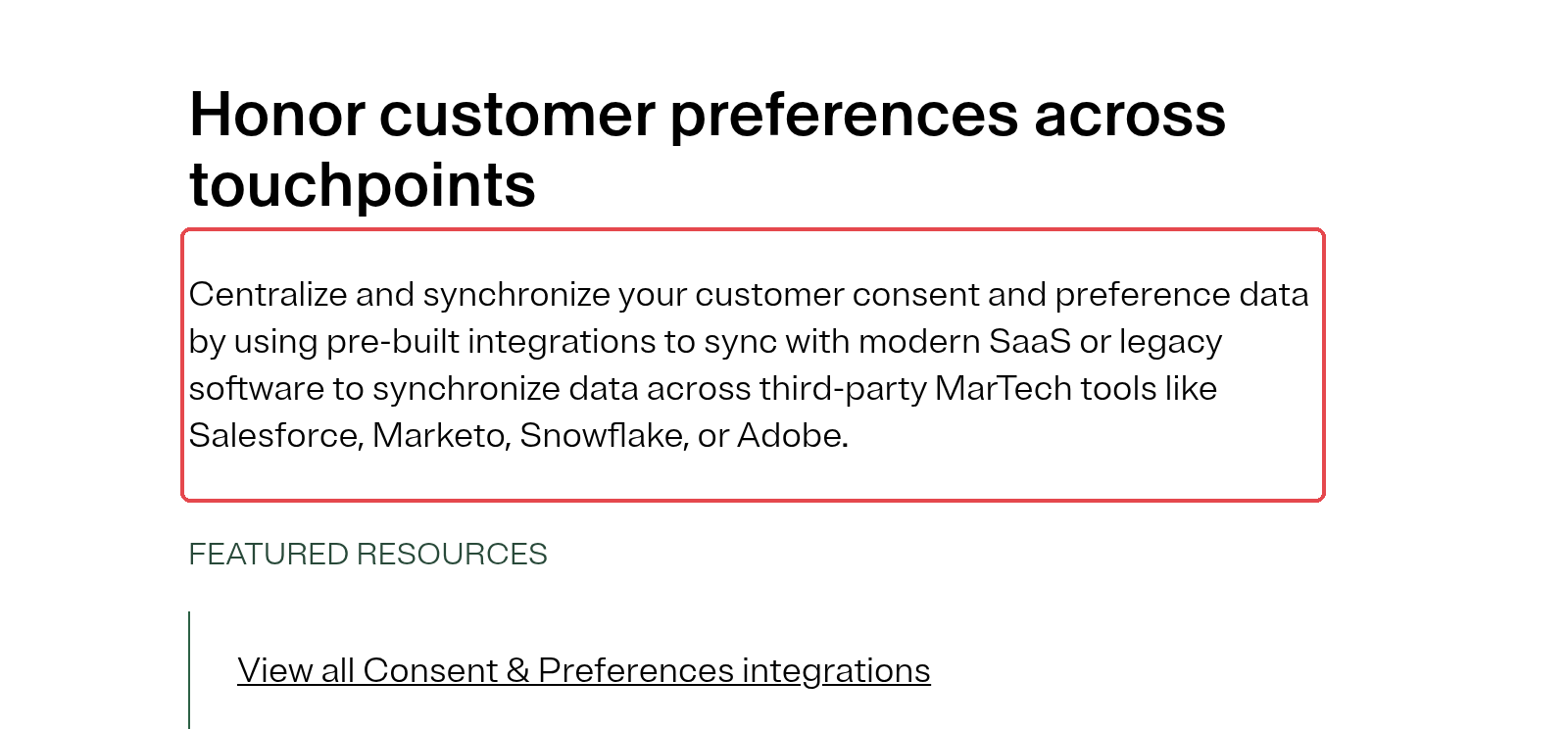
OneTrust UCPM is the module I would trial if OneTrust is already in the estate. UCPM is sold with a claim that consent and preference records can sync into Salesforce, Marketo, Snowflake or Adobe. PreferenceChoice, an older OneTrust URL, returned HTTP 404 on 12 November 2026, so I am treating UCPM as the live product name. In a trial I would watch a worked opt-down leave the preference portal and arrive in the campaign tool, and I would ask for a DPDP-shaped notice, not a GDPR template with the heading changed.
A wider OneTrust comparison, including other modules, is in OneTrust alternatives.
Pricing
Quote-based. There is no self-serve UCPM price to compare.
Reviews
The OneTrust Consent and Preferences G2 profile, dated 13 November 2026, carries 3.6 out of 5 across 17 reviews. That is a thin corpus, and I would not treat the score as a wide market verdict. The broader OneTrust platform has a much larger review base; this line is the consent and preference module, which is the product a Didomi switcher would actually trial.
Clients
OneTrust publishes customer stories on its own site. I would ask for a reference that runs UCPM, not only Cookie Compliance, and I would ask how long a preference change takes to reach Salesforce or Marketo in that stack.
Summary
Pick UCPM if OneTrust is already paid for and the job is a preference portal with named MarTech sync claims. Confirm a worked opt-down and a DPDP notice in a trial. A team that does not already hold OneTrust should weigh the wider suite cost before opening this row as a net-new buy.
Against Didomi: you stay inside the OneTrust estate and you get named sync claims for Salesforce, Marketo, Snowflake and Adobe. What you give up is Didomi's PMP as a focused preference product, and you still have a quote-only price and a thin module-level review base.
4. Ketch
Features
A team leaving Didomi often wants one designed centre that can hold a purpose choice and a channel or frequency choice in the same place. Ketch does not sell that as a single artefact on every tariff. Ketch pricing puts a privacy-preference centre on the Free, Starter, Plus and Pro cards. The centre marketing would recognise as on-brand, with controls for type, frequency and channel, is a Pro item, documented on the marketing preference management path. Before you start on Free, get sales to write down which centre you are actually buying, and in a trial watch a purpose change arrive in the tools that still send campaigns.
A wider Ketch comparison is in Ketch alternatives.
Pricing
On ketch.com/pricing, dated 13 November 2026, Free is $0 for 5,000 unique users/month and already includes the privacy-preference centre. Starter costs $150 a month, billed monthly. Plus begins at $499 monthly when you pay annually. The on-brand marketing centre is a Pro item, and Pro is a quote.
Reviews
The platform-wide Ketch G2 profile, dated 13 November 2026, carries 4.6 out of 5 across 225 reviews. On 15 October 2026, Jason S. scored 3.0 out of 5 and wrote "Too many unnecessary things needed to be filled". I would take that as a dated report, and I would ask the sales team what setup still has to be completed before a preference change is live.
Clients
Ketch publishes customer stories on its own site. I would ask for a reference that runs the privacy preference centre on a published plan, and a second reference if you think you will need the Pro marketing centre.
Summary
Pick Ketch if a listed tariff for a privacy-preference centre is the first job, and you can wait until Pro is justified before you need the marketing centre. Prove a DPDP-shaped record in a trial. Do not start on Free or Starter expecting the on-brand marketing centre to come with that card.
Against Didomi: you get a public tariff, and a privacy-preference centre that is already on the Free card. What you give up is Didomi's designed PMP as the default centre, and the marketing-grade centre waits for a Pro quote.
5. Osano
Features
Unified Consent & Preference Hub is the Osano product I would trial when a mid-market team wants a preference centre without taking on a full enterprise PMP. In a trial I would follow one purpose or channel change out of that centre and into the ESP, and I would ask for a DPDP-shaped notice.
Osano's banner product is sold under a different name and a different plans URL. I would not use those banner dollars to budget this row.

Pricing
The Unified Consent & Preference Hub is priced through a demo. No dollar figure for that product appears on osano.com/plans. A separate Cookie Consent URL still shows $0 and $199; those figures price the banner product, not the Unified Consent & Preference Hub. Dollar amounts listed for Osano on G2 are G2's listing until Osano confirms them.
Reviews
The platform-wide Osano G2 profile, dated 13 November 2026, carries 4.5 out of 5 across 173 reviews. On 26 October 2026, Daniel W. scored 4.5 out of 5. I would ask for a reference that already runs the Unified Consent & Preference Hub, because many Osano reviews describe cookie consent, and that is a different buy.
Clients
Osano publishes customer logos and stories on its own site. I would ask for a mid-market reference that already runs the Unified Consent & Preference Hub, and I would ask how an opt-out reaches the ESP.
Summary
Pick Osano if you want a lighter mid-market preference product and can work from a demo for the Unified Consent & Preference Hub. Prove reach and a DPDP-shaped record in a trial. A team that only needs a published cookie banner should look at Osano's Cookie Consent plan, or at another published banner tariff, and should not treat this row as that buy.
Against Didomi: the Unified Consent & Preference Hub is a smaller preference product, which can be the right weight for a mid-market team. What you give up is Didomi's PMP depth, a published price for the Unified Consent & Preference Hub, and a review corpus that cleanly separates that product from cookie consent.
6. Transcend
Features
Transcend Consent & Preference Management is the row I would open when engineering will own enforcement, and a preference change has to be honoured across connected systems, not only stored in a centre. Transcend's product story is a real-time decision layer: once a person updates a preference or opts out, the change is claimed to reach connected systems without a manual sync. In a trial I would watch one opt-out arrive in the CRM and in the ad tool, and I would ask for a DPDP-shaped notice, because a DPDP-shaped notice is not Transcend's lead claim.
Pricing
Quote-based. transcend.io/pricing redirects to a contact form, as of 13 November 2026. On G2, a Basic plan is listed at $10,000 per user per year. I would treat that figure as G2's listing until Transcend confirms it on a call, because the company pricing URL does not show it.
Reviews
The platform-wide Transcend G2 profile, dated 13 November 2026, carries 4.6 out of 5 across 112 reviews. Users on G2 have liked the simplicity of using the system for user preferences, and have complained about a price that puts the product out of reach for smaller companies (G2, February 2025, older than 12 months). The most recent comments on the most-recent pages are older than 12 months, so treat them as dated reports. On 20 February 2025, a mid-market reviewer wrote "We've enjoyed the simplicity of using the system for user preferences." On 19 February 2025, a mid-market reviewer wrote "The price is quite high, which will put this solution out of the range of possibilities for a lot of smaller companies." Both comments are more than a year old.
Clients
Transcend publishes customer stories on its own site. I would ask for an engineering-led reference, and I would ask how long the first connector took to honour a preference change.
Summary
Pick Transcend if engineering will own purpose and preference enforcement, and you can work from a quote. Confirm a DPDP notice in a trial. A team that wants a designed marketing centre with a published plan will usually be better served by Ketch or by staying closer to Didomi.
Against Didomi: enforcement is the product, not only the centre. What you give up is a designed PMP as the lead artefact, a public self-serve price, and a review corpus whose most recent visible comments are older than 12 months.
7. Consentin (by Leegality)
Features
Consentin is the India-built product I would trial when the job is a notice, a signed artefact, and a privacy centre, and the team wants a published starting pack. Notices can be shown in the 22 scheduled languages. In a trial I would read a completed artefact, and I would follow a withdrawal from the privacy centre into the systems that still hold the data.
A wider Consentin and Leegality comparison is in Leegality alternatives.
Pricing
Consentin publishes a Starter Pack: a monthly pack of 3,000 DPDP-compliant collections, priced at Rs. 0, with no end date stated. Paid volume uses monthly packs, billed annually or quarterly on a yearly term. No rupee figure for those paid packs appears on the pricing page, so treat anything above the Starter Pack as a quote. Unused collections in a pack do not roll over, per that page.
Reviews
No public G2 corpus appears for Consentin. Ask for a reference call, and come with one notice and one system that has to honour a withdrawal.
Clients
Consentin and Leegality publish customer stories on their own sites. I would ask for an Indian enterprise reference that already uses the privacy centre, not only e-sign, and I would ask how a withdrawal is recorded on the artefact.
Summary
Pick Consentin if an India-built record and a published Starter Pack are the starting point, and the preference work can live in a privacy centre beside signed notices. Confirm withdrawal reach in a trial. A team that needs a designed marketing PMP with named cloud connectors will still want a second conversation with Didomi, Ketch or OneTrust.
Against Didomi: you get an India-built notice, scheduled-language support, and a published Rs. 0 starting pack. What you give up is Didomi's PMP as a marketing preference product, a large G2 corpus, and a paid-pack rupee tariff on the pricing page.
8. Privy by IDfy
Features
Privy Consent Governance is the India-built suite I would trial when a self-serve portal has to sit beside the rest of the IDfy privacy products. A withdrawal can be routed to internal systems. In a trial I would follow one withdrawal from the portal into those systems, and I would read the notice the Data Principal actually sees. Privy was a winner of the official MeitY DPDP Innovation Challenge; treat that as a credential, not as a substitute for a worked trial.
A longer product read is in Privy review.

Pricing
Quote-based. Privy keeps consent governance pricing behind a sales call.
Reviews
No public G2 corpus appears for Privy by IDfy. Ask for a reference call, and come with the portal flow you want a Data Principal to complete.
Clients
IDfy publishes customer stories on its own sites. I would ask for an Indian enterprise reference that already uses the self-serve portal, and I would ask how a preference or withdrawal is recorded against the notice.
Summary
Pick Privy if the self-serve portal has to sit inside an India-built suite, and you can work from a quote and a reference call. Confirm a DPDP notice and withdrawal routing in a trial. A team that wants a designed marketing centre with public connectors will usually stay closer to Didomi, Ketch or OneTrust.
Against Didomi: the portal sits inside an India-built suite, which can be the right packaging for a domestic programme. What you give up is Didomi's PMP depth, a public price, and a review corpus.
How to choose, by situation

I need a branded preference centre
Stay close to Didomi if marketing wants a designed centre, form or widget, and a named cloud connector. If you already pay for OneTrust, trial UCPM first. If you already pay for Usercentrics or Cookiebot, trial Preference Manager first. Trial Transcend if engineering, not marketing, will own how a change is honoured in the stack.
I need a DPDP record in India
Start with Redacto when the preference change must sit on the same record as the notice. Start with Consentin when a published Starter Pack and signed artefacts matter. Start with Privy when the self-serve portal has to live inside an India-built suite. In every case, follow one withdrawal into the systems that still hold the data.
I want a published price
Open Ketch if you can start on a privacy-preference centre, including the Free plan for 5,000 unique users a month, and you can postpone the on-brand marketing centre until Pro is justified. Open Consentin if the Starter Pack of 3,000 collections a month at Rs. 0 covers a pilot. Didomi, OneTrust, Transcend, Redacto and Privy are quote-based, so they will not answer this job on a public tariff.
I already have Usercentrics or OneTrust
Add the preference module in the estate you already pay for before you open a net-new shortlist. Preference Manager and UCPM exist for that reason. Leave only if a trial cannot show a DPDP notice, or cannot show a change that reaches campaign tools.
I need marketing-cloud connectors first
Start from the vendors that claim the clouds you already use. Didomi's PMP claims Braze, Marketo, Pardot and HubSpot. OneTrust UCPM claims Salesforce, Marketo, Snowflake and Adobe. Usercentrics Preference Manager claims Mailchimp and Zapier. Ask for a current connector list, and watch one opt-out arrive in the tool you actually run. Do not assume a named logo means the connector is in your plan.
Final thoughts
A preference centre is only as good as the record it writes and the systems that honour it. Didomi remains a serious option when that centre is the job, and when a named connector matters more than a published price. Look past it when you need a DPDP-shaped notice in India, a public tariff, or enforcement that engineering will own. Trial the two closest rows on this list with one live notice and one withdrawal, and keep the vendor that can show both.