Consent Management for Mobile Apps: iOS & Android Compliance Guide
iOS and Android apps face strict consent requirements under GDPR, CCPA, and Apple's ATT. Here's a practical compliance guide for mobile app teams.

Mobile apps collect a lot of data. Location, device identifiers, behavior patterns, and purchase history. And users increasingly want control over what gets shared.
Regulations now require that control be built in, not bolted on. Here is what you need to know about consent management for mobile apps on both iOS and Android.
Why Mobile Consent Is Different From Web Consent
Web consent is familiar. You see a cookie banner, you make a choice, and the site records it. Mobile is more complex.
On mobile:
- Apps access device-level data beyond just cookies
- Apple and Google have introduced their own consent frameworks
- Users interact across multiple sessions and devices
- Data flows through SDKs from third parties you may not fully control
A standard web consent management platform may not be sufficient for mobile without additional configuration.
iOS Privacy Consent: App Tracking Transparency
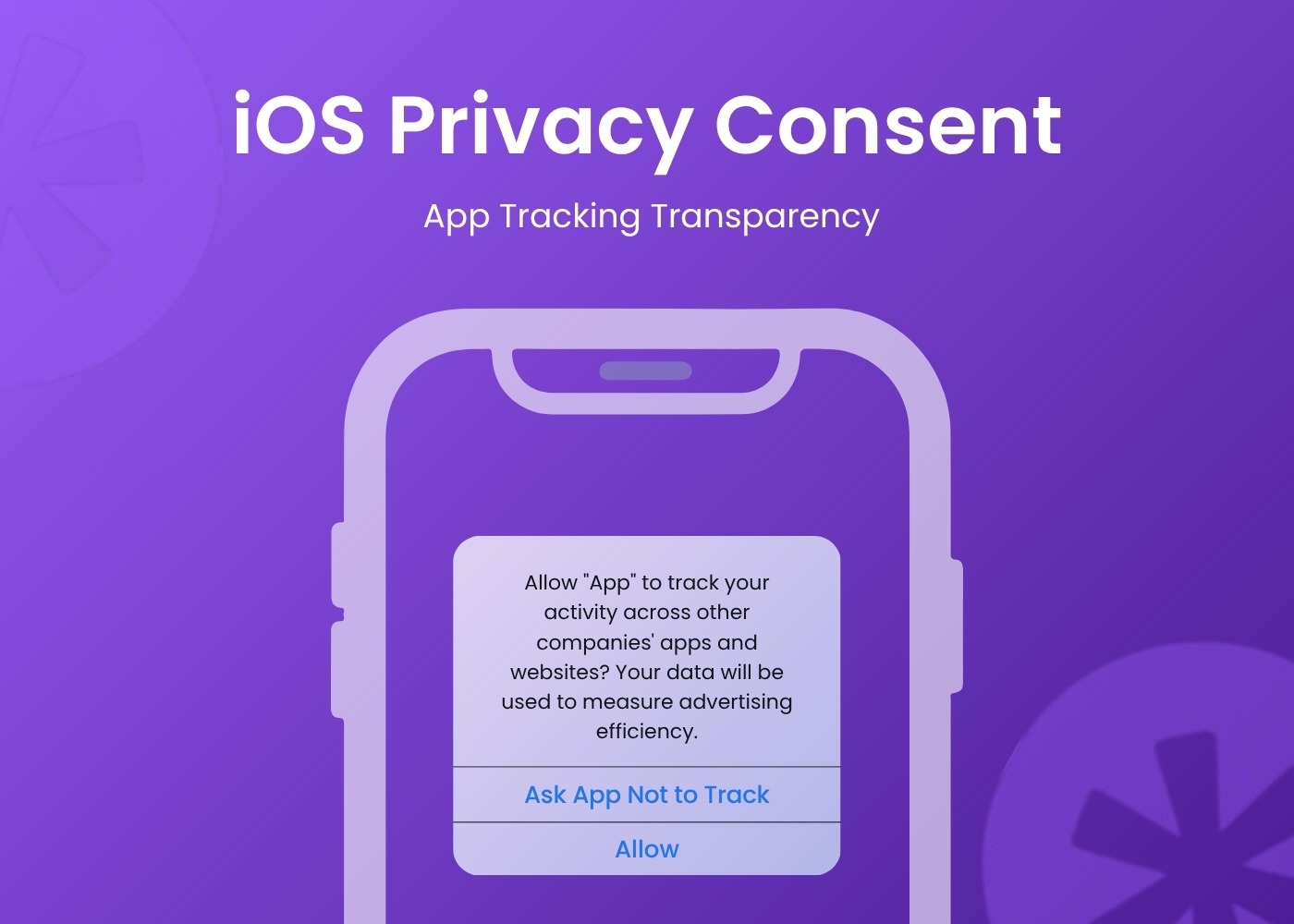
What ATT Requires
Apple's App Tracking Transparency (ATT) framework, introduced with iOS 14.5, requires apps to ask users for permission before tracking them across other apps and websites.
The ATT prompt is system-level. Apple controls the language. The user sees a standard dialog asking whether to "Allow Tracking" or "Ask App Not to Track."
Key things to know:
- Apps must request ATT permission before accessing the IDFA (Identifier for Advertisers)
- If a user opts out, you cannot use their IDFA for advertising or cross-app tracking
- ATT applies regardless of where your company is headquartered
Purpose Strings Matter
Apple requires apps to declare in the privacy manifest what data they collect and why. Your iOS privacy consent setup must include accurate purpose strings in your app's privacy nutrition label and Info.plist file.
Misrepresenting what your app collects can lead to App Store rejection or removal.
Android App Privacy Compliance
Google Play's Data Safety Section
Google requires developers to complete a Data Safety section in the Play Console, disclosing what data the app collects, how it is used, and whether it is shared with third parties.
This is not just a form. Users see this information on your app's Play Store listing. Inaccurate disclosures can lead to policy violations.
Key requirements for Android app privacy compliance:
- Disclose all data types collected, even through third-party SDKs
- Indicate whether data collection is optional or required
- Update your Data Safety section whenever your data practices change
Runtime Permissions
Android uses a runtime permissions model. Sensitive capabilities like location, camera, and contacts require explicit user permission at the time of use. Good consent design means asking at the right moment, with clear context about why the permission is needed.
GDPR and CCPA Requirements for Mobile Apps
GDPR Consent Requirements for Apps
Under GDPR, consent must be freely given, specific, informed, and unambiguous, just as on the web. For mobile, this means:
- Your in-app consent UI must meet the same standard as a web CMP platform
- Consent must be obtained before any non-essential data processing begins
- Users must be able to withdraw consent as easily as they gave it
Many apps use an IAB TCF-compliant consent management software framework to meet these requirements.
CCPA and US Privacy Laws
For apps serving California users, the right to opt out of the sale or sharing of personal information must be clearly available. If your app serves users in other US states with privacy laws, check each state's specific requirements as they vary.
Building a Consent Flow That Actually Works
A few practical principles:
- Ask at the right moment. Timing matters. Request consent when the user understands why you need the data, not upfront before they have experienced the app.
- Layer your information. Give a short explanation first with a link to full details. Do not dump legal text on users.
- Record everything. Store when consent was given, what the user agreed to, and what version of your privacy policy was in effect.
- Respect withdrawals promptly. When a user changes their preferences, stop the affected processing immediately.
For fintech apps specifically, check out this guide on how to automate consent collection for fintech apps.
Conclusion
Mobile consent is more complex than a cookie banner, but the core principle is the same: users deserve clear choices, and those choices need to be respected.
Redacto's consent management platform supports multi-channel consent orchestration, including mobile environments, with built-in compliance for GDPR, CCPA, and India's DPDP Act. Get in touch or message us on WhatsApp to see how it works.