What Is Data Loss Prevention (DLP)? Meaning, Types and How It Works
What DLP means in cyber security, how data loss prevention works, the four DLP types, DLP vs DSPM, and what DPDP Rule 6 expects from you.

I looked after security and privacy, and the data leaks that kept me up at night rarely started with a hacker. They started with a colleague who emailed a customer list to a personal account, uploaded a contract to the wrong shared folder or pasted account numbers into an AI chatbot to "tidy them up". None of them meant harm, and from May 2027 India's DPDP Rules can make any one of them a breach you have to report.
It's an expensive problem. IBM's 2026 Cost of a Data Breach Report puts the global average cost of a breach at USD 4.99 million, based on 602 breached organisations (IBM, 29 July 2026).

You searched for what DLP means, so I'll give you the plain definition first. Then I'll walk you through how data loss prevention works, the four types, DLP vs DSPM, where it falls short and what India's DPDP Rules expect. Read to the end for the rollout order I'd use so your first month of alerts doesn't bury your team.
TL;DR
DLP (data loss prevention) means the tools and policies that find sensitive data, watch where it goes and stop it leaving through email, uploads, USB, cloud apps or AI prompts.
- DLP stands for data loss prevention. Data leak prevention means the same.
- The four types are endpoint, network, cloud and email DLP.
- DLP watches data move. DSPM shows where sensitive data sits, and DLP works best after it.
- India's DPDP Rules don't name DLP, but Rule 6 asks for logs, monitoring and review from 13 May 2027. DLP is one way to produce part of that evidence.
- Start in monitor-only mode with three data types, and tune for weeks before blocking.
DLP meaning in cyber security
In plain English, DLP means data loss prevention: a set of rules and tools that spot sensitive information and stop it from being shared, copied or sent where it shouldn't go. The DLP full form in cyber security, banking and IT is the same. If someone asks "what is a DLP?", they usually mean the product that does this job.
The formal version, from NIST, is that DLP is a system's ability to identify, monitor and protect data in use, data in motion and data at rest, through content inspection and a look at the context of each transfer. Accurate, but nobody outside security talks like that, so here's how I explain it.

If you're new to this, think of DLP as a customs desk for your data. It knows what counts as contraband (Aadhaar numbers, card data, source code), it checks what's leaving, and it can wave something through, ask for paperwork or stop it at the border.
What does DLP protect? Whatever you define as sensitive. In most Indian companies I'd start with Aadhaar and PAN numbers, bank and card details, health records, customer exports and source code. The DLP meaning in business is the same: the control that keeps customer and company data inside approved walls.
Why is DLP important? Firewalls and antivirus look for attackers. DLP looks at the data itself, so it catches the honest mistake as well as the planned theft.
How does DLP work?
DLP works in four steps that run in a loop: discover, classify, monitor and enforce.

- Discover. Find where sensitive data sits: file shares, SaaS apps, laptops, databases and cloud storage. A data discovery tool does this faster than any spreadsheet.
- Classify. Label what you found. Detectors match patterns, keywords, checksums and nearby words, and some use machine learning. Our guide to data classification covers the labels I'd use.
- Monitor. Watch the data move: email, browser uploads, USB, printing, copy and paste, and prompts to AI apps.
- Enforce. When a rule matches, act on it, and log the event either way.
What are DLP rules? A DLP rule is one condition plus one action, for example "more than five PAN numbers in an email to an outside address, then block and notify". A DLP policy, or data loss prevention policy, is a set of those rules. A data leakage protection policy is the same document under a different name.
The actions are the same in most tools; Microsoft Purview's set is typical: show the user a policy tip, block but let them override with a reason, block outright, quarantine files at rest, or hide the content in a Teams chat. Start with the policy tip. Blocking on day one is how DLP projects get switched off.
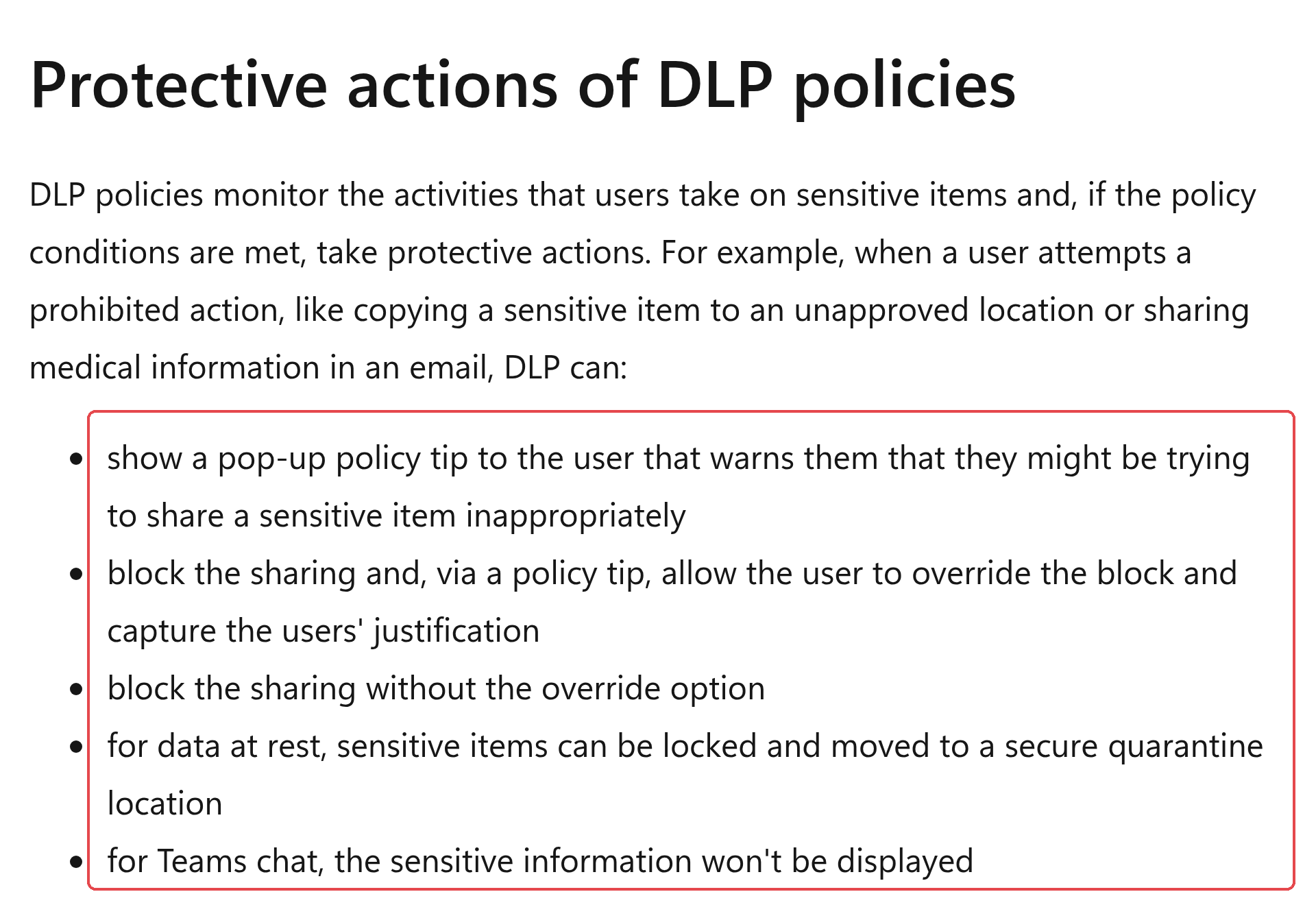
My preference is the middle option, block with an override and a typed reason, for most rules in the first months. It stops the careless send, keeps work moving and gives you a written record of why someone thought it was fine.
Types of DLP
There are four types of DLP, sorted by where the control sits.
| Type | Where it sits | What it catches | Where it struggles |
|---|---|---|---|
| Endpoint DLP | An agent on laptops and desktops | USB, printing, copy and paste, uploads | Personal devices |
| Network DLP | At the network edge or a cloud proxy | Outbound web traffic | Encrypted traffic |
| Cloud DLP | Connected by API to SaaS and cloud storage | Over-shared files and public links | Apps you haven't connected |
| Email DLP | In the mail flow | Sensitive mail sent outside | Personal webmail |
Endpoint DLP
Endpoint DLP runs an agent on each device and watches what the user does with files. It still works when your team is at home, and it annoys people most, so test it on your own security team first.
What is network DLP?
Network DLP inspects traffic leaving your network, at the edge or through a cloud proxy. Its blind spot is HTTPS, and decryption is where rollouts break things. After one company's proxy went live, an engineer on r/cybersecurity wrote that half their tools failed with certificate errors, others timed out, and SSH to their cloud dev boxes seemed to be blocked. I'd plan developer exceptions before day one.
What is cloud DLP?
Cloud DLP protects data stored in or moving through cloud apps and cloud storage. It connects to services by API and scans files, chats and buckets, and it can remove public links or restrict sharing. This is where "cloud data loss prevention" and "Google data loss prevention" searches land. It's one layer of wider cloud data protection.
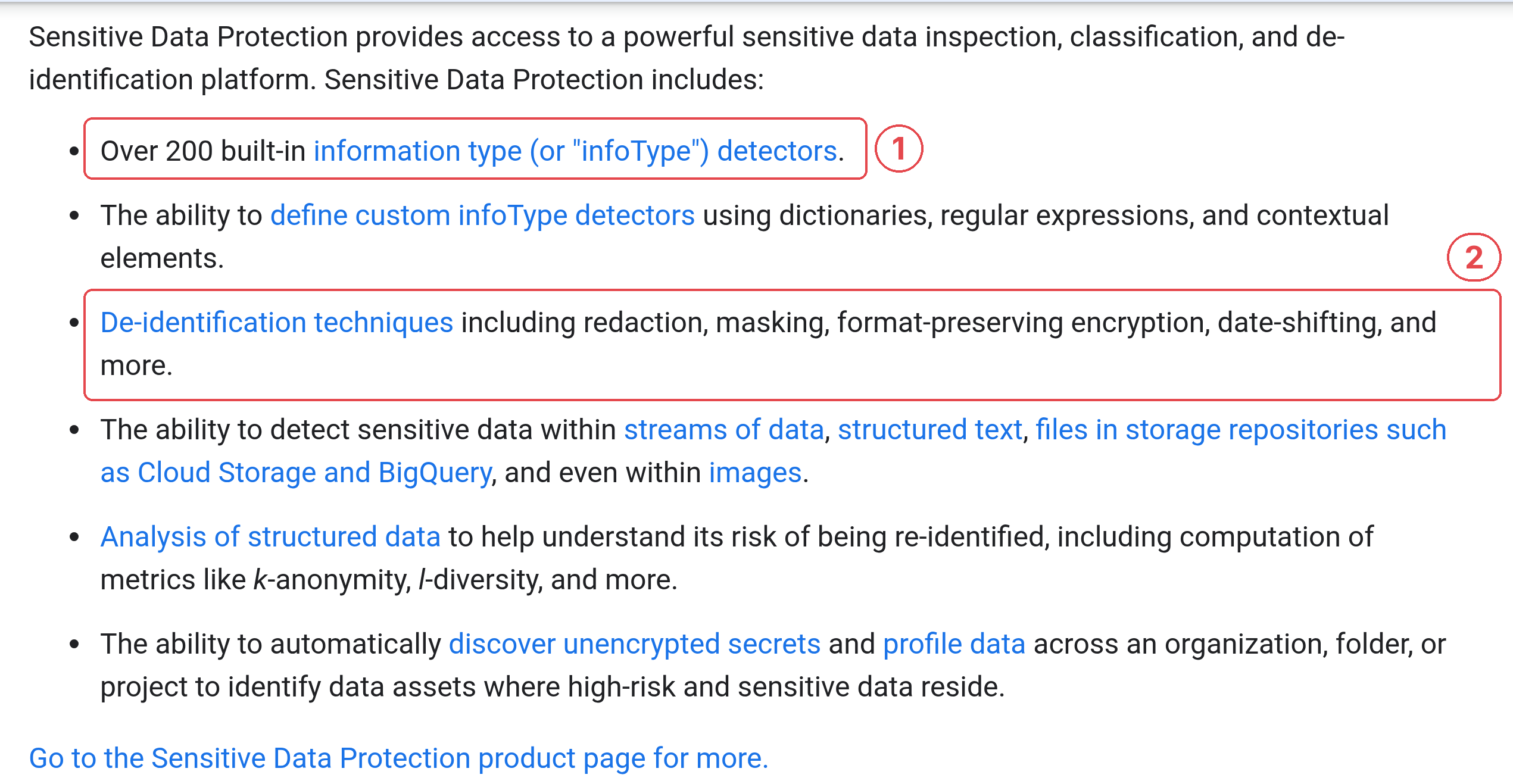
Google's own service, the one many people still call Cloud DLP, is now documented as Sensitive Data Protection. It ships with more than 200 built-in detectors, called infoTypes, and can redact, mask or encrypt what it finds. Its detector list includes Indian types such as Aadhaar, PAN, GST and passport numbers (infoType reference).
For Microsoft shops, Teams data loss prevention is part of Purview DLP, which also covers Exchange, SharePoint and OneDrive. Box, Dropbox, Google Workspace and Salesforce come in as connected apps, still in preview (Microsoft Learn), and that's the route most teams take for Dropbox data loss prevention. I wouldn't put a regulator-facing control on a preview feature without a fallback.
What is the purpose of DLP at the application layer in a SaaS deployment? To monitor and restrict unauthorised sharing of sensitive data. Encrypted tunnels, blocking malicious executables and VPN access policies belong to other controls.
Email DLP
Email DLP checks outgoing mail and attachments against your rules before they leave. It's the oldest type and still the one I'd switch on first, because email is where most misdirected sends happen. One limit is easy to miss: Microsoft Purview scans new email for policy matches, but it doesn't scan email already sitting in mailboxes or archives.
How does DLP work for cloud apps and AI?
For AI, the risk is the prompt. Someone pastes a customer file into a public chatbot and the data has left. Purview now covers ChatGPT, Gemini, DeepSeek and Copilot inline through Microsoft's business browser and network options (Microsoft Learn). If your people use a chatbot you haven't approved, block it first and add DLP rules for the ones you have.

My advice: approve one AI tool for work and use DLP to warn on the rest. Block every chatbot and the pasting moves to personal phones, where you see nothing.
Data loss prevention vs data leak prevention
There's no real difference. Data loss prevention, data leak prevention, data leakage prevention, data loss protection and information leakage prevention all describe the same control, and vendors use the terms interchangeably. You'll also see "information loss prevention" and "extrusion prevention" (TechTarget, July 2024). Don't let a vendor sell you two of them.
If you want a split, "leak" is accidental exposure and "loss" also covers theft. What is data leakage protection? The same tool under an older name.
DLP vs DSPM: which one do you need?
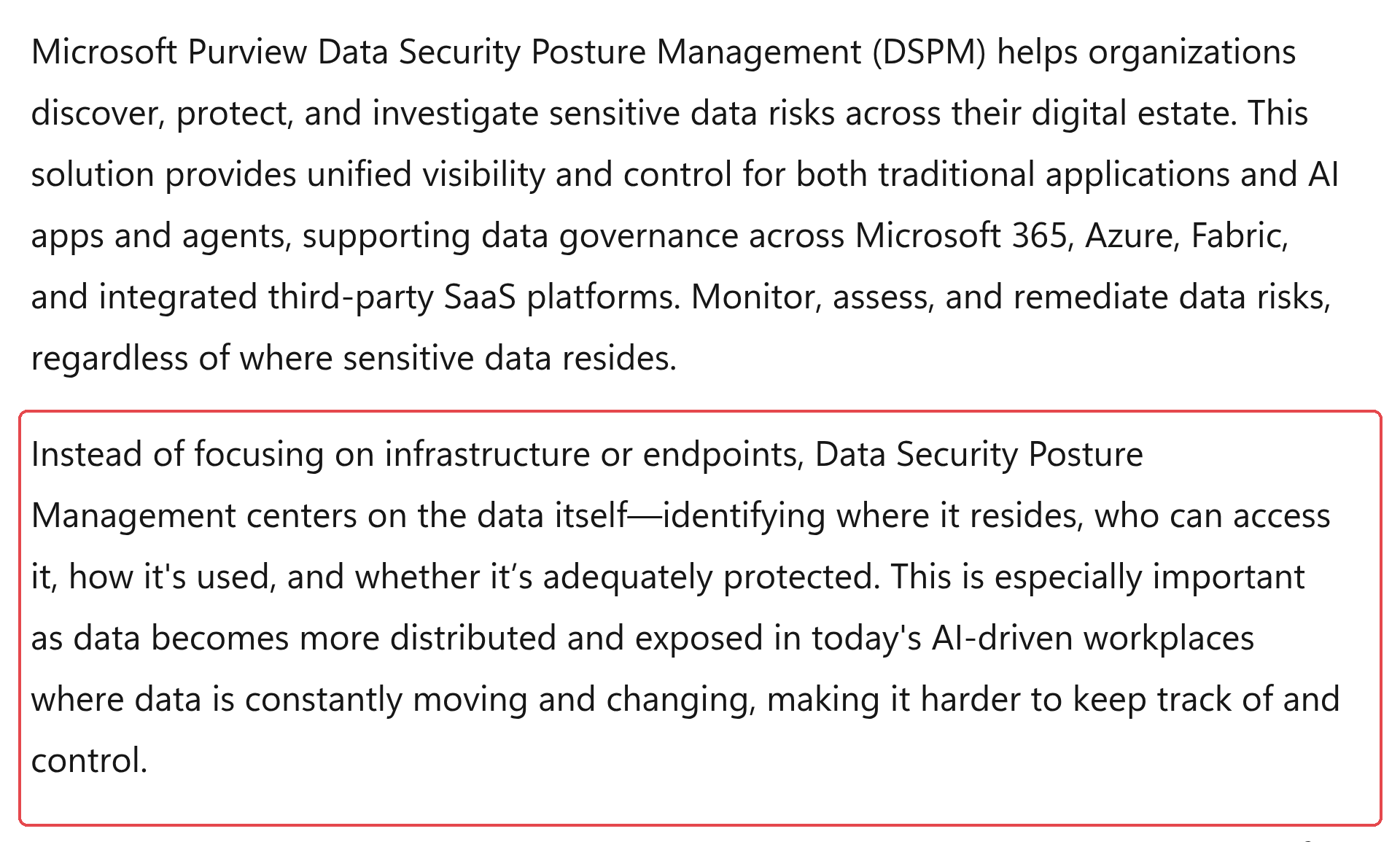
DLP asks "is this data leaving right now, and should I stop it?" DSPM (data security posture management) asks "where is my sensitive data, who can reach it, and is it exposed?" DSPM starts from the data itself, not from the infrastructure or the endpoints (Microsoft Learn).
| DLP | DSPM | |
|---|---|---|
| The question it answers | Should this transfer go ahead? | Where is sensitive data, and who can reach it? |
| Where it looks | Data moving through email, endpoints, network and apps | Data stored in databases, file shares, SaaS and cloud stores |
| What it does on a finding | Block, warn, quarantine, log | Ranked list of exposures and fixes |
My take: DSPM comes first, DLP second. A DLP rule for "customer data" is guesswork until something has found where customer data lives. CSPM checks cloud settings, not data, and encryption protects data if it leaves anyway.
Data loss prevention products: how to compare them
DLP products come as suites inside wider security platforms, standalone DLP tools, and managed data loss prevention, where a provider runs the policies and the alert queue for you.
Star ratings won't separate them. Gartner Peer Insights lists 91 products in its DLP market, and in November 2026 the most-reviewed sat between 4.2 and 4.7 out of 5: Forcepoint DLP at 4.4 from 618 ratings, Trellix DLP at 4.5 from 385, Symantec DLP at 4.5 from 350, Proofpoint Enterprise DLP at 4.6 from 232 and Microsoft Purview at 4.2 from 84. When everything scores well, the rating shows buyers stuck with their choice, not which one fits you.
What buyers who've rolled DLP out advise is more useful, and it matches my own advice: prove the product in a proof of concept, launch with a small group of users, and name and train internal DLP leads before you scale. That's the gist of Gartner's Peer Lessons for DLP (November 2025, from at least 75 reviewer responses).
If you need to benchmark DLP tools for compliance use, here's the test I'd run:
- Your data. Test a sample with Aadhaar, PAN, GST and account numbers, and count misses and false alarms.
- Your evidence. Export a month of logs and check they show who did what, when.
- Your alert load. Ask who tunes a noisy rule, and how.
What DLP can't do
DLP is worth having, but it gets oversold. Plan for these limits:
- False positives. A 12-digit number isn't always an Aadhaar number, and buried analysts stop reading alerts.
- Unknown data. DLP only protects what you've defined and found.
- Encrypted and personal channels. Password-protected zips, personal phones and screenshots get past most rules.
- Insiders set on stealing. DLP doesn't stop someone who photographs a screen.
- Friction. Badly tuned DLP breaks developer tools, and people route round it.
Is DLP safe for employees' privacy? It reads their messages and files, so treat it as processing of employee personal data. Section 7(i) of the DPDP Act lists as a legitimate use processing "for the purposes of employment or those related to safeguarding the employer from loss or liability, such as prevention of corporate espionage, maintenance of confidentiality of trade secrets, intellectual property, classified information…". DLP aimed at those risks fits that wording, so you don't need employee consent for it. The Act's other duties still apply to what DLP collects, including security and erasure once the purpose is served, and the Act doesn't replace your employment contracts or labour law. Customer data that DLP sees inside staff messages falls under the security duty in section 8(5), not section 7(i). I'd still tell staff in writing what DLP watches, keep the alert queue to a small named team and avoid screen recording.
How to roll out DLP without drowning in alerts
This order is slower in month one and much faster by month three.
- Pick three data types. Choose the ones that would hurt most if leaked: Aadhaar and PAN numbers, card data, customer exports. Ignore the other 300 templates for now.
- Find the data first. Run discovery on those three types to see where they live and who uses them. Data profiling helps here.
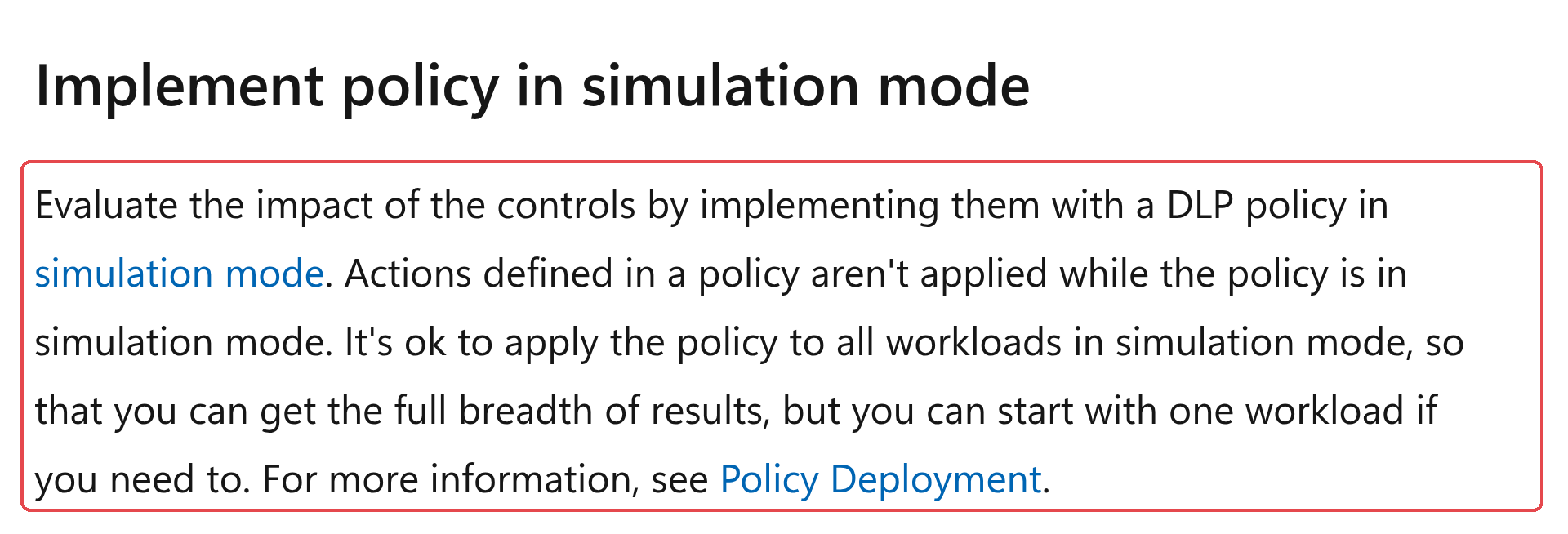
- Run monitor-only for a few weeks. Microsoft calls this simulation mode: the policy evaluates content, but no action applies.
- Talk to the business owners. Every legitimate flow you find (payroll to the bank, KYC files to a processor) becomes a documented exception with an owner.
- Turn on user warnings. Policy tips teach people the rules before anything is blocked.
- Block only high-confidence rules. Start with rules that rarely fire on legitimate work, such as bulk exports to personal email.
- Tune every week, and keep the audit trail. Track alerts per rule and how many are real, and retire rules nobody acts on. My DLP audit checklist is short: the policy list with an owner per rule, coverage by channel, triaged alerts with outcomes, the exceptions register and proof that logs are kept.
Plan for retention too. Microsoft keeps DLP alerts for 30 days in the Purview dashboard and six months in the Defender portal. If those alerts are part of your evidence, that's shorter than the one year of logs India's DPDP Rules ask for, so export them to your SIEM or log store.
DLP and the DPDP Act: Rule 6 reasonable security safeguards
The DPDP Act doesn't require DLP by name. Section 8(5) says a Data Fiduciary must protect personal data by taking reasonable security safeguards to prevent a personal data breach, and Rule 6 of the DPDP Rules, 2025 lists the minimum. Rule 6 applies from 13 May 2027, eighteen months after the Rules were published on 13 November 2025.

Here's how DLP maps to the clauses:
| Rule 6(1) clause | What it asks for | Where DLP helps |
|---|---|---|
| (a) | Encryption, obfuscation, masking or virtual tokens | DLP can encrypt or redact on a match, and cloud DLP can mask stored data |
| (c) | Visibility on access through logs, monitoring and review | DLP event logs and alert reviews are part of this evidence, alongside access logs |
| (e) | Keep logs and personal data for one year | Export DLP logs and keep them for a year |
| (g) | Technical and organisational measures | DLP policies, training and the exceptions register |
Clauses (b), (d) and (f) cover access control, backups and processor contracts; DLP helps only indirectly.
Rule 6(1)(c) asks for visibility on who accesses personal data, through appropriate logs, monitoring and review, so you can detect, investigate and fix unauthorised access. It doesn't name DLP, and access logs reviewed in a SIEM cover much of it. DLP adds a record of personal data leaving your systems, which supports the monitoring and review the clause asks for.
The Schedule to the Act sets a penalty of up to ₹250 crore for failing to take reasonable security safeguards under section 8(5), and Rule 7 gives you 72 hours to send the Board a detailed breach report. Our posts on the DPDP Rules, DPDP Act compliance requirements and DPDP penalties cover the rest.
DLP under GDPR and CCPA follows the same logic. Article 32 of the GDPR asks for "appropriate technical and organisational measures" and gives examples such as pseudonymisation and encryption, but it doesn't mention DLP. DLP is one way to show you took those measures, and our GDPR vs DPDPA comparison sets out where the two laws differ. California's CCPA works the same way: section 1798.100(e) requires businesses to use reasonable security procedures, and section 1798.150 lets consumers sue when unencrypted personal information is stolen or disclosed because those procedures failed. DLP logs help show yours were in place.
Data loss prevention in India: banks and regulated firms
Banks are the exception: their regulator does name it. The RBI's Cyber Security Framework in Banks, issued on 2 June 2016, lists a "Data Leak prevention strategy" among its baseline requirements for scheduled commercial banks. It asks banks to protect data on endpoints, in transmission and in storage, online or offline, and to make "similar arrangements" at vendor-managed facilities.
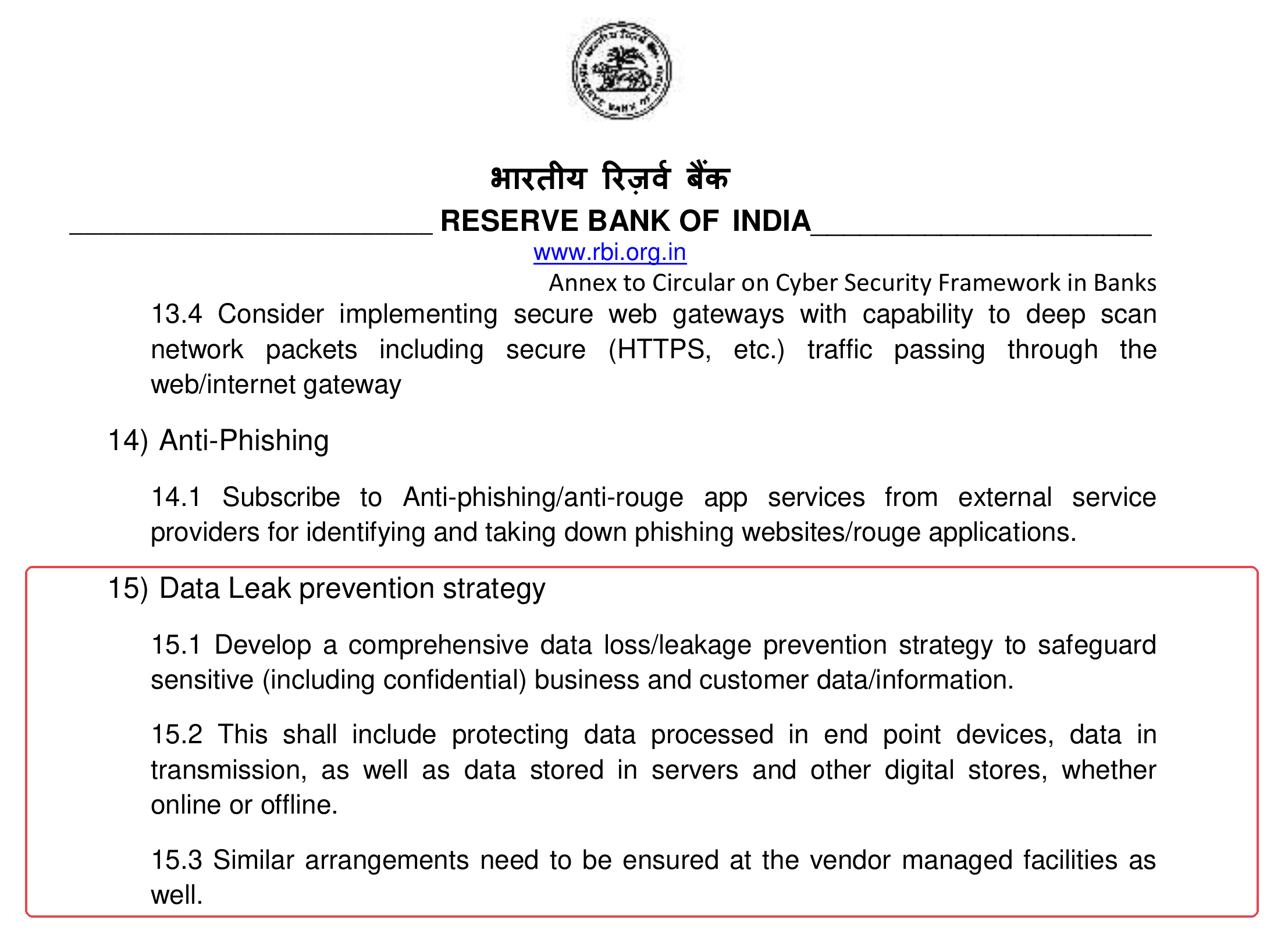
My best practices for data loss prevention (DLP) in banking come straight from that text. Cover all three data states, extend the rules to your outsourced service providers through the contract, and tie DLP logs to your SOC. Our post on DPDPA compliance software for BFSI covers the privacy side.
If you're shopping for data loss prevention solutions in India, test detection on Indian identifiers and ask where the vendor stores your logs and alert content. You may need that answer for your own records under the DPDP Act. I haven't seen an India DLP market-size figure I'd rely on, and none would help you pick a tool anyway.
Final thoughts
Start with the data: find it, label it, write a few rules you can defend and tune them until your team trusts the alerts. From 13 May 2027, the logs DLP produces become part of the evidence you'll need under Rule 6.
This is Redacto's blog, and we sell the step before DLP. Redacto's Data Security Posture finds sensitive data that is over-shared, public or forgotten, ranks it by risk under the DPDP Act and proposes the fix for your team to approve.