%20Redacto%20logo_New.png)


9 Best Automated Data Mapping Tools For Indian Enterprises


A data map usually fails long before an audit. You and I see the same pattern inside large companies: a team records a CRM in a spreadsheet, adds an analytics warehouse, hires a processor, and leaves the privacy record unchanged.
That gap matters under the Digital Personal Data Protection Act, 2023. Section 8(5) requires a Data Fiduciary to protect personal data through reasonable security safeguards. Section 8(7) also connects erasure to consent withdrawal or the end of the specified purpose. You cannot operate either duty if you cannot trace the data across systems and processors in the official text of the Digital Personal Data Protection Act, 2023.
The useful tool finds regulated records, links them to a purpose and owner, and preserves the review trail when the classification changes.
TL;DR
- Redacto - Best for India-first DPDPA mapping and evidence workflows.
- BigID - Best for discovery across a large mixed data estate.
- OneTrust - Best for global privacy programs with linked governance modules.
- Securiti - Best for data intelligence across hybrid cloud estates.
- DataGrail - Best for finding SaaS systems and keeping an application inventory current.
- Privado AI - Best for mapping privacy risk from source code and applications.
- Ketch - Best for linking real-time data maps with consent and rights workflows.
- TrustArc - Best for privacy teams that need mapping plus assessment workflows.
- MineOS - Best for a privacy inventory that supports rights request operations.
Redacto is the most direct fit when DPDPA operations drive the purchase. BigID and Securiti suit security teams that need deep discovery. OneTrust or TrustArc makes more sense when an existing global privacy program sets the operating model. DataGrail and Ketch focus more on connected SaaS workflows. Privado AI stands apart when engineering changes create the blind spots.
Disclosure: We build Redacto and included it because its India-first mapping workflow matches the DPDPA evidence needs used in this evaluation.
How I evaluated automated data mapping tools
I judged each tool by whether it can turn discovery into a record that a DPO can review and use. A scanner alone does not solve the job because the map must connect a data element to its purpose and owner, show the processor path, preserve review evidence, and reflect business changes.
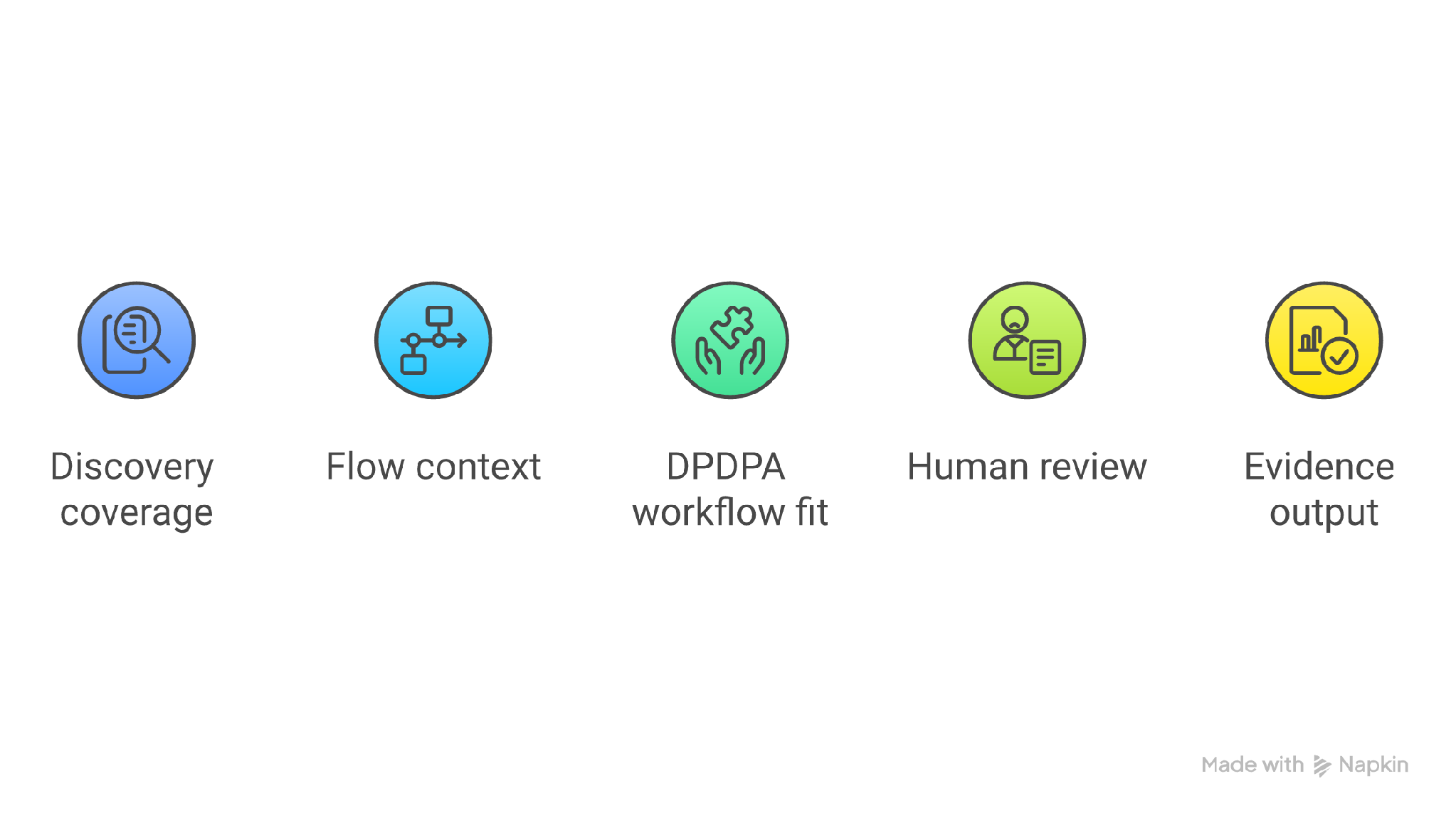
- Discovery coverage: Can it find regulated records in cloud systems and SaaS applications?
- Flow context: Can it connect a data element to a source plus destination and processor?
- DPDPA workflow fit: Can teams record purpose plus consent status and retention action?
- Human review: Can legal or privacy owners approve classifications and exceptions?
- Evidence output: Can the team export a dated inventory plus change history for review?
Comparison table
Buyer benchmarks are directional and do not replace a written quote. Scope changes with source count and modules. Redacto does not publish a price.
1. Redacto: Best for India-first DPDPA mapping and evidence
Redacto starts with AI-Driven Data Discovery & Mapping. It identifies regulated records across connected systems, turns findings into an inventory, connects each record to purpose, and records processing context.
The distinction appears in the downstream workflow. When a bank traces a request from intake to a processor, the same map can support Automated DSAR Management, inform PIA Automation, update Vendor Risk Management, and preserve completion evidence.
Features
- Finds and classifies regulated records across connected systems.
- Maps data movement and processing context.
- Connects findings to PIA records.
- Supports vendor risk records for processor oversight.
- Produces audit and reporting evidence.
Pricing:
License-based; contact Redacto. No public free plan or trial is listed. The broadest package depends on the licensed modules and enterprise deployment.
Pros
- The product model starts with DPDPA operations in India.
- Mapping connects with DSAR and PIA work.
- Vendor records help trace processor handoffs.
- The capability names match common privacy team jobs.
- Audit records keep review evidence near the map.
Cons
- Pricing is not public.
- India-first coverage is less suitable for a global multi-law program.
- The company has fewer public case studies than older suites.
- Buyers need a product review to confirm connector coverage.
- Legal teams still own purpose and retention judgments.
When to choose Redacto
Choose Redacto when the map has to drive DPDPA work across privacy and security teams. A multinational that needs deep coverage across many laws may prefer OneTrust.
Who should not choose Redacto: a global group seeking one mature platform for GDPR and US state laws should compare the international suites first.
2. BigID: Best for discovery across a large mixed data estate
BigID scans structured and unstructured sources across cloud and on-premise estates. After discovery, it links data to systems, adds purpose and vendor context, records owners, and shows movement across regions for the reviewer.
This approach suits a bank with several data platforms and legacy repositories. The map begins with discovered data rather than an owner survey. Reviewers still decide whether a suggested purpose or legal basis is correct.
Features
- Discovers regulated records across mixed environments.
- Auto-populates processing records from findings.
- Draws lineage and flow views.
- Links processors plus vendors to activities.
- Tracks approvals and version history.
Pricing:
Buyer benchmarks place the paid enterprise contract near $104,000 per year. No free plan or public trial is published. Higher packages add sources plus deployment options and modules. See the BigID buyer price benchmark.
Pros
- Direct scanning reduces dependence on questionnaires.
- Coverage suits large hybrid estates.
- Flow views include processors and regions.
- Version history supports review evidence.
- Privacy records connect to discovered assets.
Cons
- The likely contract value is high for a small team.
- Deployment needs data and security participation.
- Classification suggestions require validation.
- A broad product scope can lengthen implementation.
- India-specific workflows need configuration.
When BigID fits
BigID fits an enterprise that needs to find data before it can govern it across warehouses that security owns, file stores that business teams manage, and legacy systems whose processing purpose was never documented; its discovery depth can beat Redacto across a large global estate, but the buyer accepts a larger contract and must coordinate privacy reviewers with the engineers who grant source access. The tradeoff is cost plus implementation work.
3. OneTrust: Best for global privacy programs
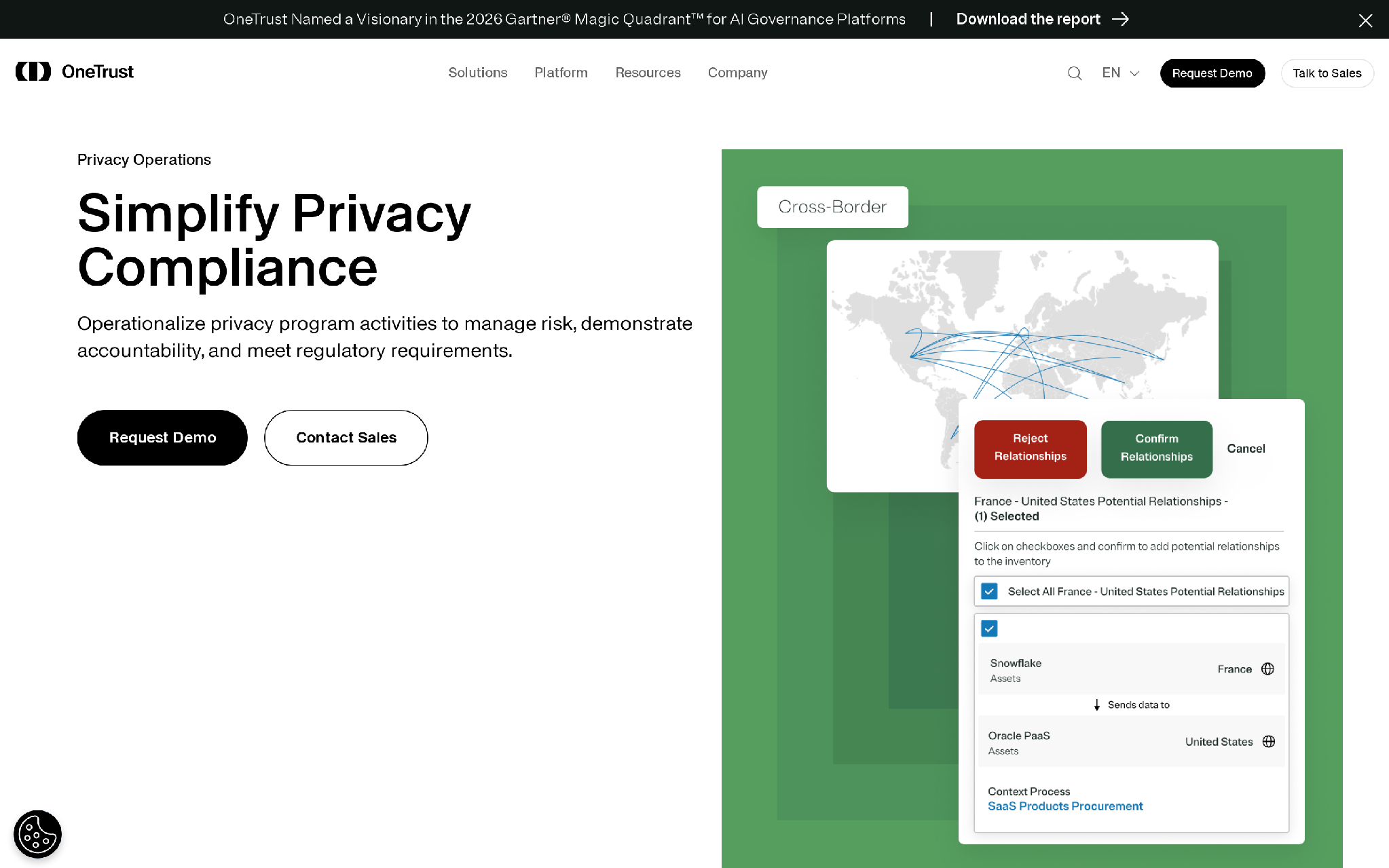
OneTrust detects assets through IAM services and cloud providers. Privacy Operations scans connected assets and then, as the inventory changes, joins them with processing activities, adds vendor context, and produces a central map.
The map sits inside a wider governance platform. A team can route a PIA or incident task from the same context. This helps a multinational that already uses OneTrust for privacy or third-party work.
Features
- Detects assets from IAM and cloud sources.
- Finds and classifies regulated records.
- Maps processing activities and transfers.
- Generates RoPA records.
- Triggers assessments and incident workflows.
Pricing:
Data Mapping Standard starts at $500 per month. No free plan or public trial covers enterprise data mapping. Higher tiers add admin users and inventory scope.
Pros
- The map connects to a wide privacy platform.
- Global regulatory context supports multinational teams.
- Asset detection can trigger follow-up work.
- Vendor records sit beside processing activities.
- Training and partner coverage help large rollouts.
Cons
- Packaging can exceed the needs of an India-only team.
- Module choices make total cost harder to forecast.
- Implementation may require a partner.
- DPDPA details need local legal review.
- A broad interface can add operator training.
When OneTrust fits
OneTrust fits a multinational that wants mapping inside one governance suite because its existing vendor records can inform the processing inventory, assessment results can start remediation, and regional privacy teams can work from the same operating model; it wins over Redacto when global regulatory breadth matters more than India-first product depth, especially when the enterprise already depends on other OneTrust modules and trained administrators.
4. Securiti: Best for data intelligence across hybrid cloud
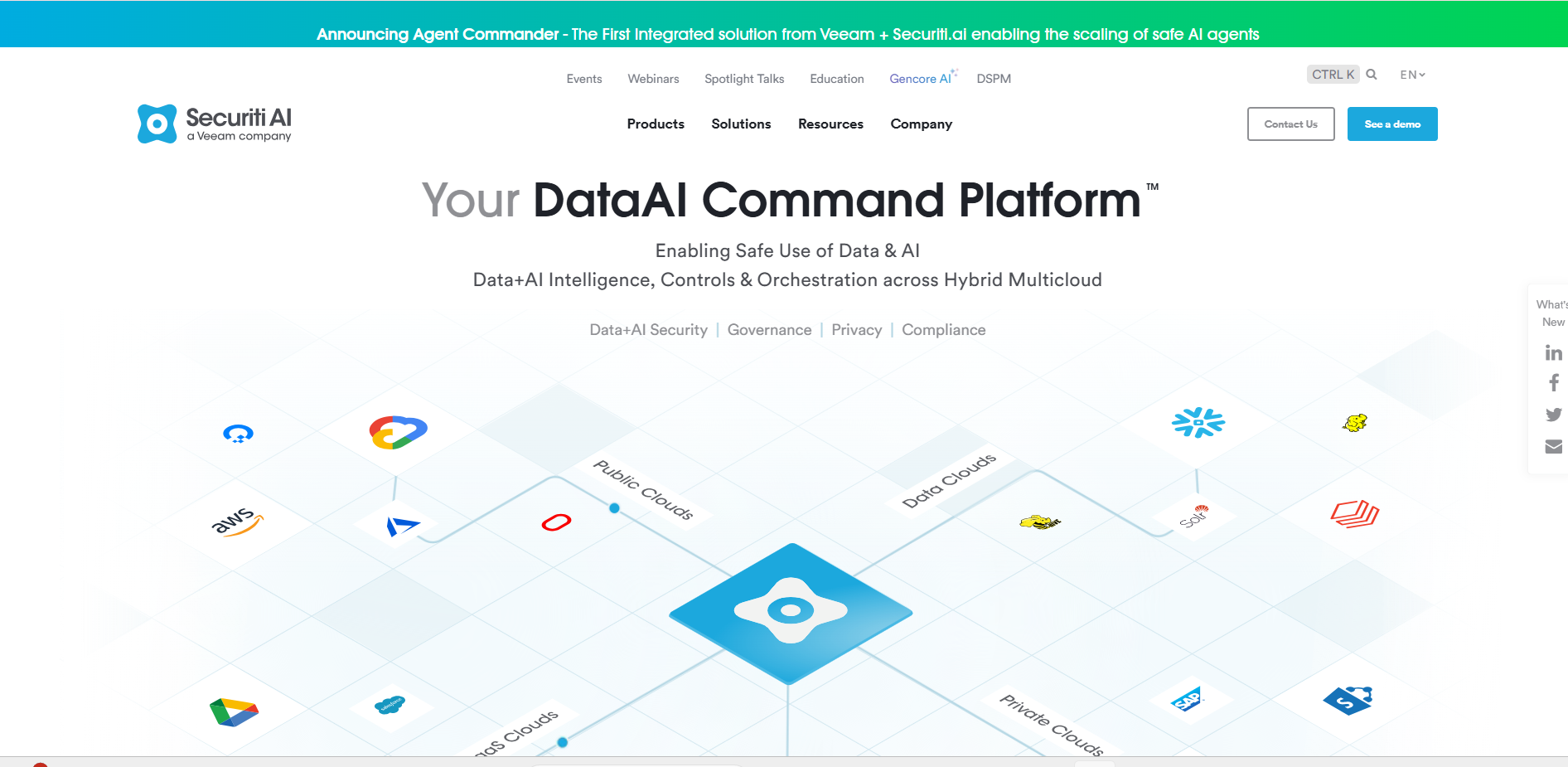
Securiti connects data discovery with a catalog and visual flow records. Once teams import assets, they can scan connected sources, map findings to processing activity, trigger a privacy assessment, and assign its review when risk appears.
Its reach across privacy and security makes sense for a CISO-led program. The operating risk is ownership. A discovered field still needs a person to confirm purpose and retention.
Features
- Scans cloud plus on-premise sources.
- Classifies personal and sensitive data.
- Creates visual flow maps.
- Generates processing records.
- Triggers assessment workflows from findings.
Pricing:
The median paid Data Command Center contract is $49,841 per year. No free tier or public trial covers enterprise mapping. Larger packages add data volume plus connectors and modules. See the Securiti buyer price benchmark.
Pros
- Security and privacy teams share discovery context.
- Hybrid coverage suits regulated enterprises.
- Visual flows expose cross-system movement.
- Findings can start assessment work.
- The catalog supports ownership records.
Cons
- The platform can be too broad for one privacy use case.
- Setup needs technical access to data sources.
- Buyer pricing is not transparent.
- DPDPA workflows require configuration.
- Human validation remains necessary for purpose tags.
When Securiti fits
Securiti suits a security team that wants privacy mapping beside data controls across cloud accounts that change often, on-premise repositories that still hold customer records, and catalog entries that need an accountable owner; it can be a better pick than Redacto when DSPM and hybrid cloud visibility lead the program, while the privacy office remains responsible for validating each suggested purpose and turning a technical finding into DPDPA evidence.
5. DataGrail: Best for finding SaaS systems
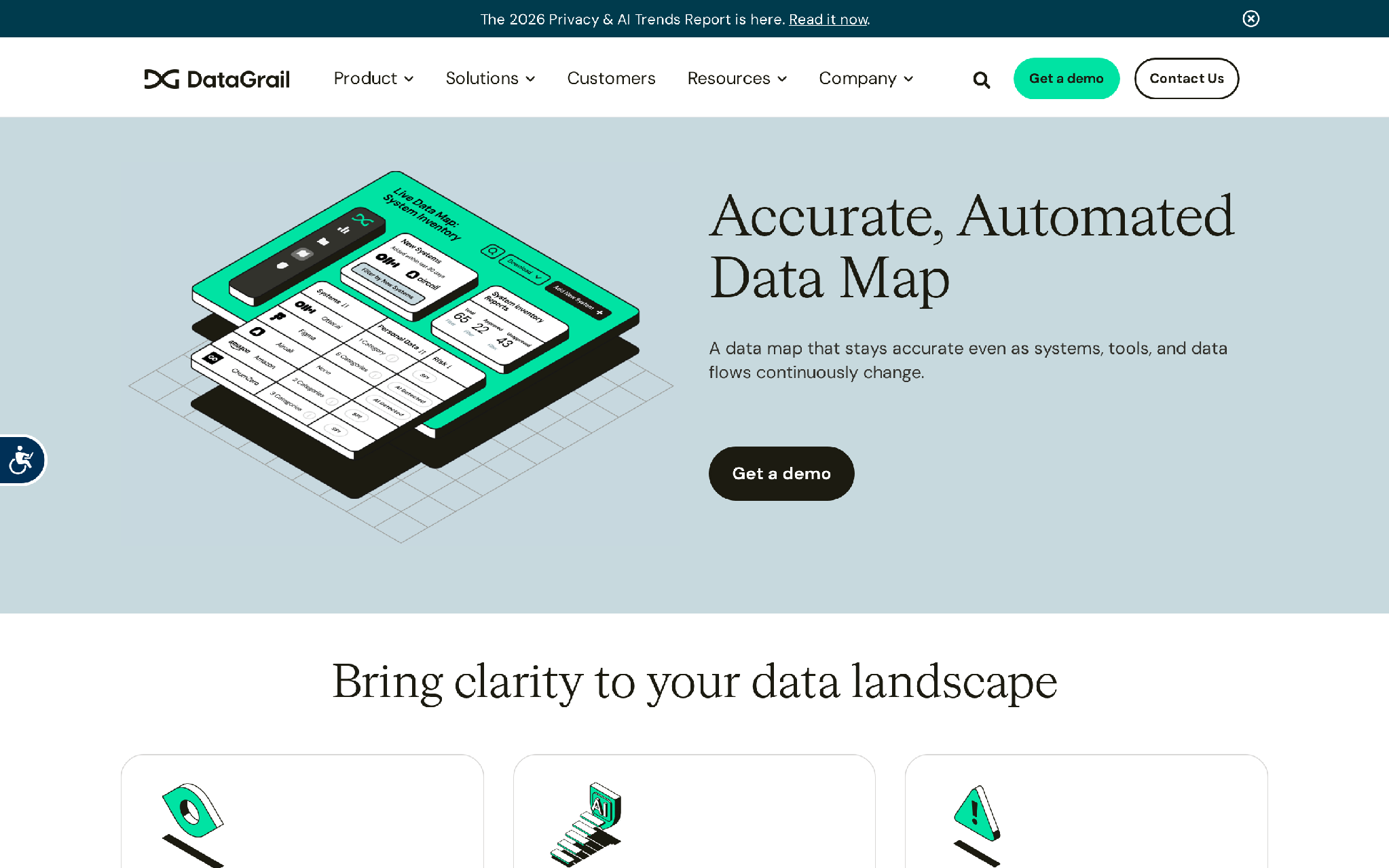
DataGrail Live Data Map detects systems across a technology estate. When a new application appears, it flags the system, adds processing context from its library, updates the inventory, and helps the team align its RoPA with current use.
This works well when shadow SaaS creates the gap. DataGrail can surface the application without scanning all data by default. Deeper discovery depends on the connected source and agreement.
Features
- Detects applications in the technology estate.
- Maintains system profiles and processing activities.
- Adds risk context across more than 2400 systems.
- Supports responsible data discovery.
- Links the map to rights request workflows.
Pricing:
Buyer benchmarks place the paid privacy deployment near $50,000 per year. No free plan or public trial is published. Larger contracts add modules and request volume. See the DataGrail buyer price benchmark.
Pros
- System detection helps find shadow SaaS.
- The application library adds quick context.
- Continuous updates reduce stale inventories.
- Rights workflows use the same system map.
- Privacy-safe discovery can reduce data exposure.
Cons
- Deep discovery varies by integration and contract.
- Pricing is not published by the vendor.
- Database-heavy estates may need another scanner.
- India-specific records need local design.
- The median contract may exceed a lean team budget.
When DataGrail fits
DataGrail fits a SaaS-heavy enterprise that cannot keep its application register current because new systems appear between review cycles, ownership changes before the next survey, processor context goes stale, and the RoPA stops matching the applications that employees actually use. BigID or Securiti may suit a deeper database discovery program.
6. Privado AI: Best for mapping risk from source code
Privado AI scans source code to see how an application collects and shares data. It also scans SaaS systems and contracts, then uses those findings to populate maps, prepare assessments, create engineering tickets, and carry remediation back to the code owner.
This model catches a class of change that inventory surveys miss. A new SDK can create a third-party flow before a privacy owner updates the register.
Features
- Scans application source code.
- Maps data sent to third parties.
- Scans SaaS systems and contracts.
- Auto-populates PIAs and RoPAs.
- Creates remediation tickets in engineering tools.
Pricing:
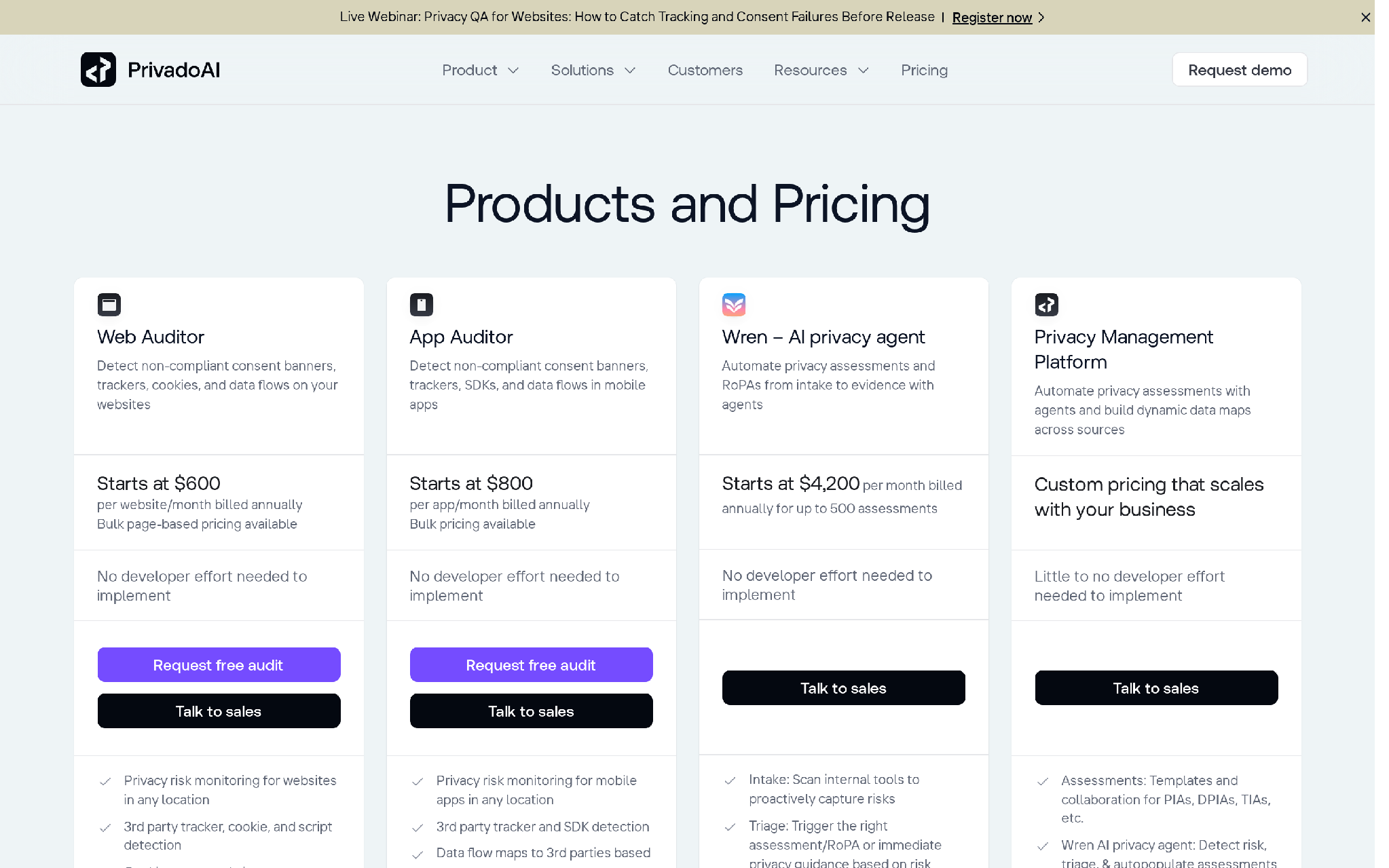
Web Auditor starts at $600 per website each month with annual billing. No free plan is published, but a free audit is offered. App Auditor costs $800 per app each month and the management platform uses a scoped quote.
Pros
- Code scanning reveals flows before release.
- Engineering tickets shorten the remediation path.
- Contract extraction adds processor context.
- Website and app scans cover digital touchpoints.
- Assessment records reuse discovered facts.
Cons
- Public starting prices apply to auditor products.
- The full mapping platform needs a quote.
- Code access requires engineering approval.
- Business processes outside software need another input.
- DPDPA judgments remain with privacy and legal teams.
When Privado AI fits
The product is the sharper pick when software releases change the data map each week because a new SDK can add a recipient, move a data type across a border, change an existing purpose, and reach production before the next manual inventory review. It does not replace stakeholder review for offline processing or purpose decisions.
7. Ketch: Best for consent-led privacy operations
Ketch builds a point-and-click map and can add discovery across connected systems. In its Pro tier, the map connects to privacy workflows, updates a real-time RoPA, carries consent context, and supports rights work from the same system record.
The fit is strongest when permission choices need to propagate across a digital estate. The lower consent plans do not include data mapping.
Features
- Builds point-and-click data maps.
- Discovers and classifies connected data.
- Maintains a real-time RoPA.
- Connects maps to consent workflows.
- Adds risk assessments and stakeholder review.
Pricing:
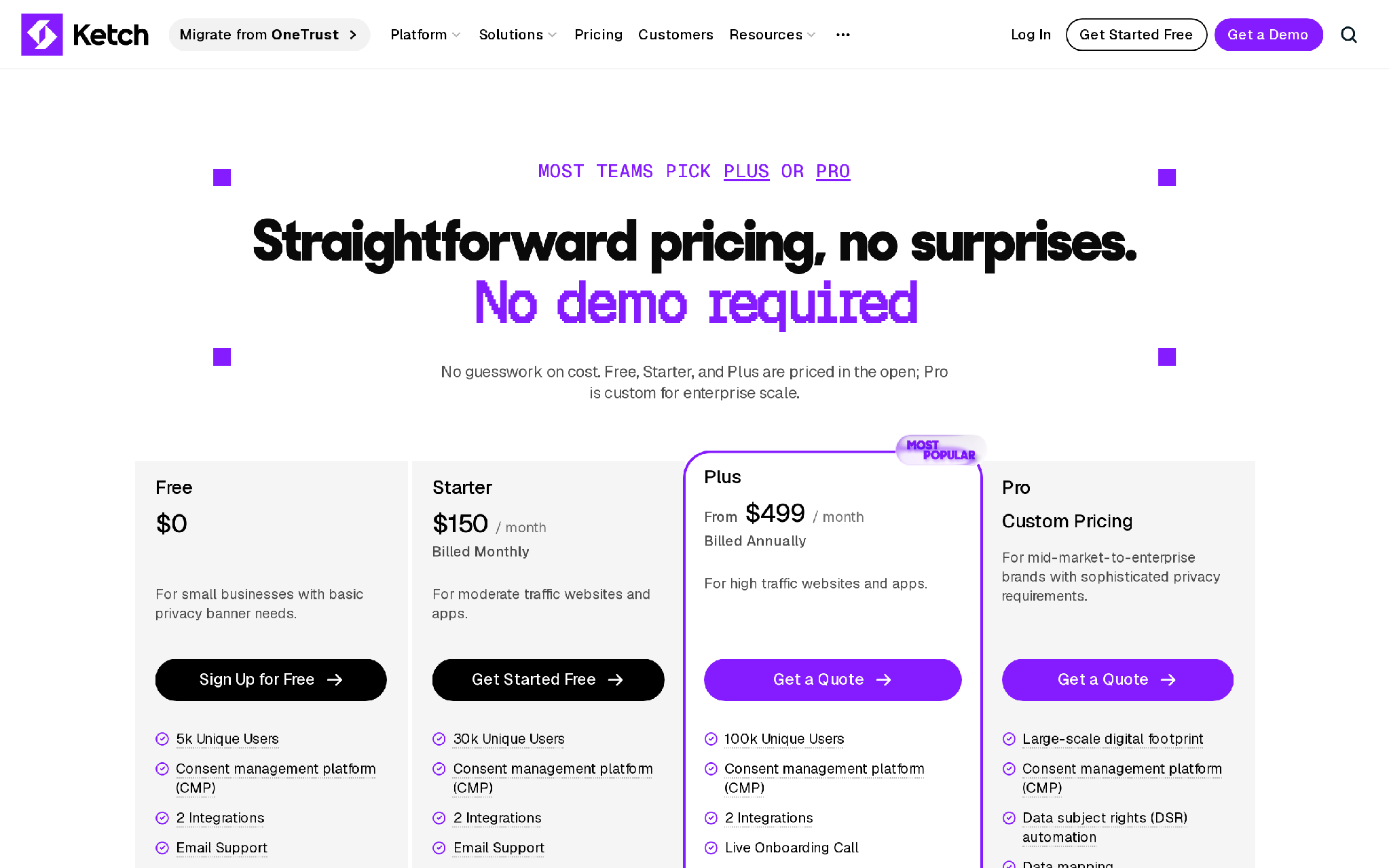
Starter consent costs $150 per month for up to 30,000 monthly users. A free plan covers 5,000 users but excludes mapping, and no mapping trial is published. Pro adds mapping through a scoped quote after the $499 per month Plus plan.
Pros
- Consent and mapping share one context.
- The map can update with connected systems.
- Workflow tools support cross-team review.
- Published consent tiers aid budget planning.
- Rights automation can use the same inventory.
Cons
- Mapping sits only in the quoted Pro tier.
- Lower plans do not test the mapping product.
- Deep scanning depth needs proof in a pilot.
- DPDPA-specific logic needs configuration.
- Teams buying only mapping may pay for a wider suite.
When Ketch fits
Ketch fits a digital business that treats consent enforcement as the first mapping use case because a consent change can reach the mapped system, the operating team can see where the instruction went, and the privacy owner can review whether downstream action matched the recorded purpose; before purchase, the enterprise should test discovery depth against its actual Indian data estate and require proof that one withdrawal propagates across a real processor path.
8. TrustArc: Best for mapping plus assessment workflows
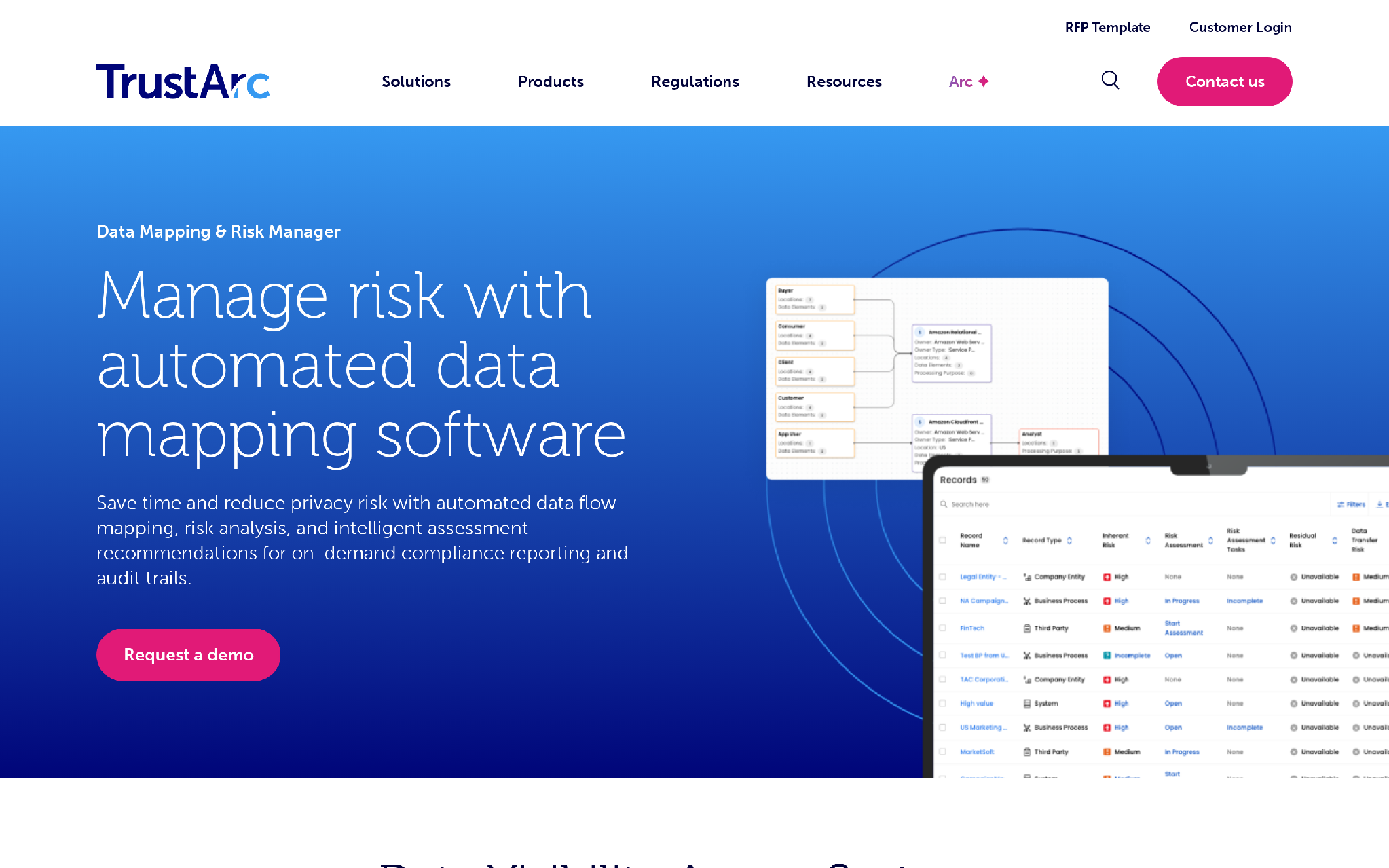
TrustArc builds an inventory across systems and vendors. When a record carries higher risk, it generates a flow view, calculates risk from processing context, triggers another assessment, and preserves the resulting review history.
This model suits a privacy office that already runs assessment cycles. It gives legal teams a place to review machine-filled records before they become evidence.
Features
- Creates system and vendor inventory records.
- Draws interactive data flow maps.
- Adds transfer and jurisdiction views.
- Scores risk from processing context.
- Triggers follow-up assessments.
Pricing:
Buyer benchmarks place the paid Data Mapping and Risk Manager contract near $40,000 per year. No free plan or public enterprise trial is published. Larger contracts add modules and record volume. See the TrustArc buyer price benchmark.
Pros
- Mapping and risk review work together.
- Vendor relationships appear in the flow.
- Assessment routing preserves human control.
- Revalidation schedules help keep records current.
- Exportable records support audit preparation.
Cons
- Vendor list pricing is not public.
- India-first statutory logic is not the core design.
- Deep source scanning may need integrations.
- The interface serves a wider global program.
- Small teams may face more setup than they need.
When TrustArc fits
TrustArc fits an established privacy office with assessment owners and review cycles because each processing record can carry a risk result, a named reviewer can resolve the exception, and the next review can inherit the prior decision without rebuilding its context; Redacto gives an Indian enterprise a more direct DPDPA operating model, while TrustArc makes more sense when assessment governance already defines how the global privacy team works.
9. MineOS: Best for a privacy inventory used in rights work
MineOS creates a system inventory and maps the records linked to each system. From one mapped source, a privacy team can identify the owner, route a rights request, check consent context, and record the action required for a person.
The product is easier to frame around privacy operations than a large data catalog. Buyers with petabyte estates should test discovery depth and scan performance before selection.
Features
- Builds a privacy system inventory.
- Maps regulated records across connected sources.
- Links systems to rights request handling.
- Tracks consent and preference records.
- Supports processing and vendor documentation.
Pricing:
Buyer reports place the paid enterprise privacy platform near $24,000 per year. No free tier or public trial covers mapping. Larger contracts add systems and privacy modules. See the MineOS buyer price benchmark.
Pros
- The inventory supports privacy operations directly.
- Rights requests can use mapped systems.
- Consent records add person-level context.
- The product can suit a lean privacy team.
- System records help assign owners.
Cons
- Public enterprise pricing is limited.
- Large estate performance needs a pilot.
- India-specific workflow depth needs validation.
- It has less third-party market evidence than older suites.
- Security teams may still need a separate DSPM tool.
When MineOS fits
MineOS fits a privacy team that wants the inventory close to rights and consent work, where each mapped system needs an owner, every request needs a route, consent context must remain visible, and the final action has to return to one case record. BigID or Securiti offers a more security-led discovery model.
How to choose the right tool for an Indian enterprise
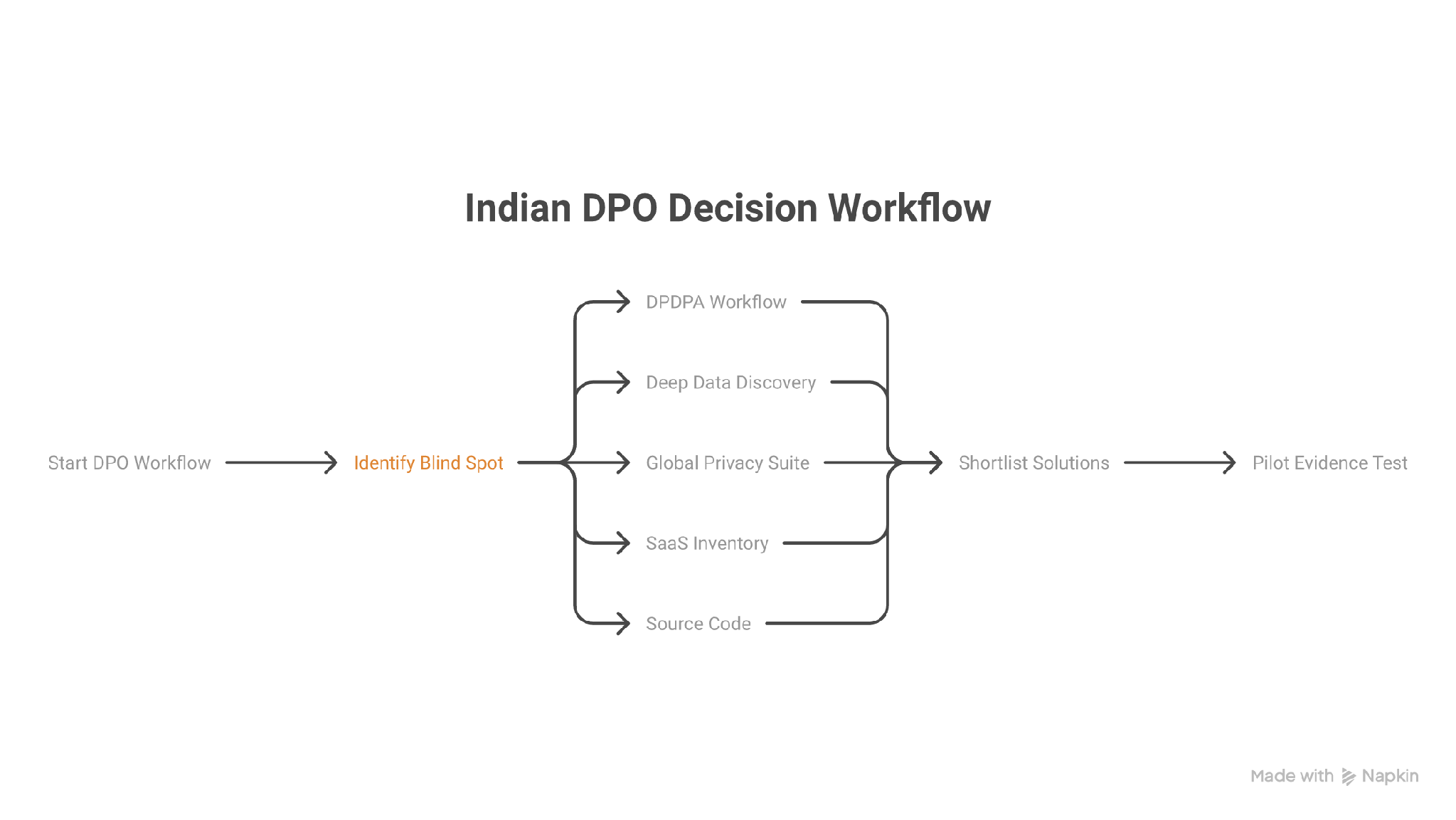
Start with the DPDPA evidence your team cannot produce today, whether that is a processor trail, an approved purpose record, or dated change history. Test one tool against that missing record before you compare the rest of its feature set.
- Redacto fits when DPDPA workflows and India-first evidence lead the program.
- For unknown data inside a mixed estate, begin with BigID.
- A global privacy suite points the decision toward OneTrust.
- Security and privacy teams that share a hybrid cloud program can shortlist Securiti.
- Choose DataGrail when new SaaS systems keep making the inventory stale.
- Application releases that create unrecorded flows favor Privado AI.
- Ketch belongs on the shortlist when consent enforcement depends on the map.
- Assessment-led privacy governance gives TrustArc a clear role.
- Rights teams that need a usable system inventory can evaluate MineOS first.
Run a pilot with one real process. A healthcare enterprise could trace a patient onboarding flow from the app to the CRM and one processor. Ask the vendor to show discovery and classification. Then require an owner approval plus an exported change record.
The Act makes that evidence useful during control reviews. A usable map gives the team a path from the source to the processor, the purpose record, and the person who approved it. Automation can prepare this record, route its review, and flag a missing owner. The DPO and legal team still decide whether the purpose and retention treatment are correct.
This Monday pick one customer flow. List every system and processor that receives the data. Compare that list with your current map. Any missing destination is the first pilot test for the tool you buy.