%20Redacto%20logo_New.png)


5 Best DSAR Automation Tools in 2026


A customer asks you to delete all the personal data you hold about them.
Now you need to find that data. It could be in your CRM, support tickets, billing software, cloud files, or an internal database. You may also need to verify the person, check what can be deleted, get another team to remove it, and prove that the request was completed on time.
Doing all of that by email, spreadsheets, and manual searches gets messy quickly.
This is what DSAR automation tools are meant to handle. But the level of automation differs from one product to another.
I compared Redacto, OneTrust, Ketch, Securiti, and IQWorks to see which parts of a DSAR each tool can handle and which parts still need your team.
5 Best DSAR Automation Tools in 2026
- Redacto - Best for automated data discovery, matching, and redaction.
- OneTrust - Ideal for end-to-end DSAR fulfillment.
- Ketch - Best for routing and fulfilling requests across connected systems.
- Securiti - Ideal for identity-linked DSAR fulfillment.
- IQWorks - Best for complex DSAR workflows tied to data discovery.
What Should You Look for in a DSAR Automation Tool?
The main thing to check is how much of the DSAR process the tool can actually handle.
Some tools mainly collect requests and assign tasks. Others can also find the requester’s data, verify their identity, trigger deletion or correction in connected systems, redact records, and prepare the response.
Before choosing a tool, check:
- Can it search your databases, SaaS apps, file stores, and other systems for the requester’s data?
- Can it retrieve, delete, correct, or export records, or does someone still need to do this manually?
- Does identity verification happen inside the DSAR process before personal data is shared or changed?
- Can requests be routed by request type, location, system, or owner?
- How does it handle redaction when records contain information about other people?
- Does it show due dates, request age, and overdue tasks?
- Can you see what happened, who completed each step, and when?
- How is personal data sent back to the requester once the request is complete?
The fewer steps your team has to handle manually, the more useful the automation becomes as request volume grows.
5 Best DSAR Automation Tools in 2026: Quick Comparison
1. Redacto
Redacto is a privacy management platform that automates data discovery, record matching, redaction, and request handling for DSARs.
When a request comes in, Redacto can locate and extract the requester’s personal data from databases, applications, and cloud storage. It then matches the data to the individual using the identifiers provided with the request.
If the retrieved records contain sensitive information about other people, Redacto can automatically redact it before the records are shared. The request, internal notifications, and fulfillment history are managed from the same platform.
How Redacto Automates DSARs
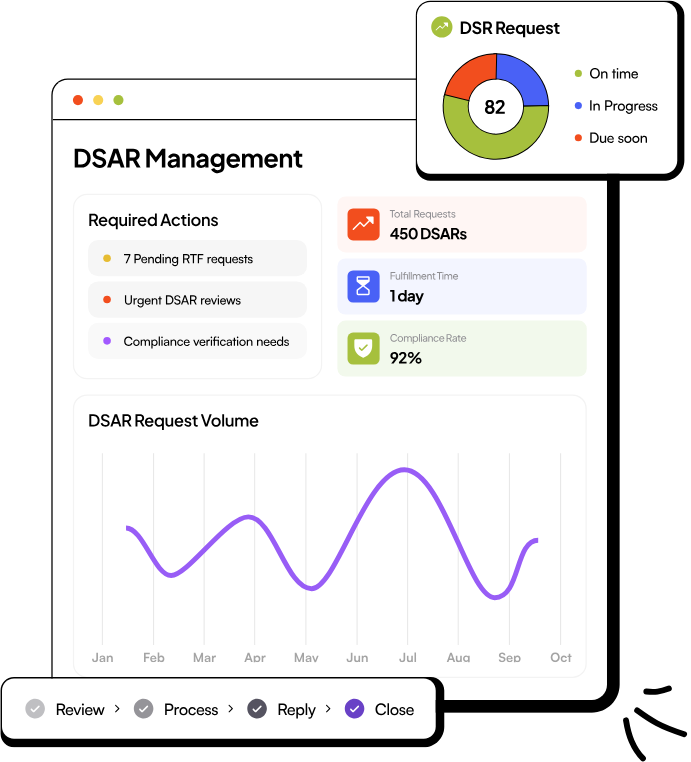
Redacto handles several parts of a DSAR that would otherwise require someone on your team to find, check, and prepare the data manually.
- With automated data discovery, Redacto searches databases, applications, and cloud storage and pulls together the personal data it finds.
- Intelligent data matching uses the identifiers submitted with the request to work out which records belong to that person.
- If those records also contain someone else’s information, automated redaction removes that information before the records are shared.
- Automated notifications bring in the right teams when their action is needed on a request.
- All requests stay in a centralized DSAR platform, along with a record of how each one was handled and completed.
Pros of Redacto
- Strong DSAR data discovery and retrieval
- Automated requester-to-record matching
- Built-in third-party data redaction
- Automated DSAR notifications and workflows
- SaaS, private cloud, and on-prem deployment options
Cons of Redacto
- Pricing is not publicly available
Best For
- Companies handling DSARs across multiple data sources
- Organizations that need automated data discovery and matching
- Businesses that need to redact third-party information from records
- Companies that want DSAR requests and audit records in one place
2. OneTrust
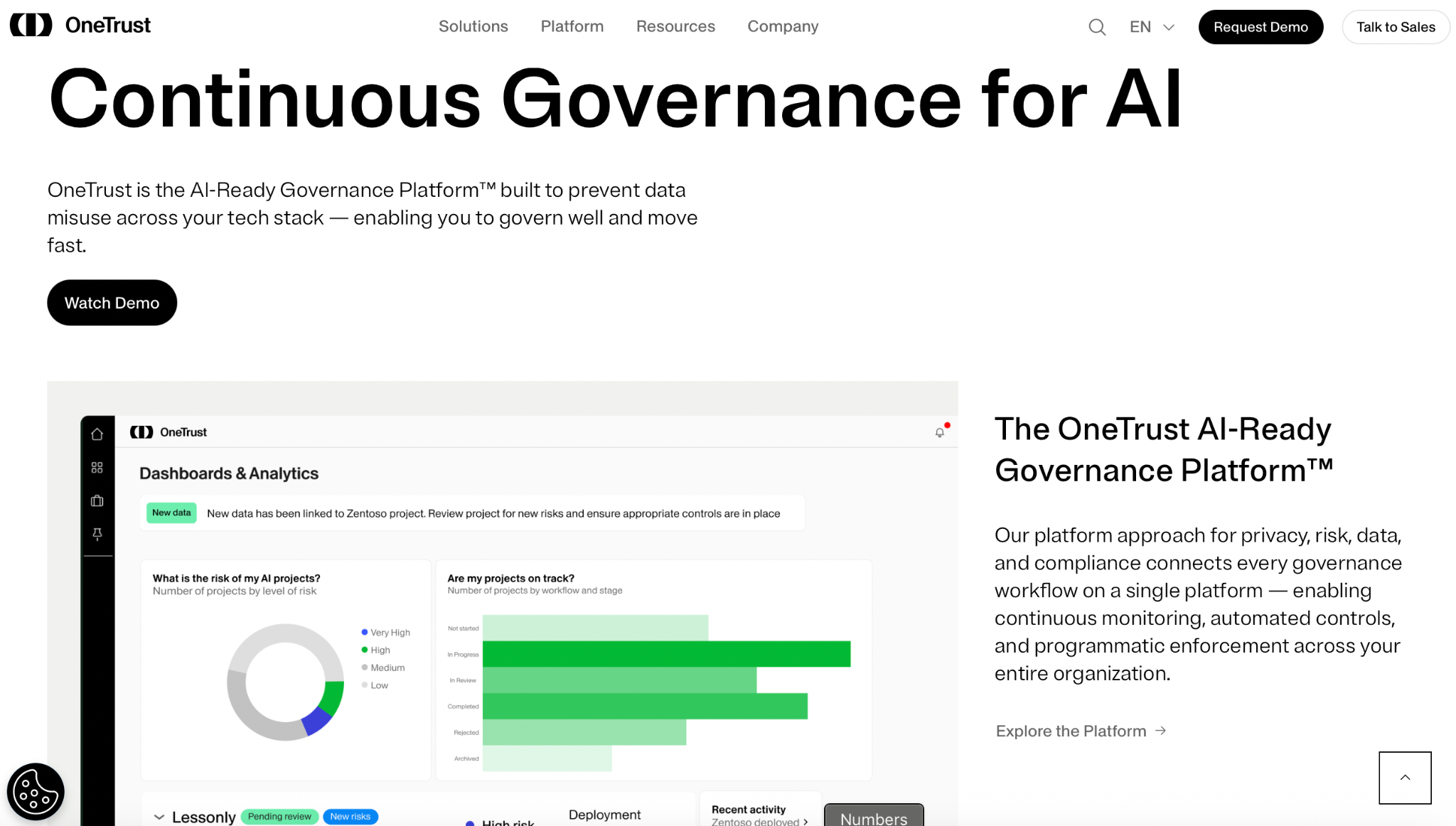
OneTrust automates a DSAR from the point a person submits the request to the point the completed response is sent back to them.
For example, if someone asks for their data to be deleted, OneTrust can verify who they are, find their personal data, check whether any of it is under a legal hold, and delete the data that can be removed. For an access request, it can retrieve the data, redact information that should not be disclosed, and return the files through a secure customer portal.
This means the same workflow can cover both finding the data and taking action on it, rather than stopping after the request has been collected.
How OneTrust Automates DSARs
OneTrust brings the work needed to fulfill a DSAR into the same process. Once a request is received, the workflow can move through identity verification, data discovery, retrieval, and the action required for that request.
The automation also accounts for steps that can complicate fulfillment. Before data is deleted, OneTrust can check for legal holds. Before information is returned for an access request, records can be redacted so data that should not be disclosed is removed.
The completed response can then be delivered through a secure customer portal. OneTrust also keeps documentation of the request and how it was fulfilled, which gives the organization a record if it later needs to show how the DSAR was handled.
- Automates data retrieval, deletion, and redaction as part of fulfillment
- Checks legal holds before eligible data is deleted
- Uses a secure portal to deliver completed responses
Pros of OneTrust
- End-to-end DSAR fulfillment automation
- Automated identity verification and data discovery
- Data deletion with built-in legal hold checks
- Automated redaction for access responses
- Secure customer portal for response delivery
Cons of OneTrust
- The large number of modules and settings can make setup more complex
- Full DSAR automation requires connections to the systems where personal data is stored
Best For
- Companies that need legal hold checks before erasure
- Businesses that need redaction before releasing personal data
- Organizations that need secure DSAR response delivery
3. Ketch
Ketch automates privacy requests from the time they are submitted until the required action is completed. It can send requests across 1,000+ connected systems, apps, and models.
A person can submit a request through a branded form, inside a product, or through an API. Ketch can then verify the person and use its data map to find which systems hold their personal data.
Ketch can also connect different identifiers that belong to the same person. This helps when someone appears under an email address in one system, another account ID in a second system, and a different identifier elsewhere.
How Ketch Automates DSARs
Once a request comes in, Ketch can automatically send it to the right system or person based on the request type, region, system, and owner. This reduces the need to manually work out who needs to handle each part of the request.
Its data map shows where the person’s data is stored, while Identity Sync connects the different identifiers linked to that person. Ketch can then track the work needed across those systems and show the progress of each request.
For deletion and opt-out requests, Ketch can apply the change to historical data, not just data collected after the request. It can also keep proof of which systems received the request and what action was taken.
- Routes requests to the right systems and owners
- Applies deletion and opt-out requests to historical data
- Redacts sensitive information before records are released
Pros of Ketch
- 1,000+ systems, apps, and models supported
- Built-in AuthenticatedID verification
- Identity Sync for matching data across different identifiers
- No-code drag-and-drop DSAR workflow builder
- Automated routing by region, request type, system, and owner
Cons of Ketch
- Custom connections may require APIs, webhooks, or Ketch Transponder
Best For
- Organizations with personal data spread across many systems
- Companies that need requests automatically sent to different systems and owners
- Businesses that need deletion requests applied to historical data
- Organizations that need to match the same person across different identifiers
4. Securiti
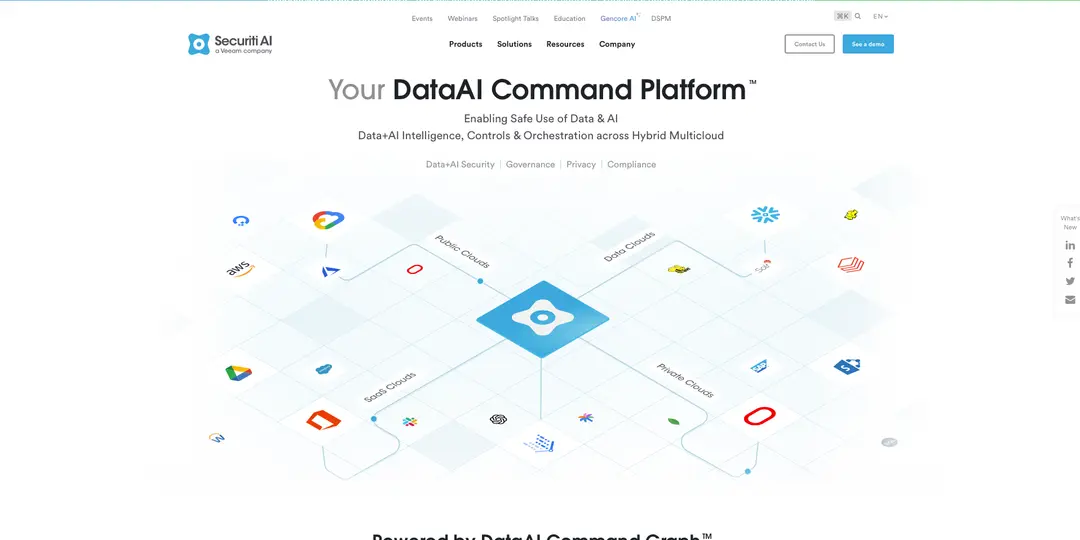
Securiti is a data privacy and security platform with a dedicated DSR Robotic Automation product. It combines privacy request management with Securiti’s data discovery and People Data Graph capabilities.
A key part of the product is its People Data Graph. It builds a relationship between personal data and the person it belongs to, which helps Securiti handle requests when information about one person exists in different data sources.
How Securiti Automates DSARs
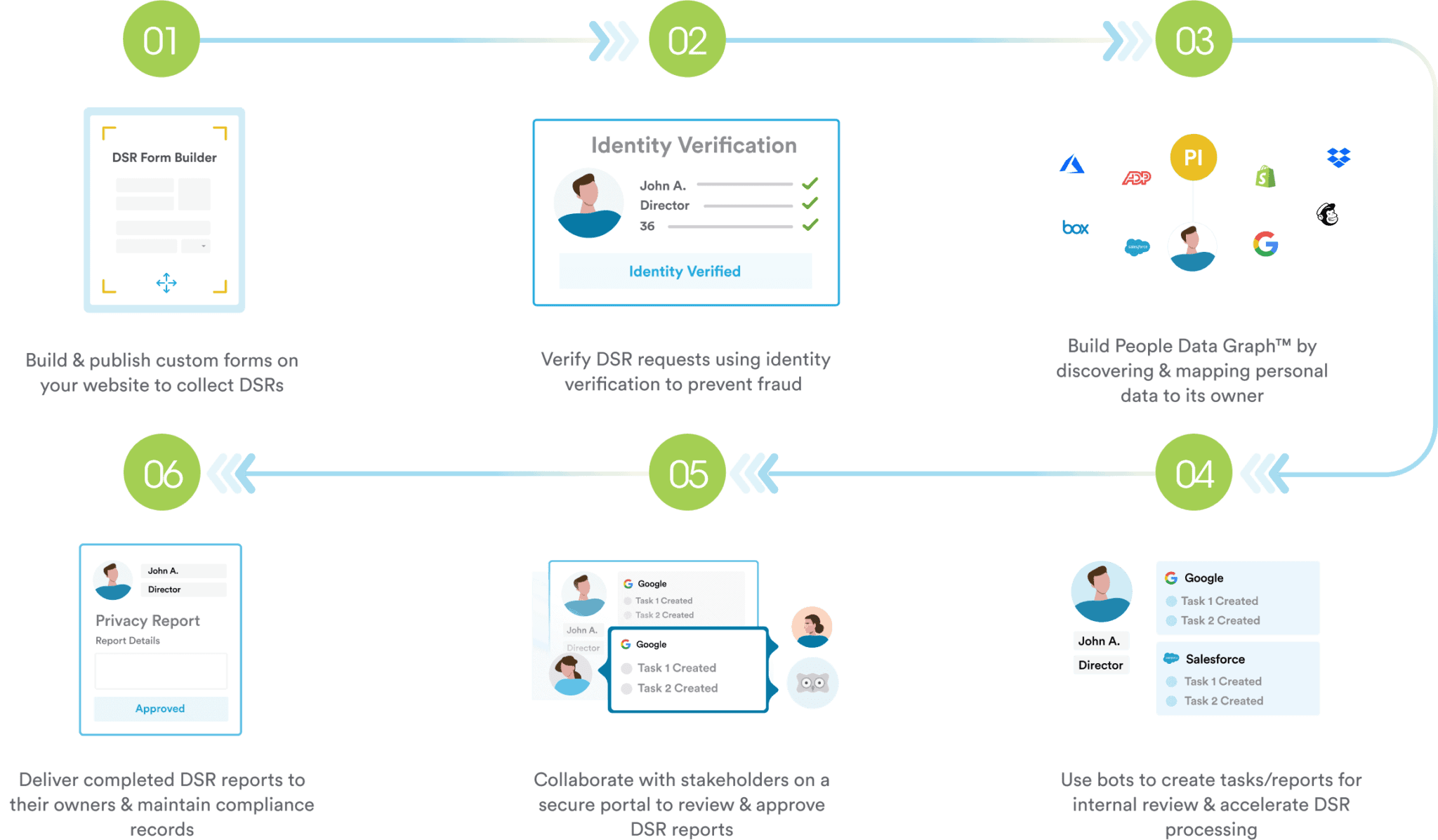
Securiti uses its People Data Graph to automatically find a person’s information across hundreds of structured and unstructured data systems.
From there, its robotic automation creates the tasks required to process the request. These tasks can follow pre-built or custom workflows, and different stakeholders can work on them without passing personal information through email.
The DSR Workbench is used to manage this work. It provides current regulatory guidance, real-time reports, audit logs, and a dashboard showing DSR activity. The final results can then be shared with the requester using encryption. Its main DSAR capabilities include:
- Custom forms for collecting privacy requests
- Identity checks before fulfilling a request
- Automatic matching through People Data Graph
- Automatic task creation for fulfillment
- Pre-built and customizable DSR workflows
- Secure collaboration without sending personal data over email
- Encrypted sharing of completed results
Pros of Securiti
- Support for hundreds of structured and unstructured data systems
- Automatic creation of fulfillment tasks
- Customizable DSR forms and workflows
- DSR Workbench with reports and audit logs
Cons of Securiti
- Automated fulfillment depends on connecting the systems that hold personal data
- Some DSR tasks and collected data can still require human review or approval
Best For
- Businesses that need to connect scattered records to one individual
- Companies dealing with both structured and unstructured records
- Organizations that need detailed records of how requests were handled
5. IQWorks
IQWorks is a privacy and cyber governance platform. For DSARs, it uses ComplyIQ to manage the request workflow and DiscoverIQ to find the requester’s personal data across connected systems. ComplyIQ itself covers DSR management from request intake through fulfillment, including deadlines and audit records.
A useful difference here is how the two products connect. From a request in ComplyIQ, you can launch a DiscoverIQ scan that is already filled with the requester’s name and email. DiscoverIQ can then search databases, SaaS apps, file shares, and endpoints for matching data. This avoids starting a separate search and manually entering the requester’s details again.
How IQWorks Automates DSARs
Requests can come through a branded public form and are collected in one ComplyIQ queue. Before a request is accepted, the requester confirms their email using a one-time code, while CAPTCHA helps block automated submissions.
Once accepted, the queue shows the request type, status, owner, age, and deadline, and flags requests that are due soon or already overdue. This means deadlines do not have to be tracked separately in a spreadsheet.
When the personal data needs to be found, you can launch a DiscoverIQ scan directly from the request. The scan opens with the requester’s name and email already filled in. DiscoverIQ then searches the connected data sources for the requester’s information. IQWorks documents DiscoverIQ as its data discovery layer across databases, SaaS apps, file shares, and endpoints.
The request record can also be used to email the requester or contact processors about actions such as deleting or correcting data. Those conversations stay with the request, giving the organization a record of how it was handled.
So, from the same request, you can:
- Verify the requester’s email with a one-time code
- Track deadlines and overdue requests
- Launch a DiscoverIQ scan using the requester’s details
- Contact the requester and processors while keeping the conversation on record
Pros of IQWorks
- Branded public form with email verification and CAPTCHA
- Central queue with owners, deadlines, and overdue flags
- DiscoverIQ search started directly from the DSAR
- Discovery across databases, SaaS apps, file shares, and endpoints
- Requester and processor communication stored with the request
- DSR audit trail for compliance records
Cons of IQWorks
- DiscoverIQ scans need to be launched from the DSR rather than starting automatically
- Data discovery only covers data sources connected to DiscoverIQ
Best For
- Organizations that want DSAR tracking tied directly to data discovery
- Companies with personal data spread across databases, SaaS apps, files, and endpoints
- Businesses that need deadline and overdue tracking for every request
Which DSAR Automation Tool Should You Choose?
The right choice depends on which part of your DSAR process takes the most time. That could be finding personal data, deleting it across systems, matching records to the right person, or keeping requests on deadline. Here’s a simple way to choose:
Conclusion
DSAR automation is useful when it removes the work that normally happens after a request comes in. That means finding the person’s data, making sure you have the right records, completing the request, and keeping proof of what was done.
The five tools in this list can all help with that, but the right choice depends on your data and how your requests are handled today. Before choosing one, check what it can actually automate in your systems and where your team will still need to step in.
Redacto is worth looking at if data discovery is a big part of that work. It can find personal data across databases, applications, and cloud storage, match it to the requester, redact information about other people, and keep the request history together.
See how Redacto handles DSAR automation.