%20Redacto%20logo_New.png)


5 Best TrustArc Alternatives For DPDPA Compliance India
.jpg)


TrustArc is a serious global privacy platform. But if you are running privacy inside an Indian bank, hospital, fintech, insurer, marketplace, or pharma company, the uncomfortable question is not “which global platform has the longest privacy checklist?” It is: “which system will help my team produce DPDPA evidence when someone asks for it?”
I would not replace TrustArc just because a tool says DPDPA on its website. I would replace it only if the alternative makes the Indian operating mess easier to control: consent captured in one place, withdrawal propagated elsewhere, DSARs arriving through support and email, processors changing after procurement approval, and product teams shipping before a PIA record exists.
That is where the Digital Personal Data Protection Act, 2023 becomes operational. Under Section 8(5) of the Digital Personal Data Protection Act, 2023, a Data Fiduciary has to take reasonable security safeguards to prevent personal data breach.
Under Section 8(6), it has to intimate the Board and affected Data Principals after a personal data breach. Under Section 8(7), it has to erase personal data when consent is withdrawn or when the specified purpose is no longer served, unless another law requires retention.
So this is my lens as someone who spent 5+ years in data privacy: the best TrustArc alternative is not the broadest privacy suite. It is the tool that turns DPDPA obligations into consent logs, DSAR queues, PIA records, vendor evidence, breach timelines, and audit-ready exports without forcing the DPO to reconcile five spreadsheets before every review.
Quick Verdict: Best TrustArc Alternatives For India DPDPA Teams
If your main requirement is India-first DPDPA operating evidence, Redacto should be first on the shortlist. That is not because every company should buy Redacto. It is because most Indian teams are not failing at privacy vocabulary; they are failing at connecting obligation, owner, system, approval, and proof.
If your privacy program is already global and mature, OneTrust or Securiti may be easier to justify. If your hardest problem is finding personal data across complex data estates, BigID deserves a serious look.
Why Teams Look Beyond TrustArc For DPDPA
TrustArc supports consent and notice, data inventory, data subject requests, PIAs, risk assessments, and DPDPA/DPDP Rules control tracking. That is a serious baseline.
The switching question starts when the buyer stops asking, "Can this support privacy management?" and starts asking, "Can my legal, security, product, support, and procurement teams prove what happened inside our Indian systems?"
Common reasons Indian CISOs, DPOs, and legal teams look at TrustArc alternatives:
- India-first workflow fit: The DPDP Rules create operational details around notice, consent manager obligations, safeguards, breach intimation, rights requests, and retention. A global suite may support them, but the configuration burden still matters.
- Evidence across fragmented systems: BFSI, healthcare, pharma, ecommerce, and telecom teams need consent, vendor, DSAR, and data-discovery evidence connected across support tools, CRM, apps, cloud stores, and processors.
- Implementation speed: A mature global privacy platform can be more than a DPDPA team needs for the first 90 days of readiness.
- Local regulatory language: Articles, workflows, and templates need to say Data Principal, Data Fiduciary, Consent Manager, Significant Data Fiduciary, and Data Protection Board of India correctly.
- Pricing clarity: Enterprise privacy vendors often use custom pricing. That makes budget comparison hard unless the buyer asks each vendor for the same workflow scope.
How I Evaluated These TrustArc Alternatives
I evaluated each TrustArc alternative the way I would want an Indian DPO or CISO to evaluate it before signing a contract: not by module names, but by the evidence it can produce on a bad Monday morning.
A privacy platform earns its place only if it connects the obligation, owner, system, approval, and record that leadership, an auditor, a customer, or the Board may ask to see.
- Consent and withdrawal workflow: Can the system connect notice, purpose, consent capture, withdrawal, and downstream propagation under Section 6 of the Digital Personal Data Protection Act, 2023 and Rule 3 of the Digital Personal Data Protection Rules, 2025?
- Data Principal request handling: Can it intake, verify, route, track, and evidence access, correction, erasure, grievance, or similar requests without relying on one inbox?
- PIA, ROPA, and risk evidence: Can teams document processing purpose, data categories, owners, systems, vendors, risks, approvals, and remediation?
- Vendor and processor accountability: Can the tool maintain vendor registers, processor contract evidence, risk tiers, reassessments, and escalation records?
- Security, breach, and audit trail: Can it support safeguards, logs, breach workflows, reporting, exports, and evidence that match the Board-facing reality under the Act and Rules?
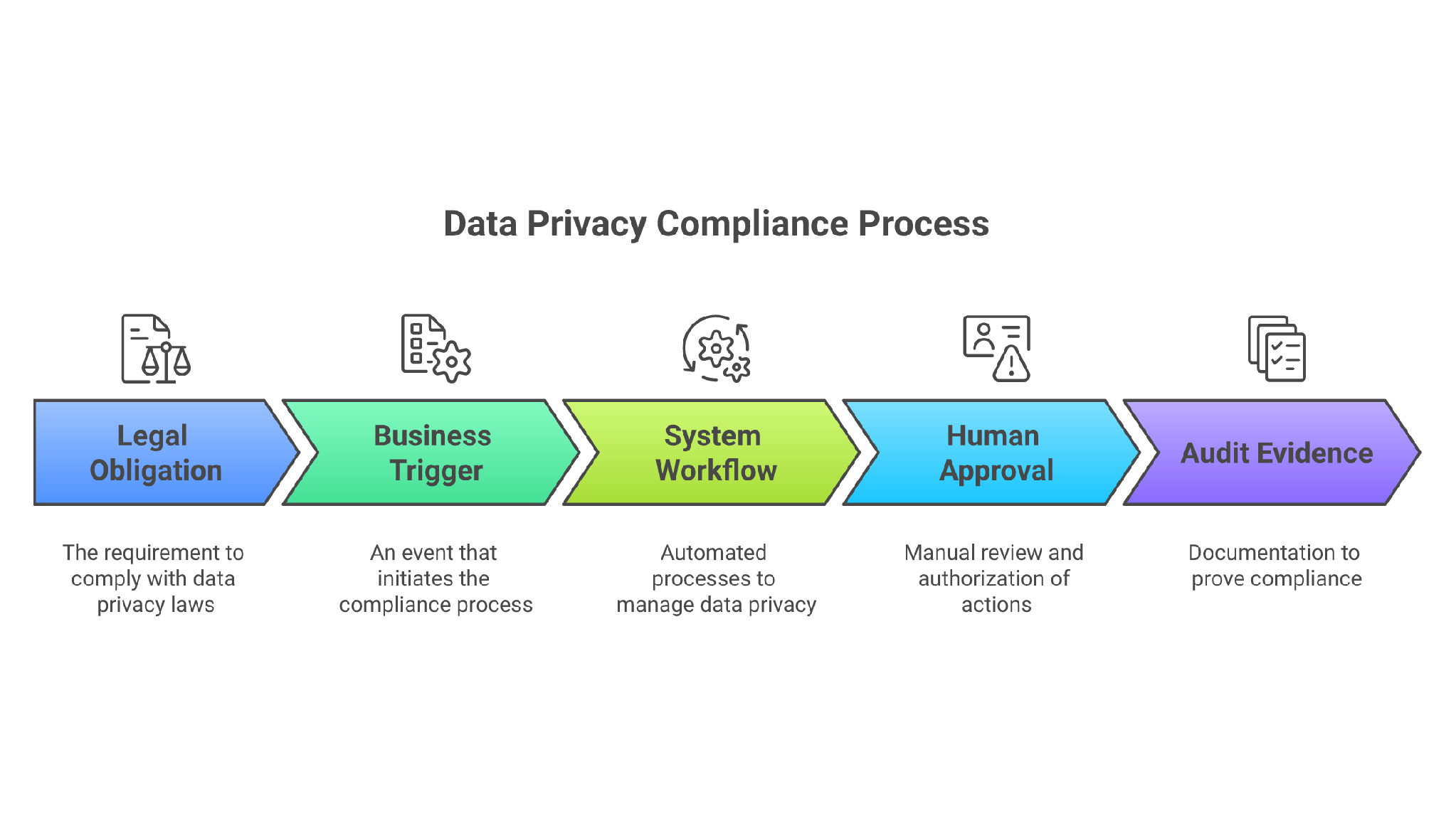
DPDPA Rules Status You Should Use While Comparing Tools
The current official Rules matter because they change tool selection from generic privacy management to operating workflow.
The Digital Personal Data Protection Rules, 2025 official Gazette PDF states in Rule 1 that Rules 1, 2, and 17 to 21 came into force on the date of publication in the Official Gazette. Rule 4 comes into force one year after that publication date. Rules 3, 5 to 16, 22, and 23 come into force eighteen months after that publication date.
That means a TrustArc alternative should not be evaluated only by feature names. It should be evaluated by whether it can prepare the workflows created by the Rules:
- Rule 3 of the Digital Personal Data Protection Rules, 2025: notice has to be understandable independently and give clear means for withdrawal, rights exercise, and complaint.
- Rule 4 of the Digital Personal Data Protection Rules, 2025: Consent Manager registration and obligations become a real operating concern, not just a consent banner feature.
- Rule 6 of the Digital Personal Data Protection Rules, 2025: safeguards include technical and organisational measures such as access controls, logs, backups, monitoring, and processor contract safeguards.
- Rule 7 of the Digital Personal Data Protection Rules, 2025: breach intimation has to support affected Data Principal notice and Board information, including detailed information within the prescribed window unless extended by the Board.
- Rule 14 of the Digital Personal Data Protection Rules, 2025: Data Principal rights need clear means and identifying particulars, which makes DSAR an intake, verification, routing, response, and evidence workflow.
5 Best TrustArc Alternatives For India DPDPA Teams
Here's are my top picks:
1. Redacto: Best For India-First DPDPA Compliance Workflows
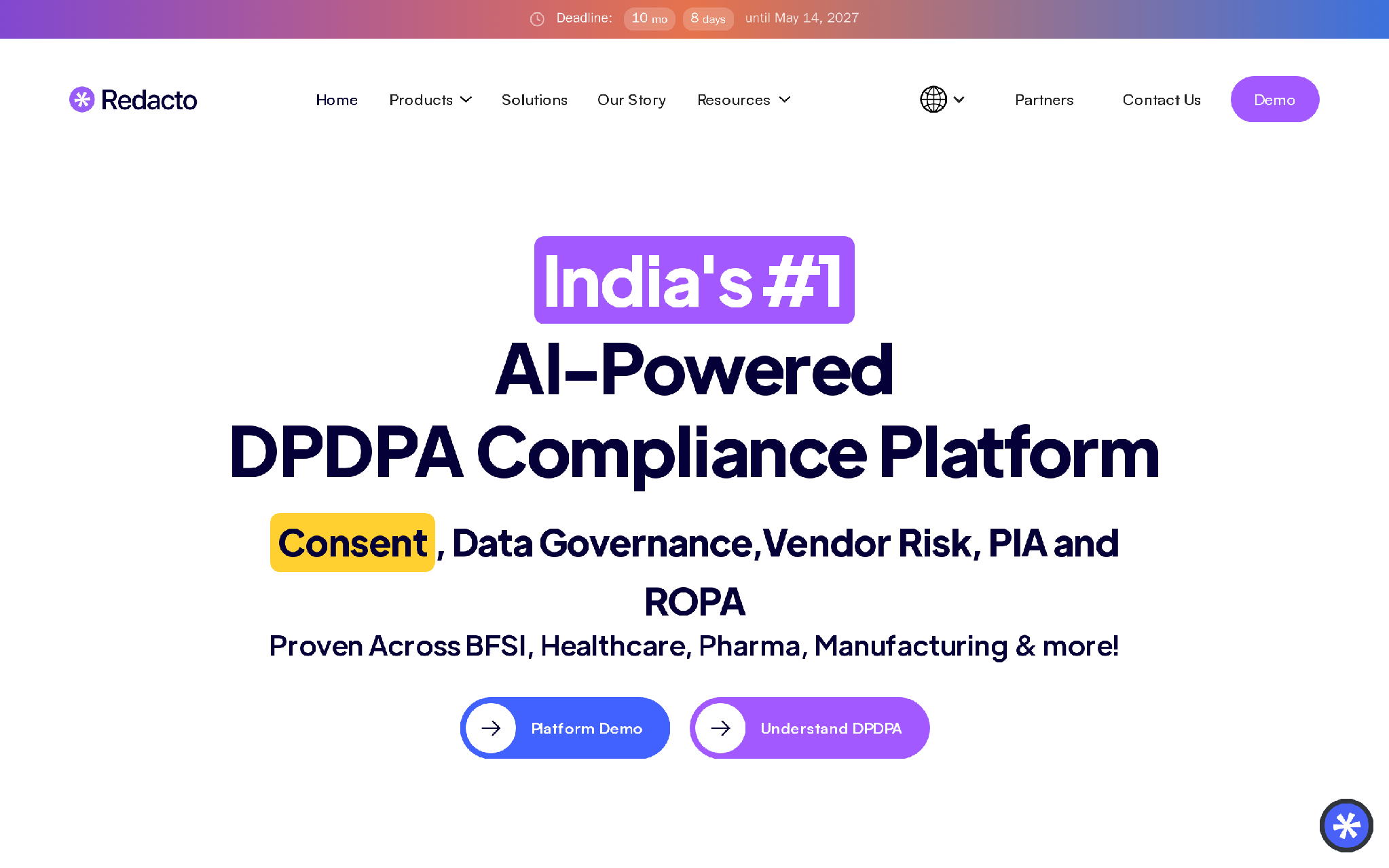
I am putting Redacto first for a specific reason: DPDPA is not a document problem anymore. It is an operating-system problem for Indian companies. The winning tool has to help the DPO prove how consent, DSAR, PIA, ROPA, vendor risk, discovery, and audit reporting actually moved through the business.
Redacto is built around that India-first operating trail. The point is not to create another policy library. The point is to know whether withdrawal reached downstream systems, whether a Data Principal request has an owner, whether a product change triggered a PIA, and whether procurement can show which processor handles which personal data category under the Digital Personal Data Protection Act, 2023.
Key features:
- Unified Consent Manager for consent capture and lifecycle records.
- Automated DSAR Management for request intake, routing, and evidence.
- Privacy Impact Assessment (PIA) Automation with Redacto-published 98.5% accuracy on AI-filled PIAs.
- AI-Driven Data Discovery & Mapping with intelligent tagging.
- Vendor Risk Management with Redacto-published 5X vendor risk assessment support.
- Audit & Reporting for DPDPA evidence.
- Anonymization & Pseudonymization for data protection workflows.
- CI/CD Privacy Scanner for product and engineering review points.
Pricing:
License-based; contact Redacto. Redacto does not publish fixed plan pricing.
Pros:
- Built for India-first DPDPA language, Data Principal workflows, and Indian enterprise operating evidence.
- Covers consent, DSAR, PIA, data discovery, vendor risk, anonymization, CI/CD privacy scanning, and audit reporting in one DPDPA-oriented operating model.
- Useful when the first problem is the full DPDPA operating trail across consent, PIA, DSAR, vendor, and evidence workflows.
- Natural fit for India-only or India-first teams where DPDPA readiness matters more than broad global privacy-program architecture.
Cons:
- Redacto has no public plan cards, so budgeting requires a vendor conversation.
- Redacto is India/DPDPA-first by design, so it may not be the right primary system if the requirement is a mature global privacy program across many jurisdictions.
- Redacto is a younger company than global incumbents, so buyers who need a long trail of public enterprise case studies should validate references carefully.
Choose Redacto if your Monday problem is evidence: consent logs, PIA records, DSAR queues, vendor registers, data maps, and audit reporting for Indian operations. This is the work we think Indian privacy teams need to get right before they debate larger global program architecture.
Do not choose Redacto as the primary system if your first requirement is a global privacy platform spanning dozens of regulatory regimes with deep legacy program maturity. In that scenario, use the decision guide below to shortlist a platform with broader global-program maturity.
2. OneTrust: Best For Global Privacy Programs That Also Need India Coverage
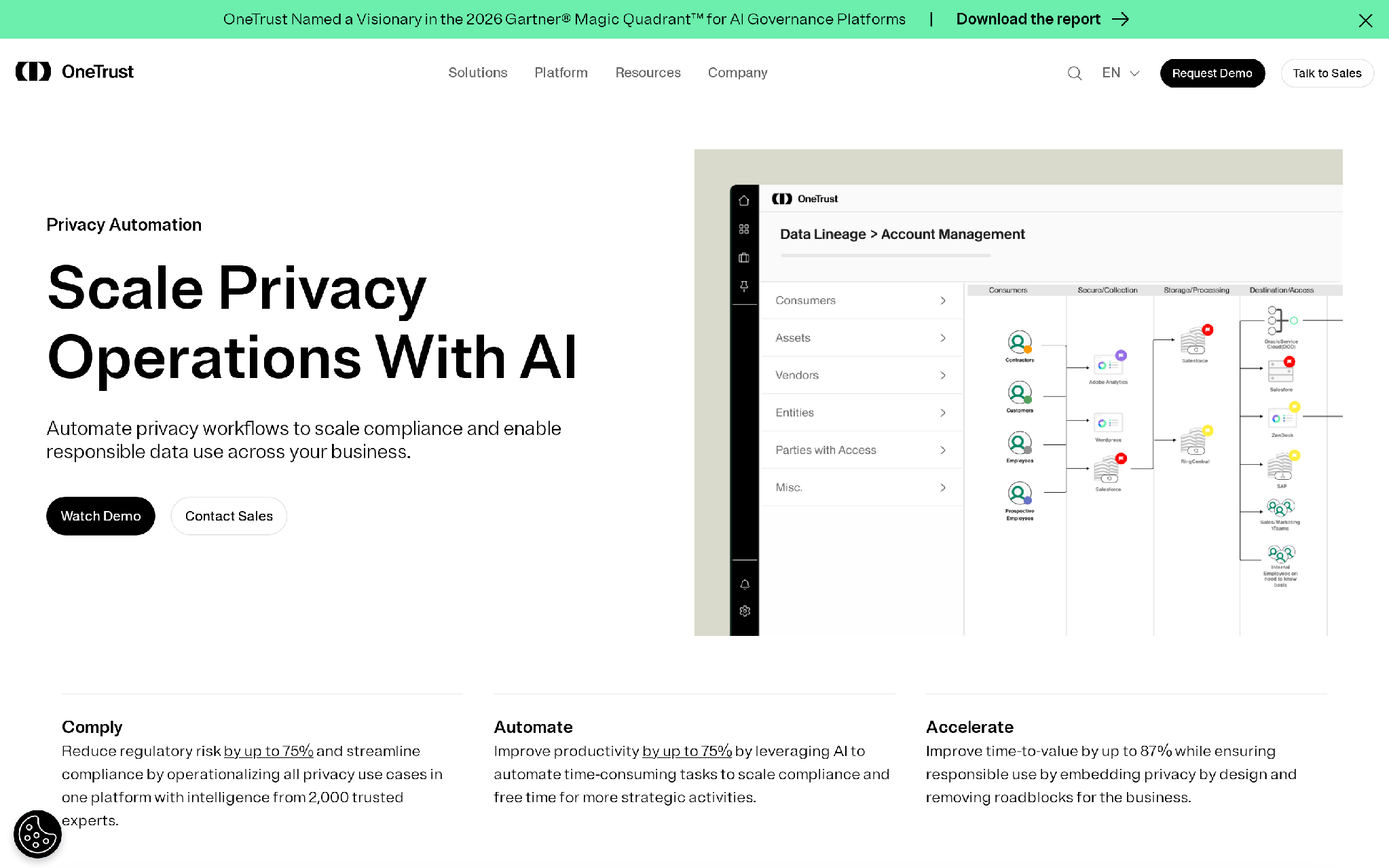
OneTrust is the alternative I would look at when India is one part of a wider privacy, AI governance, third-party risk, and consent program. It can be the sensible option when the privacy office already runs global controls and needs DPDPA added to an existing operating model.
Its privacy automation coverage includes privacy operations, DSAR automation, data and activity mapping, privacy risk assessments, incident response, and ROPA-style inventory. Its consent coverage includes geolocation-based banners, preference synchronization, APIs, SDKs, and integrations.
Key features:
- Privacy Operations for data mapping, privacy risk assessments, incident response, and privacy program activity.
- DSAR Automation from intake through fulfillment, including ID verification, data discovery, deletion, and secure response.
- Consent & Preferences for cookie banners, preference centers, APIs, SDKs, and downstream synchronization.
- Third-Party Management for vendor risk workflows from onboarding to offboarding.
- Regulatory intelligence through DataGuidance and OneTrust Copilot.
- Pricing and packaging page covering AI Governance, Consent & Preferences, Privacy Automation, Tech Risk & Compliance, and Third-Party Management packages.
Pricing:
Contact sales. OneTrust’s pricing page presents packaging areas and directs buyers to account executives or sales for customized proposals.
Pros:
- Useful for teams that need one global platform across privacy, AI governance, third-party management, and multiple jurisdictions.
- Well suited to established privacy offices where ROPA, DSAR, data mapping, and global regulatory intelligence already exist as internal functions.
- Helpful when the buyer wants privacy-program workflow, regulatory intelligence, and cross-border governance in the same buying motion.
- Gives buyers some package-level structure by separating pricing areas by solution family.
Cons:
- It can be heavy for an India-first team whose first job is DPDPA evidence rather than global privacy program management.
- Public pages describe broad regulation support, so buyers still need to validate exact DPDPA rule mappings, artifacts, and implementation timelines in demo.
- Pricing is proposal-based, which can slow Indian mid-market teams trying to budget quickly.
Choose OneTrust if your privacy program is already global and DPDPA is one operating layer inside a larger governance stack.
3. Securiti: Best For Data And AI Governance Teams With Privacy Automation Needs
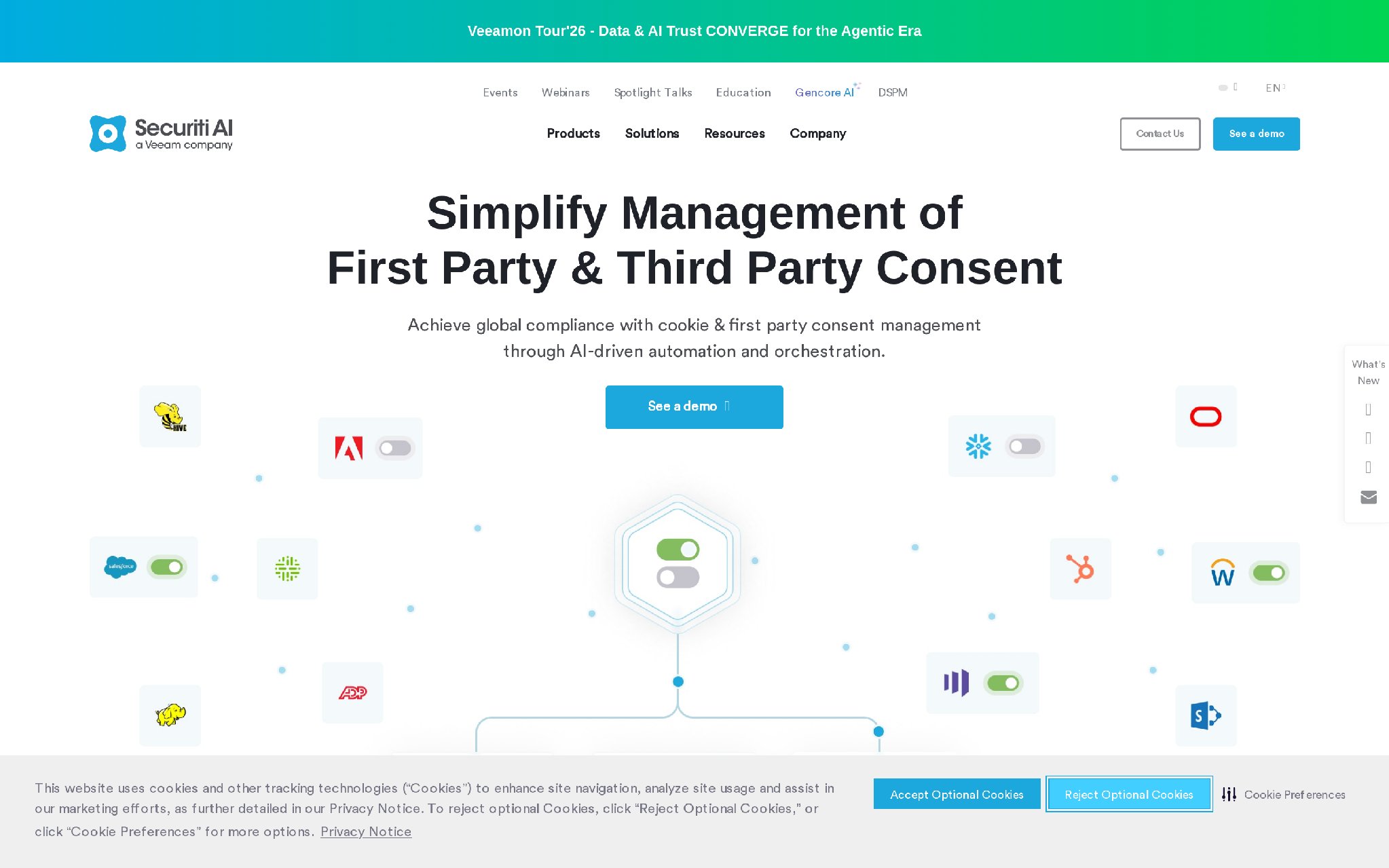
Securiti makes sense when privacy operations are tightly tied to data security, data governance, and AI risk. It is especially relevant for security and data teams that want sensitive-data intelligence, consent, DSR, and breach workflows connected to broader data controls.
Its consent coverage includes first-party and third-party consent lifecycle management, privacy notice workflows, mobile app consent, preference centers, and real-time dashboards. Its individual-rights coverage includes customizable request forms, identity verification, robotic assistance, data linking, reports, secure exchange, and audit logs.
Key features:
- Consent Management for first-party consent, third-party tracking consent, mobile app consent, dynamic privacy notices, and preference centers.
- Individual Data Rights for customizable DSR forms, identity verification, collaboration, reports, and secure exchanges.
- Data Mapping Automation and RoPA reporting from the broader privacy product menu.
- Assessment Automation for assessment lifecycle and compliance demonstration.
- Breach Management for incident management and notifications to users and regulatory bodies.
- Data Discovery & Classification and Data Security Posture Management for sensitive-data visibility.
Pricing:
Contact sales. Public product pages direct buyers to demo/contact flows rather than fixed plan cards.
Pros:
- Useful for you if you want privacy controls connected to data security, data discovery, and AI governance.
- Strong fit where the central buyer is the data security or AI governance team rather than only the DPDPA program owner.
- Good depth for programs that include hybrid cloud, SaaS, unstructured data, access controls, and AI usage.
- DSR workflow detail is visible across identity verification, secure exchange, collaboration, and audit logs.
Cons:
- Its public positioning is not India-first, so DPDPA-specific rule artifacts need demo validation.
- They emphasizes on global privacy and data/AI governance breadth, which may be more than a DPDPA implementation team needs in its first phase.
- Pricing is not publicly fixed, so commercial evaluation requires a structured RFP.
Choose Securiti if your privacy program has to sit close to data security, AI governance, and sensitive-data controls.
Also Read - 5 Best Securiti.ai Alternatives for DPDPA Compliance in Indian Enterprises
4. BigID: Best For Data Discovery-Led Privacy Programs
BigID is the clearest pick when the DPDPA blocker is data visibility. If the DPO cannot answer where personal data lives, which systems hold it, how it maps to an individual, or whether deletion was actually completed, the workflow problem starts inside the data estate.
Its privacy automation coverage includes DSR fulfillment, consent governance, global compliance, data discovery and mapping, ROPA, PIAs, and a self-service privacy portal. Its data-rights coverage includes identity-aware personal data mapping, access and deletion workflows, deletion validation, and regulator or consumer reporting.
Key features:
- Identity-aware data mapping across structured, unstructured, cloud, on-prem, production, development, and AI data sources.
- DSR and Data Rights Fulfillment with access, deletion, verification, status updates, and report generation.
- Consent and Preference Management to centralize consent, sync preferences, and enforce choices across systems.
- RoPA and PIA Automation for processing records, assessment workflows, risk context, approvals, and remediation.
- Data Lifecycle Management, minimization, and deletion policies.
- Cross-Border Data Transfer Intelligence for residency and transfer monitoring.
- Third-Party Risk and Vendor Management for vendor data access visibility.
Pricing:
Contact sales. BigID’s public privacy pages route buyers to demo requests rather than fixed plan cards.
Pros:
- Useful when the hardest part of compliance is finding, classifying, and connecting personal data across complex systems.
- Strong fit for multinational enterprises that need data-discovery depth across large cloud, unstructured, and AI data estates before DPDPA workflows can work.
- Good for DSAR accuracy because rights fulfillment depends on identity-aware personal-data mapping.
- PIA workflows connect to data intelligence, risk signals, owners, and remediation rather than staying as static questionnaires.
Cons:
- BigID is not DPDPA-first in public positioning, so buyers need to map its workflows carefully against Section 8 obligations of the Digital Personal Data Protection Act, 2023 and Rules 3, 6, 7, and 14 of the Digital Personal Data Protection Rules, 2025.
- It may be more platform than needed if the first phase is consent, notice, DSAR routing, PIA, and vendor evidence for India.
- Pricing is not publicly fixed, which makes early budgeting hard without a defined data-source and workflow scope.
Choose BigID if your privacy team cannot evidence DPDPA compliance because the enterprise cannot reliably map personal data to people, systems, vendors, and deletion actions.
5. Privy By IDfy: Best For Indian Regulated Enterprises That Want DPDP Implementation Depth
Privy by IDfy deserves attention from Indian regulated enterprises because its public messaging is built around DPDP implementation rather than generic privacy management. That matters for BFSI, insurance, NBFC, fintech, telecom, e-commerce, and consumer teams where consent, rights, incidents, vendors, and audit evidence have to fit Indian operating reality.
Its product coverage includes Consent Lifecycle Management, Continuous Compliance and Risk Management, and Personal Data Discovery and Governance. It also lists consent governance, Data Principal Rights Management, Cookie Manager, PIAs, Incident Management, Third-Party Risk Management, Data Compass, and audit evidence.
Key features:
- Consent Governance Platform for consent management and withdrawal.
- Data Principal Rights Management for access, correction, deletion, withdrawal, and grievance workflows.
- Cookie Manager for tracker categories, user preferences, and consent records.
- Data Compass for personal-data discovery, classification, mapping, and monitoring.
- Privacy Impact Assessments for products, processes, systems, campaigns, and vendors.
- Incident Management for intake, severity classification, assignment, escalation, remediation, closure, and audit logs.
- Third-Party Risk Management for vendors and processors handling personal data.
Pricing:
Contact sales. Privy does not publish fixed plan cards on its public page.
Pros:
- Clear India-specific DPDP positioning for regulated enterprises.
- Public messaging emphasizes regulated-industry adoption and enterprise references.
- Covers rights, PII discovery, PIAs, incidents, TPRM, cookies, and audit evidence.
- Good fit when the buyer wants Indian DPDP workflows rather than broad global privacy governance.
Cons:
- Buyers should validate whether the platform covers their required India-first operating evidence across consent, rights, incidents, vendors, data discovery, and audit records.
- Privy is less suitable if the dominant requirement is global privacy-program breadth or deep data-discovery scale outside India.
- Pricing is contact-sales only, so buyers still need a scope-based commercial evaluation.
Choose Privy if you want an Indian DPDP implementation platform with strong regulated-industry positioning and a connected privacy operating model.
Decision Guide: Which TrustArc Alternative Should You Shortlist?
My advice is to shortlist by failure point, not by vendor category. Ask where your DPDPA workflow breaks first, then pick the platform that fixes that break with the least manual reconciliation.
Choose Redacto if the Indian DPO or CISO needs a DPDPA operating system for consent, DSAR, PIA, ROPA, vendor risk, and audit reporting. This is the best first shortlist item for India-first teams.
Choose OneTrust if DPDPA is one part of a global privacy program and the team already has privacy-ops maturity across multiple countries.
Choose Securiti if privacy has to sit close to data security, AI governance, breach impact, and sensitive-data controls.
Choose BigID if the blocker is data visibility: where personal data lives, who it belongs to, which systems hold it, and whether deletion or minimization actually happened.
Choose Privy by IDfy if you want an India-focused DPDP platform with strong regulated-enterprise positioning and connected consent, rights, incidents, vendor, and evidence workflows.
What To Ask Every Vendor Before Replacing TrustArc
Before buying any TrustArc alternative, make the vendor walk through the same workflow questions. A demo that cannot answer these questions is not a DPDPA demo; it is a product tour.
- Can you show how a consent notice, purpose, consent capture, withdrawal, and downstream suppression are connected?
- Can you map this workflow to Section 6 of the Digital Personal Data Protection Act, 2023 and Rule 3 of the Digital Personal Data Protection Rules, 2025?
- Can a Data Principal request enter through email, web form, support, or app flow and still land in one evidence trail?
- Can the system show personal data categories, processing purpose, system owner, vendor, processor contract, and retention rule?
- Can it support reasonable security safeguard evidence under Section 8(5) of the Digital Personal Data Protection Act, 2023 and Rule 6 of the Digital Personal Data Protection Rules, 2025?
- Can it produce a breach timeline and Board-facing record under Section 8(6) of the Digital Personal Data Protection Act, 2023 and Rule 7 of the Digital Personal Data Protection Rules, 2025?
- Can it export audit evidence without requiring the DPO to reconcile spreadsheets manually?
- What is not included in the first commercial proposal?
Final Recommendation
If you are evaluating TrustArc alternatives for India, start with the evidence you will be asked to produce. Not the slide deck. Not the checklist. The evidence.
Redacto should be the first shortlist item when DPDPA compliance is the main job because it is built around India-first privacy operations: consent, DSAR, PIA, ROPA, vendor risk, discovery, and audit evidence. But Redacto is not the universal answer.
OneTrust can win when the privacy program is global and mature. Securiti can win when data and AI controls drive the buying decision. BigID can win when data discovery is the real blocker. Privy can win when an Indian regulated enterprise wants DPDP implementation depth with visible industry references. Seqrite can win when security owns the program and wants privacy close to discovery, classification, and breach workflows.
This week, take one high-risk journey: customer onboarding, patient registration, loan processing, employee KYC, or vendor onboarding. Trace the obligation from notice to consent, processing purpose, vendor sharing, DSAR path, retention rule, and evidence export. The tool that can show that chain with the least manual reconciliation deserves the first demo.