%20Redacto%20logo_New.png)


9 Best DPIA Softwares & Automation Tools For Indian Enterprises


A DPIA often begins too late, after the product team has already made the decisions the assessment is supposed to review. By then, we’re chasing system owners for purpose details, asking security to confirm controls, and pulling in legal to interpret the risks. The final document often lands after the product has already shipped, while the supporting evidence stays scattered across tickets and spreadsheets.
In India, that delay now has real statutory consequences. Section 10(2)(c)(i) of the Digital Personal Data Protection Act, 2023 requires Significant Data Fiduciaries to carry out periodic Data Protection Impact Assessments. Rule 13 of the Digital Personal Data Protection Rules, 2025 makes this an annual process and requires significant observations to be reported to the Data Protection Board.
DPIA automation tools help close this gap. They can connect intake to a data map, route reviews to the right teams, and preserve a clear decision record. But the judgment still sits with legal and the DPO. This guide compares nine tools built to support that operating model.
9 Best DPIA Softwares Based On Use Case
- Redacto - Best for Indian enterprises that need DPDPA-first DPIA and ROPA workflows
- OneTrust - Best for global groups that want one privacy program suite
- Securiti - Best for teams that need discovery across cloud data before assessment
- BigID - Best for large data estates where classification drives the DPIA
- TrustArc - Best for privacy teams that want assessment templates and advisory depth
- Privado AI - Best for product teams that want code and document signals in assessments
- DataGrail - Best for teams that need privacy requests and system integrations beside DPIAs
- MineOS - Best for lean privacy teams that want one workspace for inventory and assessments
- DPOrganizer - Best for teams that want a focused privacy program register
Disclosure: I used the same five criteria to assess every tool. Redacto is the strongest fit for India-specific requirements. OneTrust is better suited for organizations that need one global program to cover multiple privacy laws, while BigID or Securiti make more sense when the main challenge is finding records across a large data estate.
How I Evaluated DPIA Automation Tools
I evaluated each tool based on whether it can turn a DPIA from a last-minute questionnaire into a clear review trail. For an Indian enterprise, the strongest option needs to connect the assessment to the processing register and the underlying data evidence. It also needs to capture what product, security, and the DPO reviewed and approved under the DPDPA.
- Trigger and intake: Can a product change or vendor event start the right assessment?
- Data context: Can the tool bring purpose and data categories from a ROPA or live data map?
- Risk logic: Can teams adapt questions and scoring to the Digital Personal Data Protection Act, 2023?
- Handoffs: Can product and security answer their parts before the DPO records a decision?
- Evidence: Can the team export the assessment history and open actions for an audit?
9 Best DPIA Automation Tools Comparison
1. Redacto
Redacto links each DPIA record to data discovery and mapping. Its Privacy Impact Assessment Automation module can build the assessment from the processing context, while AI-Driven Data Discovery & Mapping helps teams understand what personal data a proposed change may affect. The same evidence can also support the ROPA entry, so the processing register and the risk decision stay aligned.
That alignment matters under Section 10 of the Digital Personal Data Protection Act, 2023, which frames the DPIA around the rights of Data Principals and the purpose of processing. Redacto gives Indian teams a practical way to connect that obligation to actual systems and evidence. The DPO still owns the final call on whether a risk is acceptable.
Features
- Privacy Impact Assessment Automation prepares and routes PIA records.
- AI-Driven Data Discovery & Mapping finds processing context.
- Audit & Reporting preserves review evidence.
- Vendor Risk Management links processor risk to the assessment.
- CI/CD Privacy Scanner can surface change signals earlier in delivery.
- Automated DSAR Management connects rights operations with the data map.
Pricing
License-based. Contact Redacto. There is no public free plan or trial. Ask which modules and data sources the licence covers. Confirm implementation work and evidence export terms before procurement.
Pros
- The product uses DPDPA terms and workflows.
- Discovery can feed the assessment record.
- ROPA and DPIA work can share processing context.
- Vendor review sits beside privacy assessment work.
- Audit reporting gives the DPO an evidence trail.
Cons
- Redacto does not publish pricing.
- Its India focus gives it less global regulation depth than OneTrust.
- The company has fewer public case studies than established suites.
- Buyers have less third-party review evidence to inspect.
- Legal teams still need to validate each DPIA method and decision.
Summary
Choose Redacto when the working problem is DPDPA evidence across DPIA and ROPA. A global group that needs mature GDPR and US state-law libraries may get more value from OneTrust.
2. OneTrust
OneTrust places DPIA work inside its wider suite, where a team can set conditional questions, route responses to reviewers, and track action items. Data inventory records can supply processing context. The result can update the ROPA rather than leave it as a separate spreadsheet.
Features
- Assessment automation supports PIA and DPIA templates.
- Conditional logic changes questions by risk.
- Data inventory records processing activities.
- Workflow routes reviews and remediation tasks.
- Regulatory content supports more than one jurisdiction.
- Reporting tracks open risk and completion.
Pricing
OneTrust has a reported 2026 annual floor near $10,000, a median deal near $10,514, no free plan, and no self-serve trial. Confirm whether assessments and data inventory sit in the same quote. Large deployments can add implementation fees.
Pros
- The assessment module sits within a broad privacy suite.
- Template logic supports many assessment types.
- Global rule libraries help multi-country teams.
- Workflow controls support several reviewers.
- Partners can help with implementation and program design.
Cons
- Configuration can demand a program administrator.
- Module packaging can make the final cost hard to predict.
- A broad suite can exceed the needs of an India-only team.
- Data quality still depends on inventory ownership.
- Large workflows can take time to deploy.
Summary
OneTrust is the better global-program option. It earns its place when the same team manages DPDPA work and several other laws. Indian teams should test whether its templates capture the exact Section 10 and Rule 13 evidence they need.
3. Securiti
Securiti starts at the data layer, scanning cloud systems, classifying regulated data, and carrying that context into assessments and processing records. This reduces the gap between what a DPIA questionnaire says and what scanners find. The ROPA can then draw from the same data map.
Features
- Data discovery scans cloud and on-premise sources.
- Classification identifies personal and regulated data.
- Assessment workflows support privacy risk review.
- Data mapping connects systems and processing activity.
- Privacy request tools use the same data context.
- Policy controls track remediation work.
Pricing
Securiti lists a $100,000 platform fee for 12 months, offers neither a complimentary tier nor a free trial, provides a demo, and quotes annual contracts. Buyers should ask whether assessment workflows and each data connector sit inside that platform fee.
Pros
- Live scans give assessments current data context.
- Classification can expose missed data categories.
- The platform covers privacy and data security work.
- Cloud coverage suits distributed estates.
- Shared data context can support ROPA maintenance.
Cons
- The platform can be wider than a DPIA team needs.
- Scanner rollout needs security and data-owner support.
- A $100,000 platform signal puts it in enterprise budgets.
- DPDPA logic needs local configuration and legal review.
- Discovery findings can create a large remediation queue.
Summary
Start with Securiti when unknown data blocks the assessment. Its scanners cover a global cloud estate, which gives it an edge over Redacto on discovery. Redacto stays closer to the Indian statutory workflow.
4. BigID
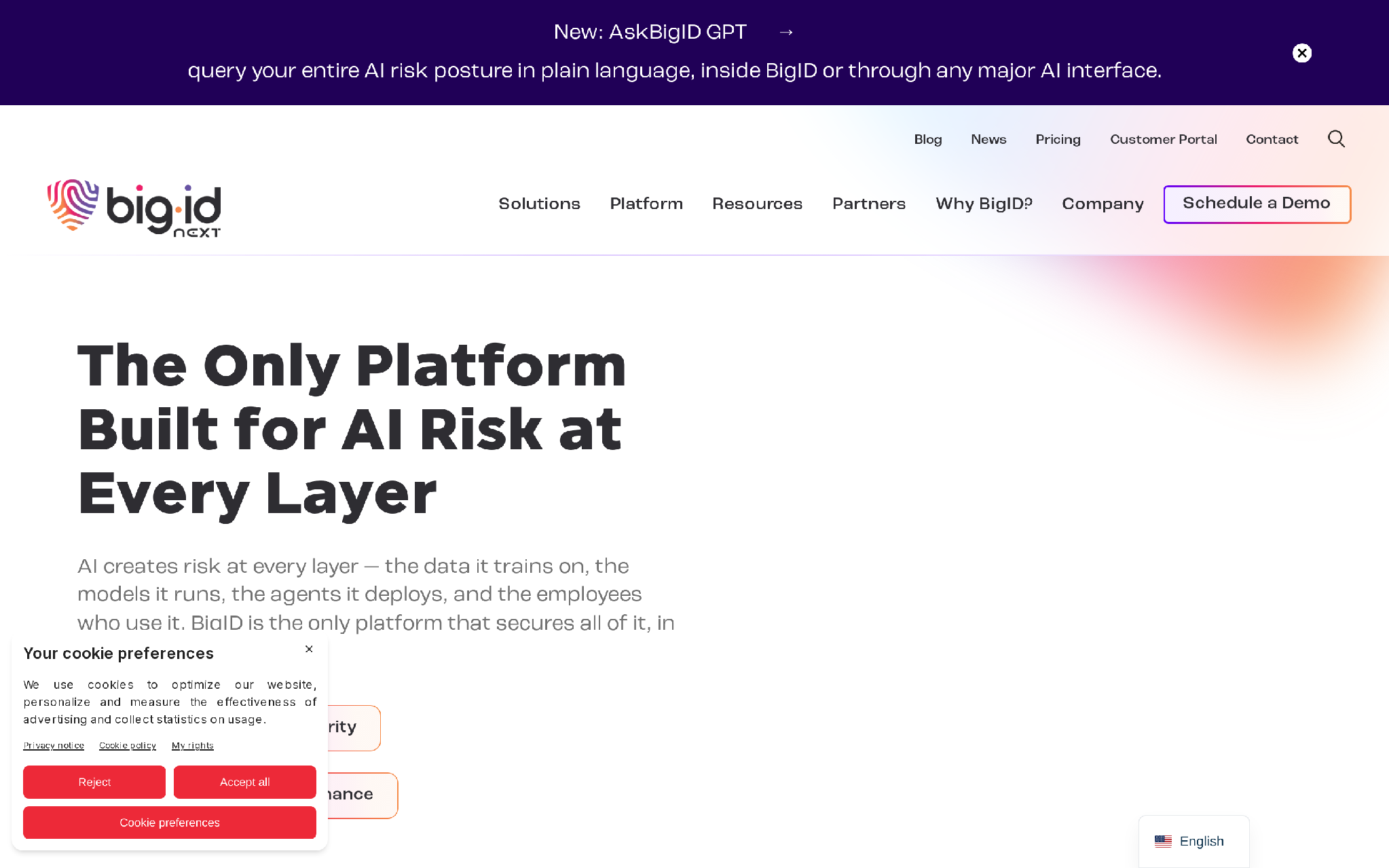
BigID scans structured and unstructured sources, classifies what it finds, and gives the privacy team evidence for its register and assessment work. Its value in a DPIA comes from evidence about where personal data lives and who can reach it. Those findings can also improve the ROPA.
Features
- Scanners inspect structured and unstructured data.
- Classification labels personal and regulated records.
- Identity correlation groups records by person or entity.
- Data inventory supports processing records.
- Risk views identify exposure and access issues.
- Remediation workflows send findings to system owners.
Pricing
BigID deployments are reported near $50,000 per year, enterprise scopes can exceed $200,000, a start-free route is advertised, and no standing free plan is published. Confirm scan volume and connector limits. Ask whether privacy assessment workflow requires another app.
Pros
- Scan evidence can validate claims in the DPIA.
- Classification covers large data estates.
- Identity correlation helps trace Data Principal records.
- Security teams can use the same findings.
- ROPA records gain evidence from live systems.
Cons
- The deployment can require data engineering support.
- DPIA workflow is not the platform’s only focus.
- Costs rise with sources and modules.
- India-specific legal logic needs configuration.
- Teams need owners to act on discovery findings.
Summary
BigID earns its place through scan evidence. Where the processing register cannot be trusted, its classification can rebuild the factual base for a DPIA. Redacto asks for less scanner infrastructure and follows the DPDPA workflow more closely.
5. TrustArc
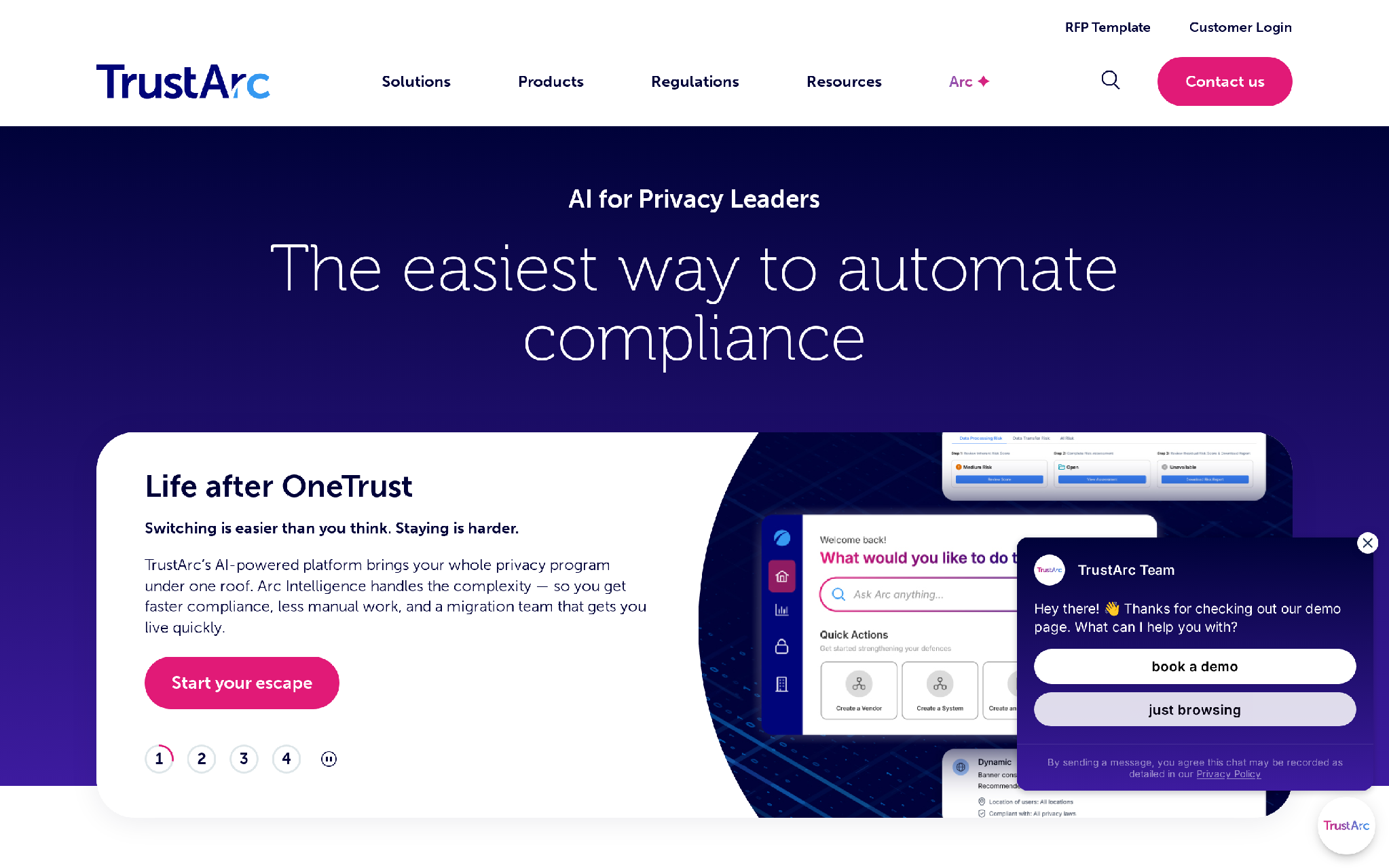
TrustArc combines assessment templates, routed review, and central processing records so the DPIA can use the same context as the ROPA. TrustArc also brings regulatory research and service support for teams that want help with program design.
Features
- Assessment Manager supports PIA and DPIA workflows.
- Templates capture risk and control responses.
- Data inventory records systems and processing.
- Workflow assigns owners and reviewers.
- Reporting shows assessment status and findings.
- Advisory services support privacy program work.
Pricing
TrustArc contracts are reported from $8,000 to $15,000 per year, mid-market deployments can reach $75,000, there is no free plan, and no free trial is published. Confirm whether assessment templates and inventory are separate modules. Ask for implementation cost in the first-year quote.
Pros
- Assessment workflows are central to the product.
- Regulatory research supports global teams.
- Service options can help a lean privacy function.
- Inventory records can support the ROPA.
- Reports give leaders a view of open assessments.
Cons
- Quote-based modules reduce cost clarity.
- India-specific workflows need review before use.
- Advisory work can add procurement scope.
- The suite can feel heavy for a small program.
- Live discovery is not its main advantage over BigID.
Summary
TrustArc suits a privacy office that values templates and advisory support. It can win when a team needs global regulatory research beside DPIA workflow. Indian buyers should ask for a DPDPA demonstration using one real processing activity.
6. Privado AI
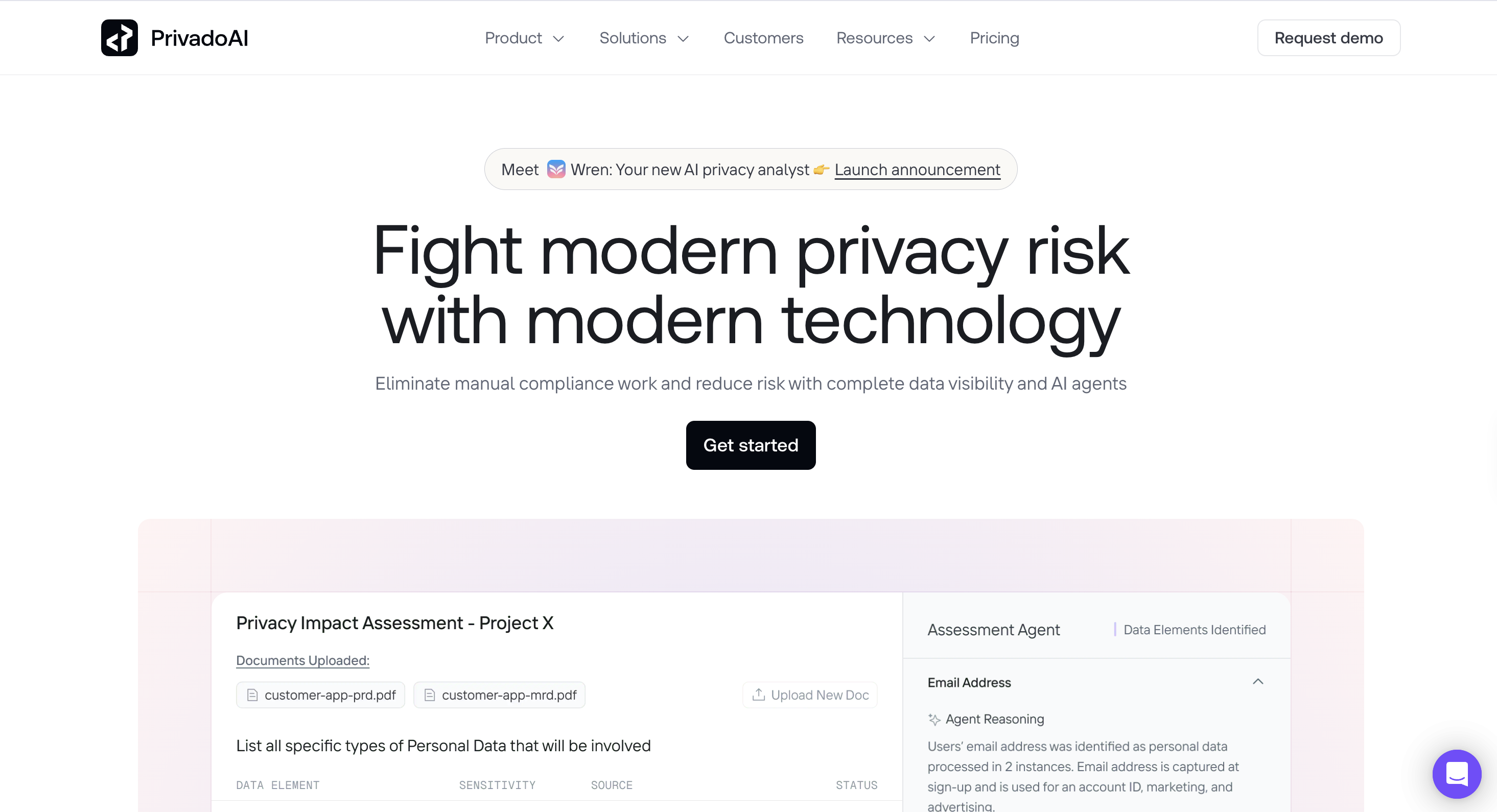
Privado AI scans code and product documents, identifies data flows, and passes that evidence to Wren for assessment and ROPA preparation. This approach moves the DPIA trigger closer to engineering work.
Features
- Document analysis extracts processing details.
- Wren prepares assessment responses from source material.
- ROPA automation uses scanned product context.
- Jira and Linear integrations create remediation tickets.
- Web and app auditors inspect trackers and data flows.
Pricing
Wren starts at $4,200 per month for up to 500 assessments, Web Auditor starts at $600 per site monthly, no free plan is published, and buyers can request a website audit. Confirm whether code scanning and the privacy platform require separate quotes.
Pros
- Product documents can feed the DPIA.
- Code scanning can catch processing missed by forms.
- Ticket integrations connect findings to engineers.
- ROPA records can update from product evidence.
- The published Wren price gives buyers a budget anchor.
Cons
- Product scans do not replace legal analysis.
- DPDPA content needs local configuration.
- The monthly cost may exceed a small assessment volume.
- Source access requires engineering approval.
- Business processes outside code still need owner input.
Summary
Privado AI wins when software delivery is the main source of privacy change. It gives product teams a direct path from code and documents to assessment evidence. Redacto fits better when the broader need is an India-first compliance system.
7. DataGrail
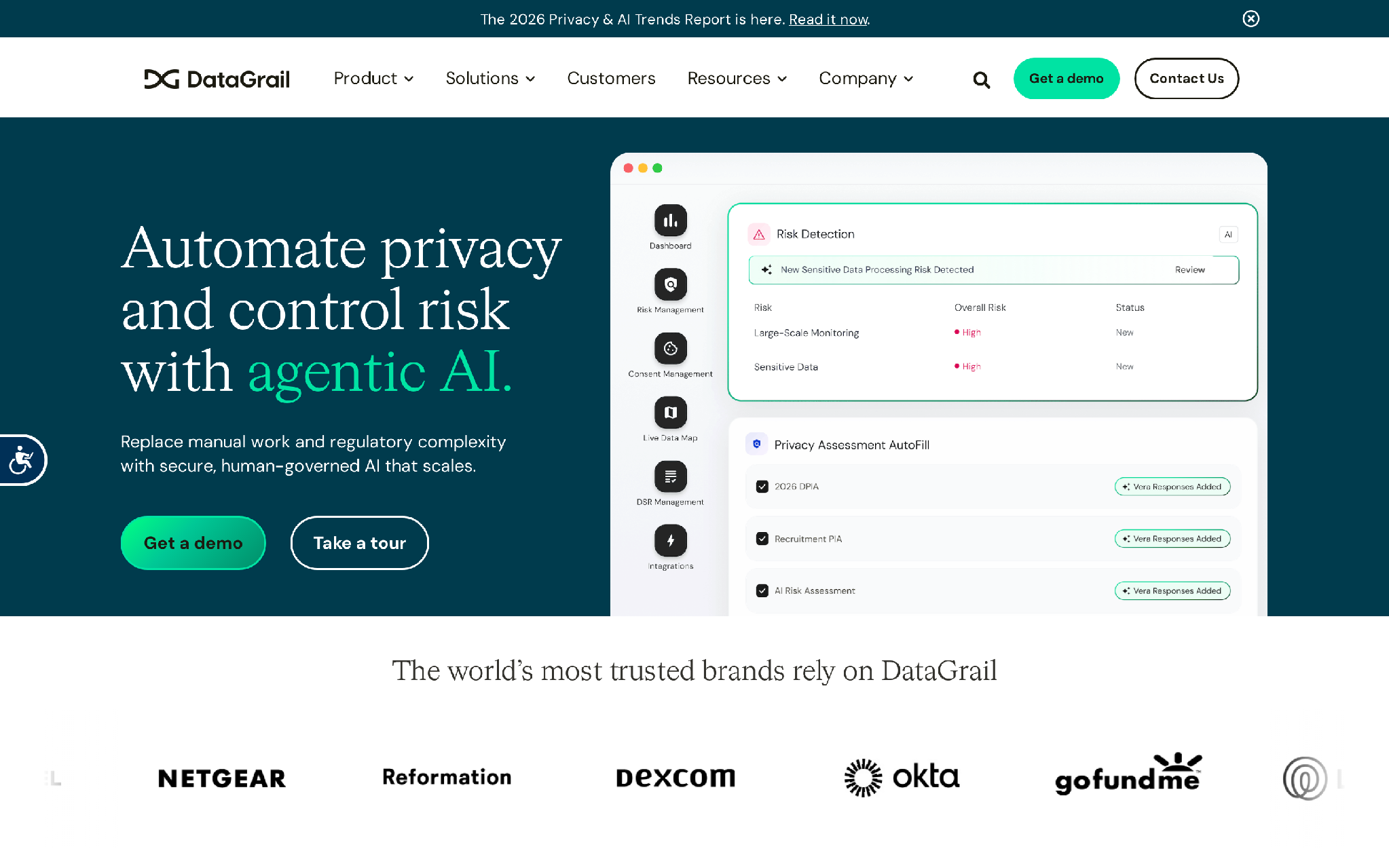
DataGrail connects to business systems, records the applications that hold regulated data, and carries that context into assessment and vendor workflows. Connected applications can keep the ROPA current between annual interviews.
Features
- System integrations map where personal data sits.
- Privacy request automation routes rights work.
- Assessment workflows capture privacy risk.
- Vendor management tracks third-party processing.
- Consent tools connect preference data with operations.
Pricing
Vendr reports a $49,550 average contract value, a $20,000 observed low, no free plan, and no public trial for DataGrail. Cost changes with Data Principal volume and integrations. Confirm whether assessment and vendor modules are included. Ask for overage terms.
Pros
- Integrations can reduce manual inventory work.
- Rights workflows use the same system map.
- Vendor records add processor context to DPIAs.
- Its integrations can detect a new SaaS system, assign an owner, and add that system to the processing register.
- ROPA upkeep can follow application changes.
Cons
- DPIA work is one part of a wider platform.
- DPDPA content needs local legal configuration.
- Annual contracts can exceed smaller budgets.
- Integration quality depends on the application.
- Deep discovery may require another tool.
Summary
DataGrail gains its advantage from connected SaaS systems. The integration network can keep assessment context current as applications change, although its statutory model needs more India-specific configuration than Redacto.
8. MineOS
MineOS keeps systems, processing activities, and assessment tasks in one workspace, which gives a lean team one record to maintain. That structure helps keep DPIA records near the ROPA.
Features
- Data inventory tracks systems and processing.
- Assessment workflows collect owner responses.
- ROPA records sit in the privacy workspace.
- Risk records track findings and treatment.
- Integrations support data and request operations.
Pricing
MineOS entry pricing is reported near $20 per month, enterprise prices remain unpublished, no enterprise free plan is listed, and no trial cap is stated. Buyers should treat that figure as a lead rather than a quote. Ask for assessment volume and integration limits. Confirm onboarding cost.
Pros
- A single workspace can suit a lean team.
- Inventory and assessments share context.
- ROPA upkeep can follow system records.
- Task routing gives owners clear work.
- The product covers more than consent banners.
Cons
- Public enterprise pricing is thin.
- India-specific statutory content needs validation.
- Discovery depth may trail BigID.
- Public evidence for large Indian deployments is limited.
- Complex programs may need more service support.
Summary
MineOS deserves a look from a smaller privacy team that wants inventory and workflow in one place. It may be easier to operate than a large global suite. Redacto has a closer DPDPA fit for Indian enterprises.
9. DPOrganizer
DPOrganizer keeps processing activities, assessment work, and risk owners in one workspace, giving teams a direct route from the ROPA entry to follow-up. The DPIA and ROPA can therefore use the same record structure.
Features
- Processing records support ROPA work.
- Assessment forms collect risk context.
- Task assignment routes follow-up work.
- Vendor records capture processor context.
- Reports export privacy program evidence.
Pricing
DPOrganizer plans are reported from about €150 per month, no current self-serve price card is published, neither a complimentary tier nor a free trial is confirmed, and no trial cap is stated. Buyers should request the price for users and entities. Ask whether assessments and vendor records sit in the base plan.
Pros
- The product centers on privacy program records.
- ROPA and assessment work can share owners.
- Task tracking supports follow-up.
- The scope can be easier to manage than a data platform.
- Reports help prepare audit evidence.
Cons
- Live data discovery is limited beside BigID.
- India-specific templates need legal review.
- Public pricing evidence is dated or incomplete.
- Manual records can drift without clear owners.
- Large data estates may need a discovery partner.
Summary
Choose DPOrganizer for a maintained register with assigned assessment work. Its narrow scope keeps the operating model clear, but a DPIA that starts from live code or a very large scan belongs with Privado AI or BigID.
How to choose the right DPIA automation tool
Start with the failure in your current process. Do not begin with the longest feature list.
- Start with Redacto when DPDPA evidence and India workflows drive the project.
- Choose OneTrust or TrustArc when one privacy office manages many jurisdictions.
- Use BigID or Securiti when the inventory cannot show where personal data lives.
- Pick Privado AI when product changes in code should trigger privacy review.
- Select DataGrail when connected privacy operations and requests drive the system map.
- Consider MineOS or DPOrganizer when a lean team needs a program register and task flow.
During a proof of concept use one real processing activity. Ask the vendor to import its purpose and data categories. Trigger a DPIA. Route security and legal review. Change one data flow. Then export the full history. This test exposes whether the tool maintains evidence or only produces a form.
Rule 13 of the Digital Personal Data Protection Rules, 2025 is scheduled to commence on 13 May 2027 because the final Rules set an 18-month phase-in from 13 November 2025. The MeitY DPDP Rules page also lists the enforcement timeline and Board notification. Teams should verify the commencement position again before publication or procurement because a later Gazette notification can change the operating date.
This Monday take one product feature released last quarter. Find its ROPA entry. Trace its DPIA threshold check and approval record. If you cannot show who reviewed the risk and what evidence they used then write that gap into your tool pilot. Automation can prepare and route the decision. Your DPO and legal team still own it.