%20Redacto%20logo_New.png)


5 Best KavachOne (ConsentiQo) Alternatives For Data Privacy and Compliance


I often see a consent record marked complete while the work behind it is still broken. You withdraw consent in an app but the old preference remains in another system. When you ask for a copy of your data the request can sit in an inbox with no clear owner.
You feel the gap when someone asks for proof. You need to show when the request arrived and who handled it. You also need a record of where the change went. If you cannot trace that path you are left rebuilding the history after the fact.
Rule 3 of the Digital Personal Data Protection Rules, 2025 also turns notice into a working interface for withdrawal and rights requests. The bare Digital Personal Data Protection Act, 2023 and the notified Digital Personal Data Protection Rules, 2025 set the legal baseline.
ConsentiQo covers purpose-based consent. It also supports Indian languages and downstream enforcement. A team may still need an alternative when the wider job includes data discovery, PIA records, vendor reviews, global regulation, or a lower-cost website banner. The five tools below solve different parts of that problem.
TL;DR
- Redacto: Best for Indian enterprises that need one DPDPA operating layer across consent and privacy work.
- Privy by IDfy: Best for regulated Indian enterprises that want privacy governance backed by identity infrastructure.
- OneTrust: Best for global companies that manage several privacy regimes and risk programs.
- Usercentrics: Best for teams that manage consent across many websites or apps.
- CookieYes: Best for smaller teams that need a clear website consent budget.
Why teams look beyond KavachOne (ConsentiQo)
ConsentiQo is a credible fit when consent capture is the main problem. It supports purpose-based records across web and mobile. It also covers cookie scanning and Data Principal requests. Its 22-language support fits Indian consumer journeys.
The switching case starts when consent becomes one step in a larger privacy program, because a CISO may need to discover personal data, classify its use, and set purposes before collection begins.
A DPO may need a PIA approval trail, procurement may need a live vendor register, and a multinational may need one control model across India and other jurisdictions.
This distinction prevents a bad comparison. CookieYes is a focused website tool and OneTrust is an enterprise governance suite; neither one can replace every ConsentiQo workflow because each solves a different compliance job with a different implementation burden. The required record defines the choice.
How I evaluated these alternatives
I evaluated each option as compliance management software rather than as a banner alone. The test was whether a privacy team could trace an obligation into a system action and then export evidence of the result.
- DPDPA workflow depth: Does the product connect notice and consent to withdrawal or rights work?
- Evidence quality: Can a DPO retrieve timestamps and approvals without rebuilding the trail by hand?
- Operating scope: Does the tool cover data maps and PIAs, or does it focus on consent?
- Integration risk: Can a preference reach the systems that use personal data?
- Buying fit: Does the pricing model match the team’s size and regulatory footprint?
Comparison at a glance
1. Redacto
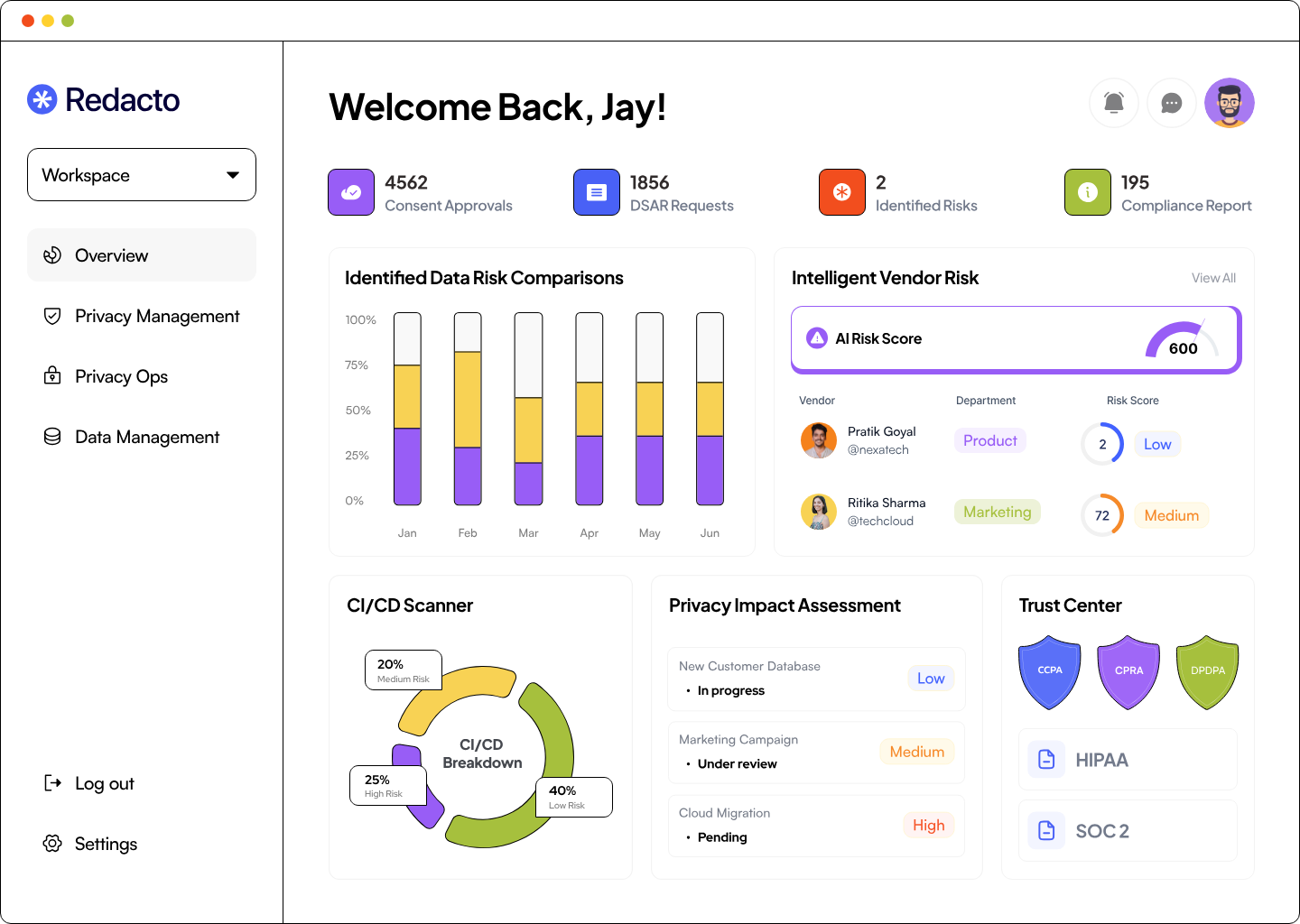
I would use Redacto when consent forms one part of the DPDPA workflow. Its Unified Consent Manager records capture and withdrawal events. Automated DSAR Management gives each rights request an owner and keeps its response trail in one queue.
I can use AI-Driven Data Discovery & Mapping to locate personal data before I assign a purpose or start a PIA. Privacy Impact Assessment Automation records the assessment. The CI/CD Privacy Scanner adds a review point when product teams change code or data flows.
That scope separates Redacto from ConsentiQo. ConsentiQo concentrates on multilingual consent across web and mobile. Redacto connects consent to discovery and vendor review. Its Audit & Reporting module then collects the records that a DPO needs for review.
I would still keep legal and security owners in the approval path. Redacto can find gaps and route work. It cannot decide whether a purpose is lawful or whether the company should accept a risk.
Redacto vs KavachOne features comparison
Pricing
License-based; contact Redacto. There is no public price or self-serve trial.
Pros
- Unified Consent Manager records consent capture and withdrawal through the same lifecycle.
- AI-Driven Data Discovery & Mapping links purposes to the systems that hold personal data.
- Automated DSAR Management assigns requests and preserves response evidence.
- Vendor Risk Management keeps processor reviews next to related privacy records.
- Audit & Reporting brings consent and assessment records into one evidence trail.
Cons
- The India-first product scope offers less depth for teams that run one program across many privacy regimes.
- The young company has fewer public case studies than long-established privacy suites.
- Buyers cannot inspect a large third-party review base before evaluation.
- Teams still need legal owners to approve purposes and risk decisions.
- Small website teams may not need its discovery and assessment modules.
Fit summary
Choose Redacto when the missing link sits between consent and operational evidence; a global group that wants one mature suite for many jurisdictions may standardize on OneTrust, while a team that only needs a low-cost banner would pay for Redacto scope it does not use.
Who should not choose Redacto: A small publisher with one website and no wider privacy operations should start with CookieYes. A multinational that prioritizes global regulatory breadth should assess OneTrust first.
2. Privy by IDfy
I would shortlist Privy by IDfy when identity checks and privacy controls need to share an India-first operating model. Its Consent Governance Platform manages collection and withdrawal. Data Principal Rights Management routes requests to the people who can verify and answer them.
I can use Data Compass to find personal data and connect it to a purpose. The PIA module records privacy review before a team changes a product or process. Third-party risk tools extend that review to processors and other vendors.
Privy covers more governance work than ConsentiQo. ConsentiQo places more emphasis on multilingual consent and channel enforcement. Privy places consent beside data discovery and assessment. That structure suits a bank or insurer that already uses identity workflows and needs one audit path across privacy work.
Privy by IDfy vs KavachOne features comparison
Pricing
Privy uses contract pricing and publishes no base subscription. Its AWS Marketplace listing for Privy by IDfy shows a $0.01 overage for each active Data Principal. It does not publish a free plan or trial.
Pros
- The Consent Governance Platform manages consent capture and withdrawal.
- Data Compass adds discovery before a team assigns purposes.
- Data Principal Rights Management routes requests to accountable owners.
- PIA records sit inside the same product family as consent records.
- Third-party risk modules extend the evidence trail to vendors.
Cons
- Public materials give limited detail about implementation steps between modules.
- The enterprise product requires teams to define owners before workflows can route work well.
- Smaller website teams may find its governance scope larger than their consent problem.
- Global multi-regulation programs may need broader jurisdiction coverage.
- Teams must still connect the suite to each system that stores personal data.
Fit summary
Privy suits a regulated Indian enterprise that wants consent near identity and governance work; ConsentiQo remains attractive when 22-language consent and rapid channel coverage drive the project, so the buying team should run both products against one real withdrawal before deciding.
Also Read - Privy by IDfy Review: Is It Worth Data Privacy & Compliance Solution?
3. OneTrust
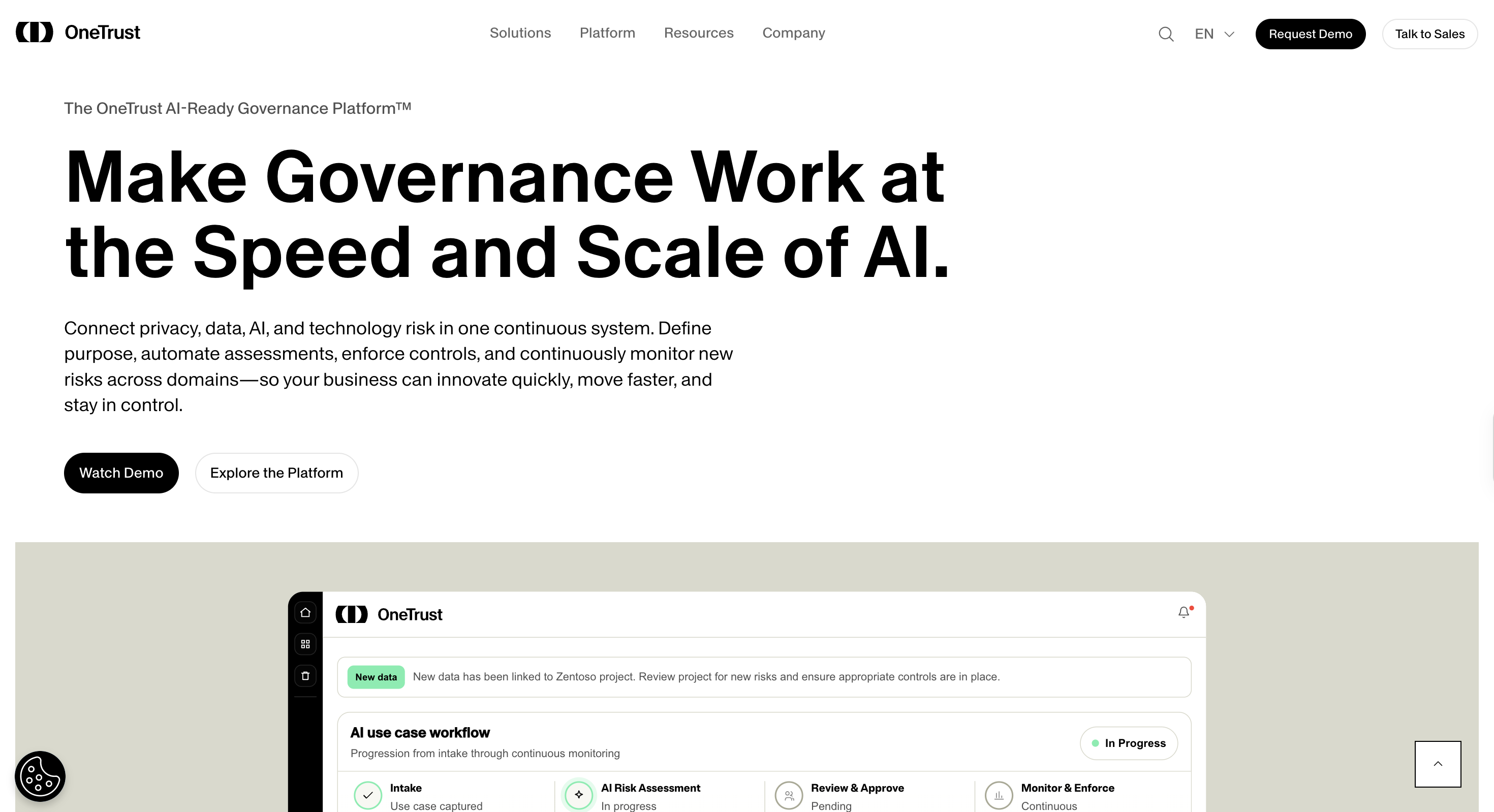
I would choose OneTrust when a global privacy office needs one product family across several regulations. Privacy Automation connects data inventories to assessments and rights work. Consent and Preferences manages collection choices across digital properties.
I can bring third-party reviews into the same program through Third-Party Management. Technology Risk adds controls for systems and security teams. These modules give a multinational one governance model across privacy and related risk work.
OneTrust covers a wider regulatory and risk surface than ConsentiQo. ConsentiQo gives an India-first team a more direct consent path. OneTrust asks the team to configure inventories and roles before it can produce useful evidence. That work suits a mature privacy operations function with named administrators.
OneTrust vs KavachOne features comparison
Pricing
OneTrust publishes usage meters but no list price or free trial. Reported 2026 buying guidance puts the floor near $10,000 per year. Large multi-module programs can move well above that level. See the independent OneTrust cost analysis for the reported floor.
Pros
- Privacy Automation connects inventories to assessments and rights workflows.
- Consent and Preferences supports web and app consent within the same product family.
- Third-Party Management brings vendor reviews into the governance record.
- Technology Risk connects privacy work with security controls.
- Multi-jurisdiction content supports a global privacy office.
Cons
- The broad module set requires clear administrators and workflow owners.
- India-only teams may configure controls that they do not need.
- Teams need a maintained data inventory before assessments produce reliable evidence.
- Added modules can create separate admin work across privacy and risk teams.
- A small consent project may take longer to configure than a focused CMP.
Fit summary
OneTrust wins when one program must span DPDPA and several other regimes. ConsentiQo offers a tighter path when India-first consent is the defined job. Budget for configuration and ownership before choosing OneTrust.
4. Usercentrics
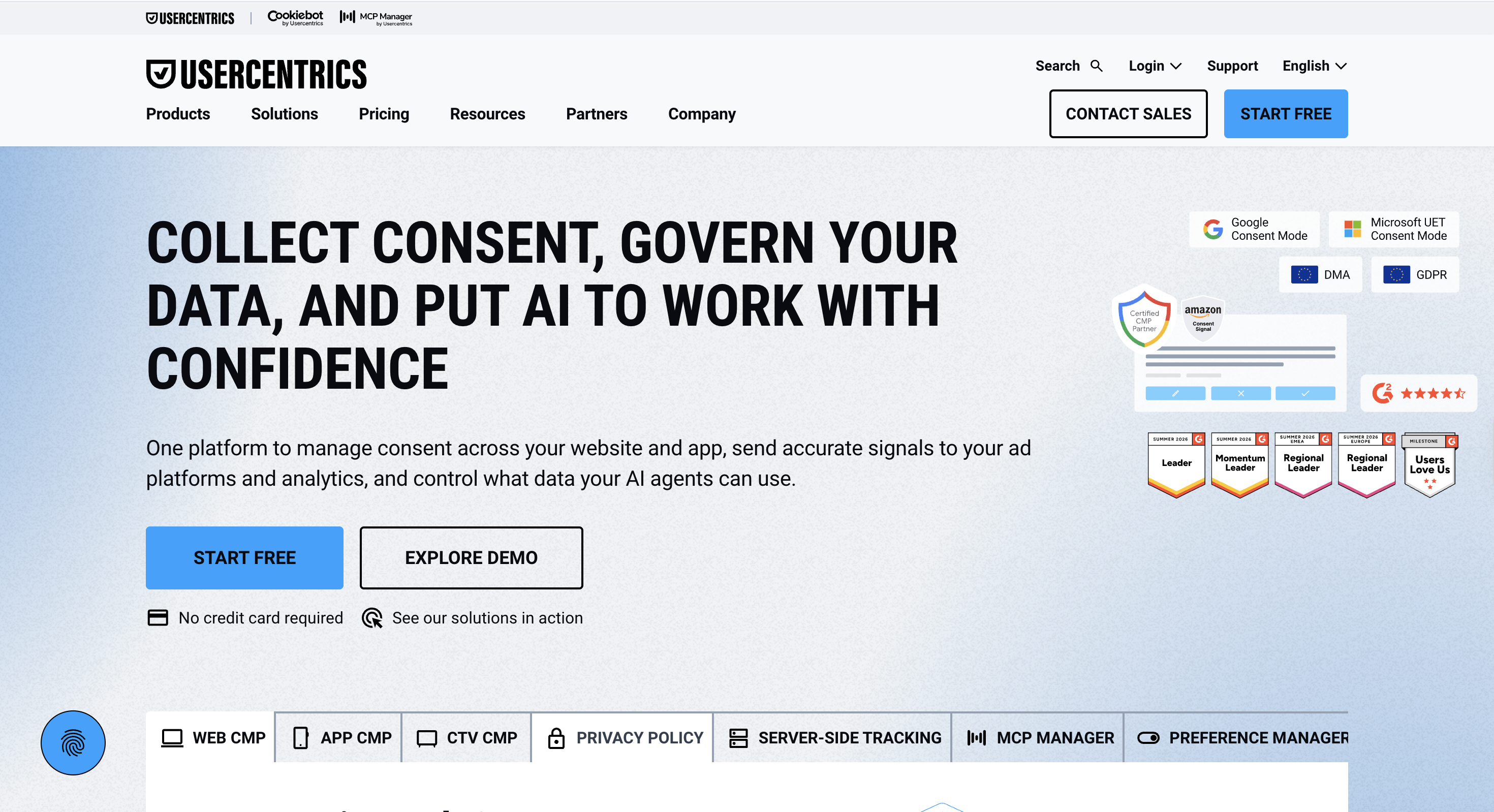
I would use Usercentrics when consent across websites and apps defines the project. Its Web CMP scans sites and controls browser tags. App CMP SDKs collect choices inside mobile products.
I can pass consent signals into server-side tagging workflows. This helps a team keep analytics and advertising tags aligned with the visitor’s choice. The product also gives teams separate usage bands for web sessions and app users. That makes deployment scope visible before engineering starts.
Usercentrics sits closer to ConsentiQo than a governance suite does. Both products cover web and app consent. ConsentiQo puts Indian languages and DPDPA workflows near the center. Usercentrics brings a wider global consent footprint and stronger focus on digital-property deployment.
Usercentrics vs KavachOne features comparison
Pricing
Usercentrics offers a free web plan for one domain under 1,000 monthly sessions. The paid App CMP starts at EUR49 per month for up to 6,000 daily active users and includes a 14-day trial. Higher web tiers start at EUR100 per month for 100,000 sessions across 10 domains.
Pros
- Web CMP scans sites and controls browser consent.
- App CMP SDKs collect choices inside mobile products.
- Server-side tagging passes consent signals into tag workflows.
- Web and app products support teams with several digital properties.
- A small web tier lets teams validate banner and tag behavior.
Cons
- The product does not provide a full PIA workflow.
- Vendor risk work needs another system.
- Teams must monitor separate web-session and app-user meters.
- India-specific statutory workflows do not drive the product model.
- Privacy teams still need a separate record for broader governance decisions.
Fit summary
Usercentrics makes sense when digital consent scale drives the purchase; ConsentiQo has the clearer India-first story, while Redacto or Privy will fit better when consent must connect to a full DPDPA record system that also covers assessment and governance work.
5. CookieYes
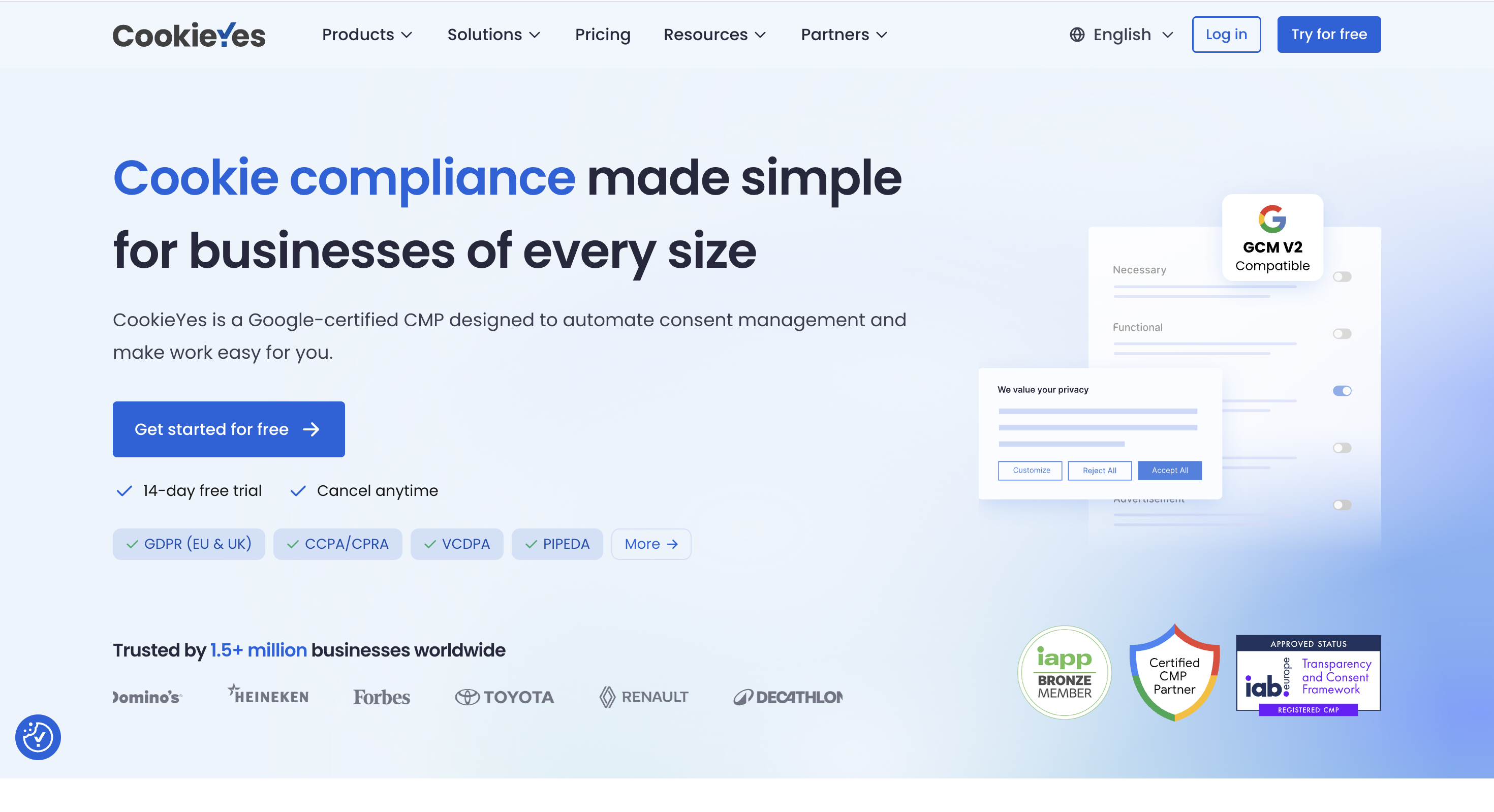
I would use CookieYes when one website needs a consent banner and cookie controls. Its scanner identifies cookies on the site. The banner records a visitor choice. Tag controls then block cookies that do not match that choice.
I can connect the setup to Google Consent Mode v2 on a paid plan. Multilingual banners help a publisher serve visitors in different languages. Scheduled scans keep the cookie list current when the site changes.
CookieYes solves a narrower job than ConsentiQo. That can help a small team launch without an enterprise privacy program. ConsentiQo remains the closer fit when consent spans mobile apps or connects to a Data Principal request workflow.
CookieYes vs KavachOne features comparison
Pricing
CookieYes has a free plan for one domain with 5,000 monthly pageviews. Basic costs $10 per month per domain and includes 100,000 pageviews. Paid plans include a 14-day trial. Ultimate costs $55 per month per domain with unlimited pageviews.
Pros
- The scanner identifies cookies before the banner records a choice.
- Tag controls block cookies based on the visitor’s consent state.
- Google Consent Mode v2 support connects choices to Google tags.
- Multilingual banners support websites that serve several language groups.
- Scheduled scans help teams detect changes in the site’s cookie set.
Cons
- The product does not replace a DPDPA governance system.
- App consent is not its main product workflow.
- PIA records need another system.
- Vendor risk reviews sit outside the product.
- Data Principal requests need a separate operating queue.
Fit summary
CookieYes is the practical budget option for one or two websites. ConsentiQo is stronger when consent crosses web and mobile or feeds a rights-request workflow. A CISO should not treat either banner deployment as proof that downstream systems honored withdrawal.
Which KavachOne alternative fits your workflow?
Start with the failure you need to remove.
- Pick Redacto when consent must connect to discovery and PIA or vendor evidence inside an India-first program.
- Assess Privy by IDfy when identity context and full-stack DPDPA governance matter to a regulated enterprise.
- Use OneTrust when a global privacy office needs one platform across several jurisdictions.
- Shortlist Usercentrics when web and app consent volume determines the architecture.
- Start with CookieYes when the job is a smaller website and the budget needs a published ceiling.
Test the withdrawal trail
Capture consent for a named purpose, send the preference to a downstream system, withdraw it, and export the record that shows who acted and when.
This Monday morning, pick one live consent flow from your website or app and trace its withdrawal through CRM and analytics. Record every broken handoff. That list will tell you which alternative belongs in the next proof of concept.
Disclosure: Redacto is our product. I included it because its DPDPA operating scope matches this comparison. I applied the same criteria to every tool.