%20Redacto%20logo_New.png)


What is ROPA in Data Privacy? & How It Fails in Practice


A privacy team opens its ROPA ahead of an audit and sees a neat row for “customer analytics.” But the product team added a new event stream six months ago. The data now goes to another processor, while the row still points to the old purpose and retention period.
ROPA stands for Record of Processing Activities. In simple terms, it is a structured record of why an organisation uses information, what data it uses, where that data goes, how long it stays, and who owns the activity. A good ROPA helps a DPO follow one purpose through systems and processors to the relevant erasure rule.
The term comes from Article 30 of the GDPR. India’s Digital Personal Data Protection Act, 2023 does not use “ROPA” or require the same Article 30 record. That difference matters. Indian teams can still use a ROPA as an operating record to support DPDPA duties, without treating a GDPR template as a legal requirement under Indian law.
TL;DR
A ROPA is simply a map of what processing happens and how the data flows through it. Under the GDPR, Article 30 makes that record a legal requirement. The DPDPA does not.
Even so, Indian teams still get real value from keeping one. It helps connect processor contracts, retention triggers and rights requests. It stops being useful when it is treated like a static spreadsheet, because product and vendor changes keep happening long after the last review.
What does a ROPA contain?
Under Article 30 of the GDPR, a controller’s record covers its purposes, categories of people and personal data, recipients, transfers, expected erasure periods and security measures. Processors keep a related record for the processing they perform for controllers.
For an Indian enterprise, a working ROPA often needs a little more operational detail:
- Processing activity: a bounded workflow such as employee onboarding or claim assessment.
- Purpose: the business outcome that justifies the processing.
- Data fields: the specific categories used in that activity.
- Systems and processors: every internal system and outside service that receives the data.
- Retention and erasure: the trigger, period, and owner for deletion.
- Accountability: the business owner, privacy reviewer and last review date.
A row called “marketing data” tells you almost nothing. A row called “abandoned-cart reminder by WhatsApp” can identify the phone number, consent state and messaging provider. It can also name the 30-day campaign window and the person who approves a change.
When the same customer later withdraws consent, the owner should be able to open that activity, identify the campaign tool, and confirm that the suppression reached it, while the retained timestamp shows when the instruction moved from the consent ledger into the messaging workflow.
Is ROPA required under the DPDPA?
The careful answer is no, not by that name. The Digital Personal Data Protection Act, 2023 contains no provision equivalent to GDPR Article 30.
Yet several DPDPA workflows depend on the information a ROPA can hold:
- Accountability for processors: Section 8(1) of the Digital Personal Data Protection Act, 2023 keeps the Data Fiduciary responsible for processing done by it or on its behalf.
- Contract control: Section 8(2) requires a valid contract when a Data Processor handles data for the Data Fiduciary.
- Erasure: Section 8(7) applies when consent is withdrawn or the specified purpose no longer operates, subject to legal retention.
- Access: Section 11(1) gives a Data Principal access to a summary of information held and the processing activities undertaken. It also covers the identities of other Data Fiduciaries and Data Processors with whom data was shared, subject to the statutory exception.
- Assessment and audit: Section 10(2) requires Significant Data Fiduciaries to conduct periodic data protection impact assessments and audits.
These are separate obligations. A ROPA does not satisfy them on its own. It gives privacy, security and product teams a common index from which they can find the relevant contract, consent record or erasure evidence.
During a DSAR, the queue may show the requester, the deadline, and the response owner, but the ROPA points investigators towards every system involved. That link saves time. It also exposes missing processors.
If the request begins in a support inbox and the identity check happens in the customer portal, the record should still connect both steps, show which processor can see the documents, and direct the responder to the source system, because a queue entry alone cannot reveal the full processing path.
The timing needs equal care. The Central Government’s 13 November 2025 commencement notification phases in the Act. Sections 3 to 17 are scheduled to commence 18 months after that notification. As of 28 July 2026, teams are in the implementation window for those provisions.
Why ROPA fails in practice
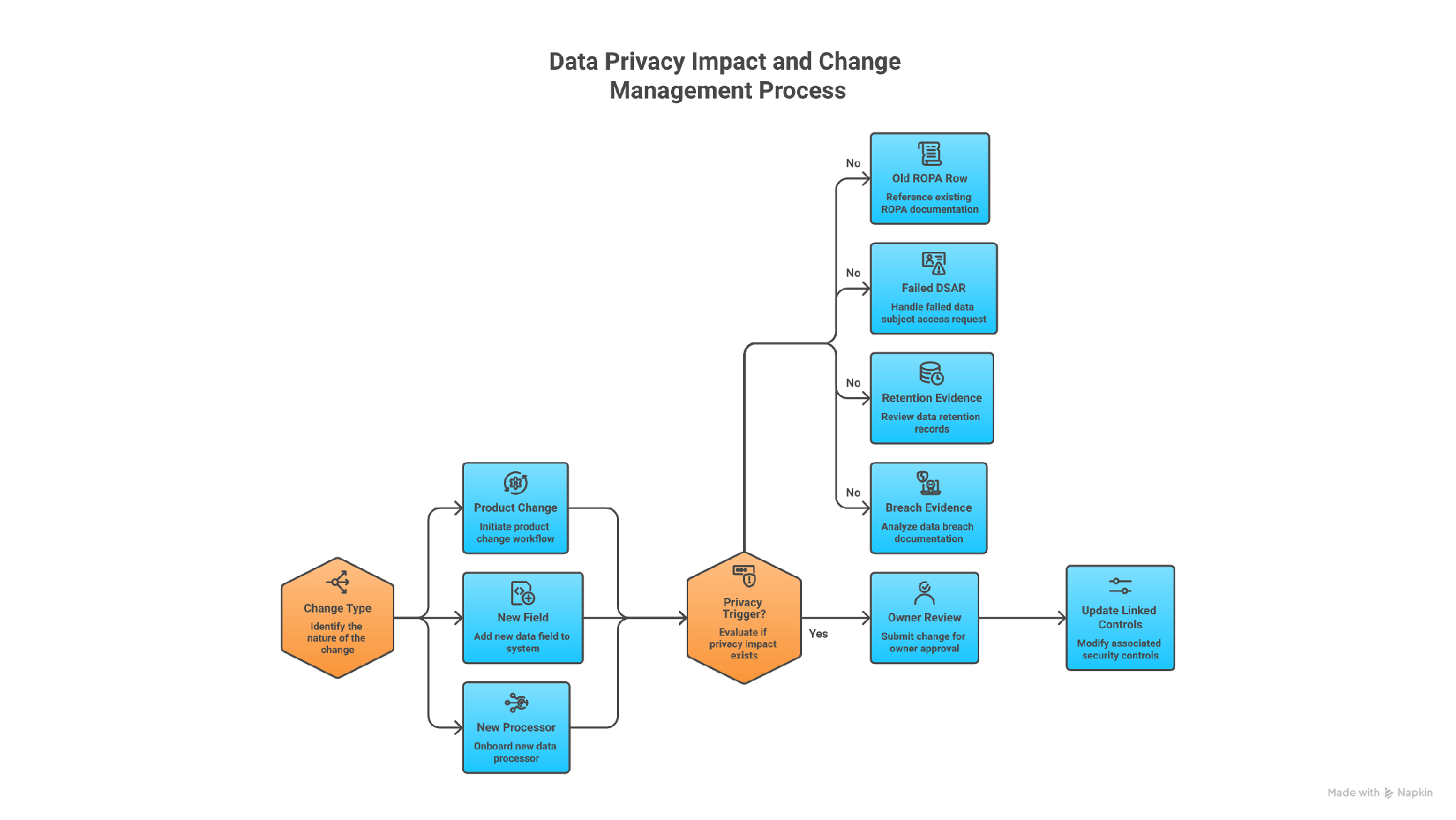
Most ROPA failures begin outside the privacy team. A new SDK ships, procurement changes a processor, or a business owner extends retention. The record receives no event that tells it to change.
When a workflow changes, the owner updates the purpose, privacy checks the legal effect, and security confirms the controls before release. Without that handoff, the row ages quietly.

1. The ROPA is organised by department, not processing purpose
“Sales” can contain lead capture, call recording and customer renewal. Those activities use different data and retention rules. A department-level row hides the links that a reviewer needs.
Organise each record around a specific purpose. Then connect that purpose to the Data Principal category, systems and processors it touches.
2. Discovery happens once
Questionnaires capture what business owners remember on survey day. They miss shadow tools and data copied into test environments. Six months later, the inventory describes an organisation that no longer exists.
A better workflow combines owner attestation with technical discovery. The owner explains why the data is used. Discovery checks where it is actually stored and moved.
The two views will differ. That difference is useful.
3. The entries are nouns without relationships
A spreadsheet may list “name, phone number, device ID” in one cell and five vendors in another. It does not show which vendor receives the device ID or why.
This is where the record breaks during a DSAR or breach review. The team needs a path: purpose to data category, data category to system and system to processor.
Once procurement approves a processor, the ROPA should capture the service, the disclosed data, and the contract owner, so the next review begins with evidence. Procurement owns the trigger. Privacy owns the interpretation.
Suppose engineering replaces an analytics SDK during a routine release, leaves the event names unchanged, and assumes the old ROPA entry still applies, even though the new provider stores identifiers in another region and uses a different deletion interface that nobody has connected to the withdrawal workflow.
4. Retention is a number without a trigger
“Keep for seven years” leaves two questions unanswered. When does the clock start, and which system performs the deletion?
Section 8(7) of the Digital Personal Data Protection Act, 2023 links erasure to withdrawal or the end of the specified purpose, unless another law requires retention. The ROPA should therefore name the trigger and the legal exception. It should also point to proof that deletion reached the processor.
5. No workflow owns a change
Annual review cannot keep pace with product releases. The ROPA needs update triggers from procurement and engineering. A new vendor should open a review, while a changed data field should route to privacy before release.
Automation can flag a new data flow and prepare the record. Legal, security and the business owner still decide the purpose, retention basis and acceptable risk.
6. The record is detached from evidence
A green status cell is an opinion. An audit trail links the entry to the processor contract, consent record and retention job. It also preserves who approved the activity and when.
The ICO’s guidance on documenting processing makes a useful operational point: the record must stay current, and generic lists without meaningful links do not describe processing at sufficient granularity. Indian organisations can apply that lesson without importing UK law into their DPDPA analysis.
Three examples of a ROPA that looks complete but is not
A bank adds video-KYC quality monitoring
The existing row covers identity verification. A later release retains short video clips to score agent quality. That is a new purpose with a different audience and retention question. Updating only the system name leaves the purpose change invisible.
The record should link the video category to the quality-monitoring purpose. It also needs the model or processor involved and the retention trigger.
For a bank, this means matching the KYC purpose, the video platform, and the retention exception, while the DPO retains legal judgment. The row can then survive review.
A hospital routes reports through a patient app
The ROPA says diagnostic reports move from the laboratory system to the hospital record. The app now sends a push notification through an outside provider. If the notification includes patient context, another recipient has entered the flow.
The DPO needs to see what reaches that provider. A generic “communications vendor” entry cannot answer the question.
During a breach review, the hospital may know that the app exposed a notification token, yet still be unable to identify which patient workflow created it, which processor retained the delivery log, and which contract sets the response duty, because those relationships never made it into the register.
A pharma team copies trial contacts into a campaign tool
The original activity covers study recruitment. A regional team exports contact details for a later awareness campaign. The new use has no owner in the ROPA because the spreadsheet tracks the CRM, not the changed purpose.
The fix starts with the campaign workflow. Privacy can then decide whether the proposed use fits the existing basis and notice.
Also Read - 7 Best Risk Assessment Tools For Pharma Companies in India
How to build a ROPA that survives change
Start with one high-risk workflow rather than asking every team to complete a large template.
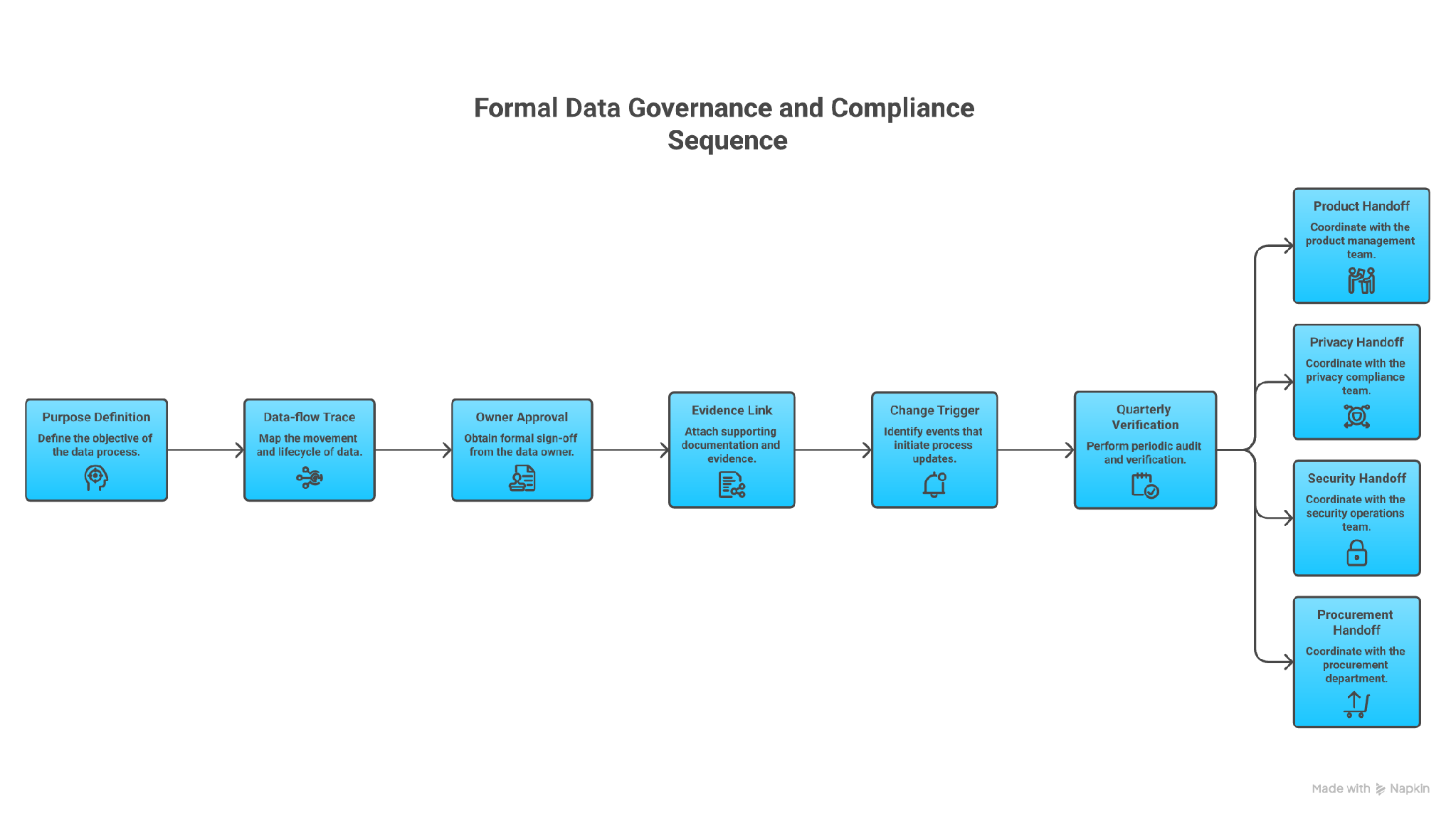
- Name the purpose. Write the outcome in terms a product or operations owner recognises.
- Trace the flow. Record the data categories, systems and processors for that purpose.
- Assign decisions. Name who approves purpose changes and retention exceptions.
- Link evidence. Point to the contract, notice, consent record or assessment behind the entry.
- Create change triggers. Connect vendor onboarding and release review to the ROPA.
- Verify the record. Pick one entry and compare it with live system data and processor access.
The result should answer one audit question without a week of email: who did what, when and why?
Where Redacto fits
Redacto’s AI-Driven Data Discovery & Mapping can surface relevant data and connect findings to a maintained processing inventory. Redacto’s Audit & Reporting capability can keep review evidence with the record.
That reduces the gap between a questionnaire and the live environment. It does not decide whether a purpose is lawful or whether a sectoral retention rule applies. Those judgments stay with the DPO, legal team and accountable business owner.
Redacto can also help teams reconcile discovered systems with the assigned owner and review date. A Redacto-maintained inventory is still only as useful as the approval workflow around it. The human gate remains visible.
When Redacto detects a store that the questionnaire omitted, the privacy team can add it to the relevant activity, ask the owner why it exists, attach the processor or control evidence, and route the revised entry for approval, while the discovery finding remains available for the next audit.
If a later release introduces another data field, Redacto can surface the change and send it into the same review path, but the DPO still decides whether the purpose covers that field, legal still interprets any retention exception, and security still owns the control response when the exposure changes.
That division of work is the point of Redacto’s ROPA workflow.
The test for your current ROPA
This Monday, take one product feature released last quarter. Ask its owner to name the purpose, data categories, processors and erasure trigger without opening the ROPA first.
Then compare the answer with the record. If the two versions differ, fix the change workflow before adding more rows.