Table of contents

GDPR vs DPDPA: How Many Rights Are There? (2026 Simple Guide)

By
Kshitija
Last Updated on:
May 11, 2026

You usually start this comparison with a simple question.

How many rights are there in GDPR and DPDPA?

So, GDPR gives you eight rights and DPDPA gives you four.

At this point, it feels like you understand the difference.

But that clarity doesn’t last once you have to deal with an actual request.

You see it the moment someone asks you to share their data, or delete everything, or fix incorrect information. 

Now you are not thinking about how many rights exist. You are trying to figure out where that data is stored, who is responsible for handling it, and how fast you are expected to respond.

This is where the comparison starts to shift.

Instead of counting rights, you are dealing with workflows. Requests come through email or support tickets. Data sits across multiple tools. 

Ownership is not clearly defined. You are trying to connect pieces that were never designed to work together.

So while GDPR and DPDPA look different on paper, the real difference shows up in how you handle these situations in practice.

In this guide, you will not just look at the number of rights. 

You will see what those rights actually require you to do, where things usually break, and why this turns into an operational problem much faster than expected.

TL;DR: GDPR vs DPDPA (Quick Comparison)

Aspect GDPR DPDPA
Number of rights You deal with 8 core rights You deal with 4 express rights
How it feels in practice You handle more request types and edge cases You handle fewer rights but still similar request pressure
Structure of rights More detailed and granular More focused and simplified
Additional protections Included within the rights framework Notice and consent withdrawal exist outside core rights
What you actually manage Access, deletion, correction, portability, objections, and more Access, correction, deletion, grievance handling, nomination
Where things get difficult Mapping data across systems and handling different request types Handling requests consistently as volume grows
What this means for you You need tighter processes and clear ownership early You still need structure once requests start increasing
Real challenge Not the number of rights, but managing requests across tools and teams Same problem, fewer rights but similar operational load

What Are Data Subject Rights?

Data subject rights are legal rights that allow individuals to control their personal data.

Under different laws, the terminology changes:

  • GDPR calls them data subjects
  • DPDPA calls them Data Principals

But the idea is the same.

These rights allow people to:

  • Know what data is collected
  • Access their data
  • Correct or delete it
  • Control how it is used

From a legal perspective, this is about user control.

From a business perspective, this is about handling requests correctly and on time.

How Many Rights Are There in GDPR?

GDPR gives individuals 8 core data subject rights.

The 8 GDPR Rights

  1. Right to be informed

Users must know how their data is collected and used

  1. Right of access

Users can request a copy of their personal data

  1. Right to rectification

Users can correct inaccurate or incomplete data

  1. Right to erasure

Also called the “right to be forgotten.”

  1. Right to restrict processing

Users can limit how their data is used

  1. Right to data portability

Users can move their data between services

  1. Right to object

Users can object to certain types of processing

  1. Rights related to automated decision-making

Users can challenge decisions made only by algorithms

These rights look structured, but in reality:

  • Requests come through email, support tickets, or forms
  • Data lives across multiple tools
  • Teams are not aligned on ownership

So even though there are 8 rights, companies struggle to handle even a few requests properly.

How Many Rights Are There in DPDPA (India)?

DPDPA gives Data Principals 4 express rights under the law.

The 4 DPDPA Rights

  1. Right to access information about personal data

Users can know what data is collected and how it is used

  1. Right to correction and erasure

Users can correct or delete their personal data

  1. Right of grievance redressal

Users can raise complaints and expect resolution

  1. Right to nominate

Users can appoint someone to act on their behalf

You may have seen articles claiming DPDPA has 6 rights. This usually includes:

  • Right to withdraw consent
  • Right to receive notice/information

These are valid protections under the law. But they are not listed as separate rights in Chapter III. So for accuracy, the safest statement is:

DPDPA has 4 express statutory rights, along with additional protections like notice and consent withdrawal.

How to Create a Data Inventory for GDPR and DPDP: Step-by-Step Guide

What These Rights Mean for Businesses

Knowing the number of rights is easy. Managing them is not. To comply, companies must:

  • Track where personal data exists
  • Respond to access and deletion requests
  • Maintain timelines
  • Provide grievance handling
  • Keep records of actions taken

This turns into a process problem, not just a legal requirement.

Why Rights Management Becomes Hard in Real Life

Most companies face the same issues.

1. Data is scattered

  • CRM
  • Marketing tools
  • Support platforms
  • Internal systems

2. Requests are unstructured

  • Emails
  • Forms
  • Customer support tickets

3. No clear ownership

  • Legal team understands rules
  • Ops team executes
  • Engineering controls systems

But no one owns the full flow.

4. No audit trail

  • Hard to prove compliance
  • Risk during audits or investigations

When Manual Tracking Stops Working

At a small scale, teams manage with:

  • Spreadsheets
  • Email tracking
  • Manual follow-ups

This works when:

  • Requests are low
  • Data is limited

But as volume grows:

  • Requests get delayed
  • Tasks fall through gaps
  • Teams lose visibility

This is where compliance starts breaking down.

A Practical Way to Handle GDPR and DPDPA Rights

At some point, you stop thinking about the rules and start feeling the gaps in your process.

You see it when a request comes in and you are not sure where to start. One part of the data sits in your CRM, another in your support tool, and something else in internal systems. 

You end up checking multiple places, sending messages to different teams, and trying to piece together a response.

This is usually the point where structure becomes necessary.

  • You need a way to bring requests into one place, so nothing gets missed. You need clarity on who is responsible, so work does not get stuck. 
  • You need visibility into where data exists, so you are not guessing every time. And you need records of what was done, so you can explain it later if required.

Without this, every request feels like a fresh problem.

With some structure in place, the process starts to look different. Requests are tracked, ownership is clear, and responses become more consistent. 

You are not solving the same problem from scratch each time.

This is where many teams move away from spreadsheets and scattered workflows. Not because they want another tool, but because they want a system that holds everything together.

You might come across platforms like Redacto while looking into this. 
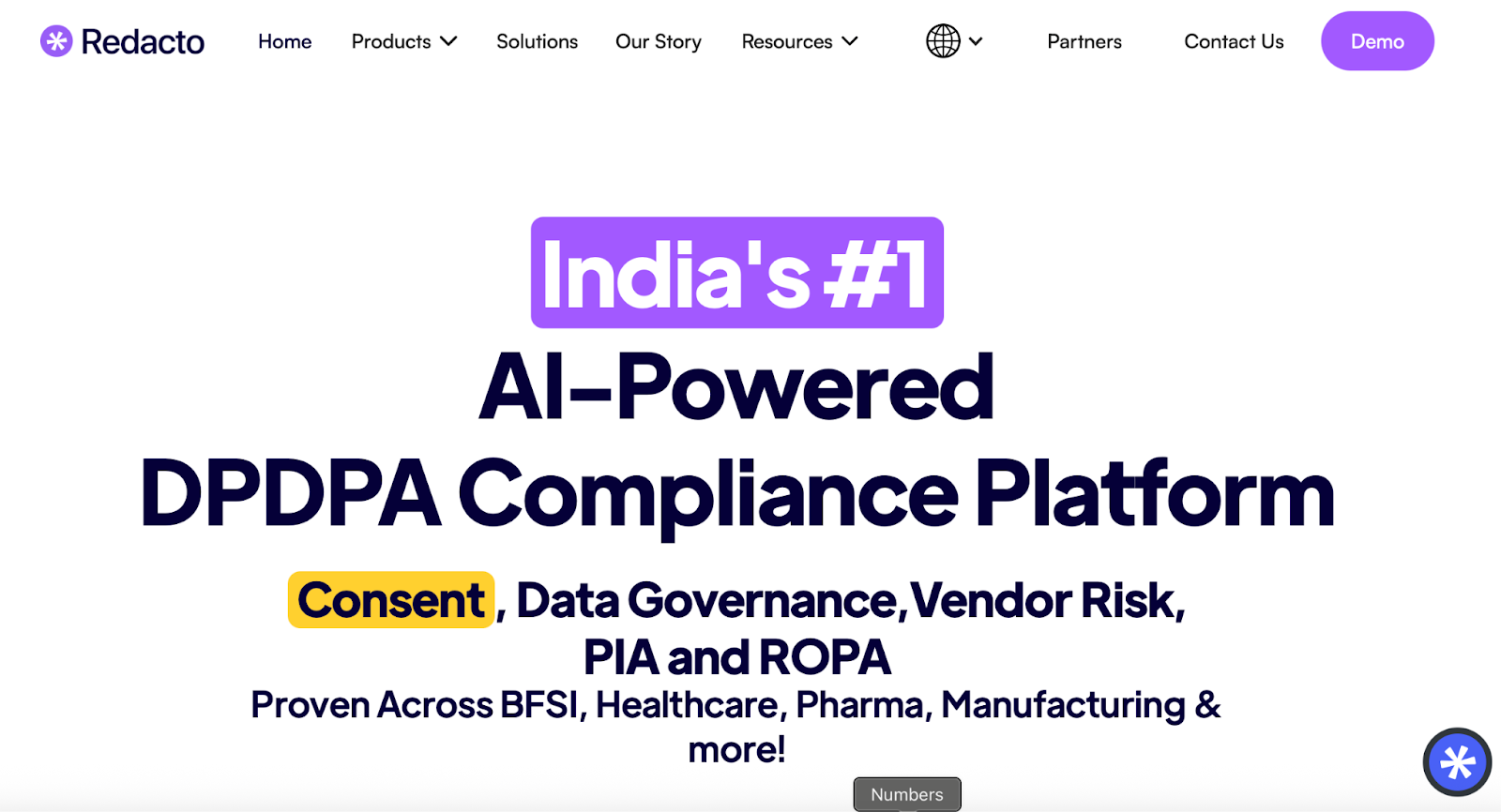
Redacto.ai Homepage
This image shows the Redacto.ai Homepage

The reason they come up is simple. They try to bring consent, requests, and compliance workflows into one place so you are not switching between tools or relying on manual tracking.

The goal here is not to add complexity. It is to reduce the number of moving parts you have to manage.

If you are handling a small number of users and very few requests, manual tracking can still work. You can manage things through email, simple logs, and basic coordination.

But the shift happens quietly.

Requests become more frequent. Data spreads across more tools. More people get involved in handling them. What used to take a few minutes now takes multiple follow ups.

This is where things start slipping.

You will notice delays, missed steps, or uncertainty around what was actually done. Not because the team is not capable, but because the process is not designed for scale.

This is common in SaaS products, fintech and BFSI teams, e-commerce platforms, healthtech companies, or any setup where user data is central to how the product works.

If your team is already receiving regular data requests, you will start to feel these gaps sooner rather than later.

That is usually the signal that manual systems are reaching their limit.

Is GDPR and DPDPA Compliance Possible Without Tools

Yes, it is possible, especially when you are operating at a smaller scale.

If your team handles very few requests and your data lives in limited systems, you can still manage things manually. Many companies start this way. 

Requests come through email, someone checks the required systems, updates a spreadsheet, and sends a response.

The problem is that this process becomes harder to maintain as things grow.

You start adding more tools. Customer data spreads across support platforms, CRMs, analytics tools, marketing systems, and internal databases. 

At the same time, requests become more frequent, and more people get involved in handling them.

This is usually where the pressure starts building.

Not because the rights themselves are complicated, but because consistency becomes difficult. 

One request gets handled properly, another gets delayed, and a third depends on who picked it up internally.

Then comes the bigger issue.

At some point, you may need to prove what happened. You may need to show:

  • when a request was received
  • who handled it
  • what action was taken
  • and whether timelines were followed

That is why the real challenge is usually not whether you can handle these rights once.

It is whether you can handle them consistently, across teams and systems, and still have a clear record of everything later.

Conclusion

GDPR gives 8 rights. DPDPA gives 4 express rights. That part is simple.

The real challenge is handling those rights in real workflows.

Most companies don’t struggle with understanding the law.

They struggle with:

  • tracking requests,
  • managing data across tools, and
  • proving compliance when needed.

Spreadsheets and scattered systems usually work… until they don’t.

And when they break, it’s not because the rules changed, it’s because the volume did.

That’s the point where teams stop trying to “manage” compliance manually and start building a system around it.

If you’re starting to feel that shift, it’s worth looking at how platforms like Redacto structure the entire flow, from request to resolution, in one place.

Compliance

GDPR vs DPDPA: How Many Rights Are There? (2026 Simple Guide)

Kshitija
Product Manager

You usually start this comparison with a simple question.

How many rights are there in GDPR and DPDPA?

So, GDPR gives you eight rights and DPDPA gives you four.

At this point, it feels like you understand the difference.

But that clarity doesn’t last once you have to deal with an actual request.

You see it the moment someone asks you to share their data, or delete everything, or fix incorrect information. 

Now you are not thinking about how many rights exist. You are trying to figure out where that data is stored, who is responsible for handling it, and how fast you are expected to respond.

This is where the comparison starts to shift.

Instead of counting rights, you are dealing with workflows. Requests come through email or support tickets. Data sits across multiple tools. 

Ownership is not clearly defined. You are trying to connect pieces that were never designed to work together.

So while GDPR and DPDPA look different on paper, the real difference shows up in how you handle these situations in practice.

In this guide, you will not just look at the number of rights. 

You will see what those rights actually require you to do, where things usually break, and why this turns into an operational problem much faster than expected.

TL;DR: GDPR vs DPDPA (Quick Comparison)

Aspect GDPR DPDPA
Number of rights You deal with 8 core rights You deal with 4 express rights
How it feels in practice You handle more request types and edge cases You handle fewer rights but still similar request pressure
Structure of rights More detailed and granular More focused and simplified
Additional protections Included within the rights framework Notice and consent withdrawal exist outside core rights
What you actually manage Access, deletion, correction, portability, objections, and more Access, correction, deletion, grievance handling, nomination
Where things get difficult Mapping data across systems and handling different request types Handling requests consistently as volume grows
What this means for you You need tighter processes and clear ownership early You still need structure once requests start increasing
Real challenge Not the number of rights, but managing requests across tools and teams Same problem, fewer rights but similar operational load

What Are Data Subject Rights?

Data subject rights are legal rights that allow individuals to control their personal data.

Under different laws, the terminology changes:

  • GDPR calls them data subjects
  • DPDPA calls them Data Principals

But the idea is the same.

These rights allow people to:

  • Know what data is collected
  • Access their data
  • Correct or delete it
  • Control how it is used

From a legal perspective, this is about user control.

From a business perspective, this is about handling requests correctly and on time.

How Many Rights Are There in GDPR?

GDPR gives individuals 8 core data subject rights.

The 8 GDPR Rights

  1. Right to be informed

Users must know how their data is collected and used

  1. Right of access

Users can request a copy of their personal data

  1. Right to rectification

Users can correct inaccurate or incomplete data

  1. Right to erasure

Also called the “right to be forgotten.”

  1. Right to restrict processing

Users can limit how their data is used

  1. Right to data portability

Users can move their data between services

  1. Right to object

Users can object to certain types of processing

  1. Rights related to automated decision-making

Users can challenge decisions made only by algorithms

These rights look structured, but in reality:

  • Requests come through email, support tickets, or forms
  • Data lives across multiple tools
  • Teams are not aligned on ownership

So even though there are 8 rights, companies struggle to handle even a few requests properly.

How Many Rights Are There in DPDPA (India)?

DPDPA gives Data Principals 4 express rights under the law.

The 4 DPDPA Rights

  1. Right to access information about personal data

Users can know what data is collected and how it is used

  1. Right to correction and erasure

Users can correct or delete their personal data

  1. Right of grievance redressal

Users can raise complaints and expect resolution

  1. Right to nominate

Users can appoint someone to act on their behalf

You may have seen articles claiming DPDPA has 6 rights. This usually includes:

  • Right to withdraw consent
  • Right to receive notice/information

These are valid protections under the law. But they are not listed as separate rights in Chapter III. So for accuracy, the safest statement is:

DPDPA has 4 express statutory rights, along with additional protections like notice and consent withdrawal.

How to Create a Data Inventory for GDPR and DPDP: Step-by-Step Guide

What These Rights Mean for Businesses

Knowing the number of rights is easy. Managing them is not. To comply, companies must:

  • Track where personal data exists
  • Respond to access and deletion requests
  • Maintain timelines
  • Provide grievance handling
  • Keep records of actions taken

This turns into a process problem, not just a legal requirement.

Why Rights Management Becomes Hard in Real Life

Most companies face the same issues.

1. Data is scattered

  • CRM
  • Marketing tools
  • Support platforms
  • Internal systems

2. Requests are unstructured

  • Emails
  • Forms
  • Customer support tickets

3. No clear ownership

  • Legal team understands rules
  • Ops team executes
  • Engineering controls systems

But no one owns the full flow.

4. No audit trail

  • Hard to prove compliance
  • Risk during audits or investigations

When Manual Tracking Stops Working

At a small scale, teams manage with:

  • Spreadsheets
  • Email tracking
  • Manual follow-ups

This works when:

  • Requests are low
  • Data is limited

But as volume grows:

  • Requests get delayed
  • Tasks fall through gaps
  • Teams lose visibility

This is where compliance starts breaking down.

A Practical Way to Handle GDPR and DPDPA Rights

At some point, you stop thinking about the rules and start feeling the gaps in your process.

You see it when a request comes in and you are not sure where to start. One part of the data sits in your CRM, another in your support tool, and something else in internal systems. 

You end up checking multiple places, sending messages to different teams, and trying to piece together a response.

This is usually the point where structure becomes necessary.

  • You need a way to bring requests into one place, so nothing gets missed. You need clarity on who is responsible, so work does not get stuck. 
  • You need visibility into where data exists, so you are not guessing every time. And you need records of what was done, so you can explain it later if required.

Without this, every request feels like a fresh problem.

With some structure in place, the process starts to look different. Requests are tracked, ownership is clear, and responses become more consistent. 

You are not solving the same problem from scratch each time.

This is where many teams move away from spreadsheets and scattered workflows. Not because they want another tool, but because they want a system that holds everything together.

You might come across platforms like Redacto while looking into this. 

Redacto.ai Homepage
This image shows the Redacto.ai Homepage

The reason they come up is simple. They try to bring consent, requests, and compliance workflows into one place so you are not switching between tools or relying on manual tracking.

The goal here is not to add complexity. It is to reduce the number of moving parts you have to manage.

If you are handling a small number of users and very few requests, manual tracking can still work. You can manage things through email, simple logs, and basic coordination.

But the shift happens quietly.

Requests become more frequent. Data spreads across more tools. More people get involved in handling them. What used to take a few minutes now takes multiple follow ups.

This is where things start slipping.

You will notice delays, missed steps, or uncertainty around what was actually done. Not because the team is not capable, but because the process is not designed for scale.

This is common in SaaS products, fintech and BFSI teams, e-commerce platforms, healthtech companies, or any setup where user data is central to how the product works.

If your team is already receiving regular data requests, you will start to feel these gaps sooner rather than later.

That is usually the signal that manual systems are reaching their limit.

Is GDPR and DPDPA Compliance Possible Without Tools

Yes, it is possible, especially when you are operating at a smaller scale.

If your team handles very few requests and your data lives in limited systems, you can still manage things manually. Many companies start this way. 

Requests come through email, someone checks the required systems, updates a spreadsheet, and sends a response.

The problem is that this process becomes harder to maintain as things grow.

You start adding more tools. Customer data spreads across support platforms, CRMs, analytics tools, marketing systems, and internal databases. 

At the same time, requests become more frequent, and more people get involved in handling them.

This is usually where the pressure starts building.

Not because the rights themselves are complicated, but because consistency becomes difficult. 

One request gets handled properly, another gets delayed, and a third depends on who picked it up internally.

Then comes the bigger issue.

At some point, you may need to prove what happened. You may need to show:

  • when a request was received
  • who handled it
  • what action was taken
  • and whether timelines were followed

That is why the real challenge is usually not whether you can handle these rights once.

It is whether you can handle them consistently, across teams and systems, and still have a clear record of everything later.

Conclusion

GDPR gives 8 rights. DPDPA gives 4 express rights. That part is simple.

The real challenge is handling those rights in real workflows.

Most companies don’t struggle with understanding the law.

They struggle with:

  • tracking requests,
  • managing data across tools, and
  • proving compliance when needed.

Spreadsheets and scattered systems usually work… until they don’t.

And when they break, it’s not because the rules changed, it’s because the volume did.

That’s the point where teams stop trying to “manage” compliance manually and start building a system around it.

If you’re starting to feel that shift, it’s worth looking at how platforms like Redacto structure the entire flow, from request to resolution, in one place.

Frequently asked  questions

Kshitija
Product Manager
I turn tangled vendor chaos into clean, clicky flows at Redacto. If there’s a faster and smarter way to do compliance, I’m probably already building it.

Contact Us

Thank you! Your submission has been received!
Oops! Something went wrong while submitting the form.

Your Trusted partner