%20Redacto%20logo_New.png)


What Is a Consent Manager Under the DPDP Act? 7 Things To Look At
.jpg)


India’s Digital Personal Data Protection (DPDP) Act has changed how businesses are expected to collect and manage user consent.
But one term that still confuses most teams is “consent manager.”
If you’ve come across this while reading about compliance, you’re probably trying to figure out:
- What exactly a consent manager does
- Whether your business needs one
- And how it fits into DPDP requirements
The confusion is understandable. Unlike traditional cookie banners or privacy tools, a consent manager under the DPDP Act plays a more structured role in how consent is collected, tracked, and enforced.
In simple terms, it sits between your users and your systems, helping manage consent in a way that is transparent and compliant.
In this guide, I’ll break it down step by step:
- What a consent manager is under the DPDP Act
- Why it exists and how it works in practice
- Whether it is mandatory for your business
- And what you should look at before choosing one
By the end, you’ll have a clear understanding of where consent managers actually fit and whether investing in one makes sense for your setup.
TL;DR: 7 Things to Look at in a Consent Manager
Here are 7 things to look at in a consent manager is
- Consent collection,
- Consent records,
- Withdrawal management,
- DPDP compliance fit,
- System integrations,
- Data Principal rights handling,
- Security.
A good Consent Manager should not only collect consent, but also help you prove, update, withdraw, and connect consent across your compliance workflows.
What Is a Consent Manager Under the DPDP Act?

Consent Manager is defined under Section 2 clause(g) of the DPDP Act.
It is a registered entity under India’s DPDP Act that helps you give, manage, review, and withdraw consent for your personal data.
It acts as a bridge between you (data principals) and companies (data fiduciaries).
Instead of giving consent separately to every app, you can manage it in one place.
It’s regulated by the Data Protection Board of India, so there are clear rules on how it should work.
At its core, it exists to give you control. You decide who can use your data, for what purpose, and you can change that anytime.
Also read: 8 Best Consent Management Platforms for Indian Enterprises (DPDPA-Compliant 2026)
Role of a Consent Manager in the DPDP Act (Why It Exists)
Right now, your consent is probably all over the place.
You say “yes” on one app, forget about another, and if you ever want to take it back… good luck finding where to do it.
That’s the gap the DPDP Act is trying to fix.
A consent manager exists to make this simple for you.
Instead of guessing who has your data and what they’re doing with it, you get one place to see and control everything.
Here’s what that actually looks like in practice:
- You can see what you’ve agreed to, without digging through settings
- You can take back consent anytime, without friction
- Your choices are recorded properly, so companies can’t ignore them
And just as important, what it doesn’t do:
- It doesn’t own your data
- It doesn’t decide how companies use your data
- It only carries your instructions
That’s the whole point. Not more tools, not more complexity. Just making sure your consent actually means something.
Is a Consent Manager Mandatory Under the DPDP Act?
No, you don’t have to use a consent manager.
The DPDP Act makes consent itself mandatory, not the tool you use to manage it.
So even if you don’t use a consent manager, you still need to:
- collect valid consent
- store it properly
- allow users to withdraw it
- prove it during an audit
That’s where things start getting difficult.
If you’re handling a small amount of user data, you can manage this internally. A simple setup might work.
But as your product grows, this gets messy fast.
Multiple teams, different tools, no single source of truth for consent.
That’s when a consent manager becomes useful.
You don’t need it to comply.
But you may need it to stay compliant at scale.
That’s the real difference.
7 Things To Look At in a Consent Manager
Here are the 7 things you should look at in a Consent Manager, especially if you are evaluating it for DPDP compliance in India.
1. Consent Collection and Notice Management
A Consent Manager should help you collect consent clearly, not through vague or hidden language.
Under the DPDP Act, consent needs to be free, specific, informed, unconditional, and unambiguous, and it should be given through clear affirmative action. The notice should also explain what personal data is being processed, why it is being processed, and how the user can exercise their rights.
So, check whether the tool can help you manage:
- purpose-wise consent
- clear consent notices
- consent in multiple languages
- consent linked to specific data processing activities
- consent capture across website, app, forms, and internal systems
2. Consent Records and Audit Trail
A good Consent Manager should not only collect consent. It should also help you prove consent later.
This matters because if a question arises about whether consent was given, the Data Fiduciary may need to show proof of consent.
Look for:
- timestamped consent records
- user identity or identifier mapping
- purpose and notice version tracking
- source of consent
- withdrawal history
- audit-ready logs
Without this, consent becomes hard to defend during audits, complaints, or regulatory review.
This is where a platform like Redacto can be useful, especially for Indian businesses that need to maintain consent records, track notice versions, and keep an audit trail for DPDP compliance.
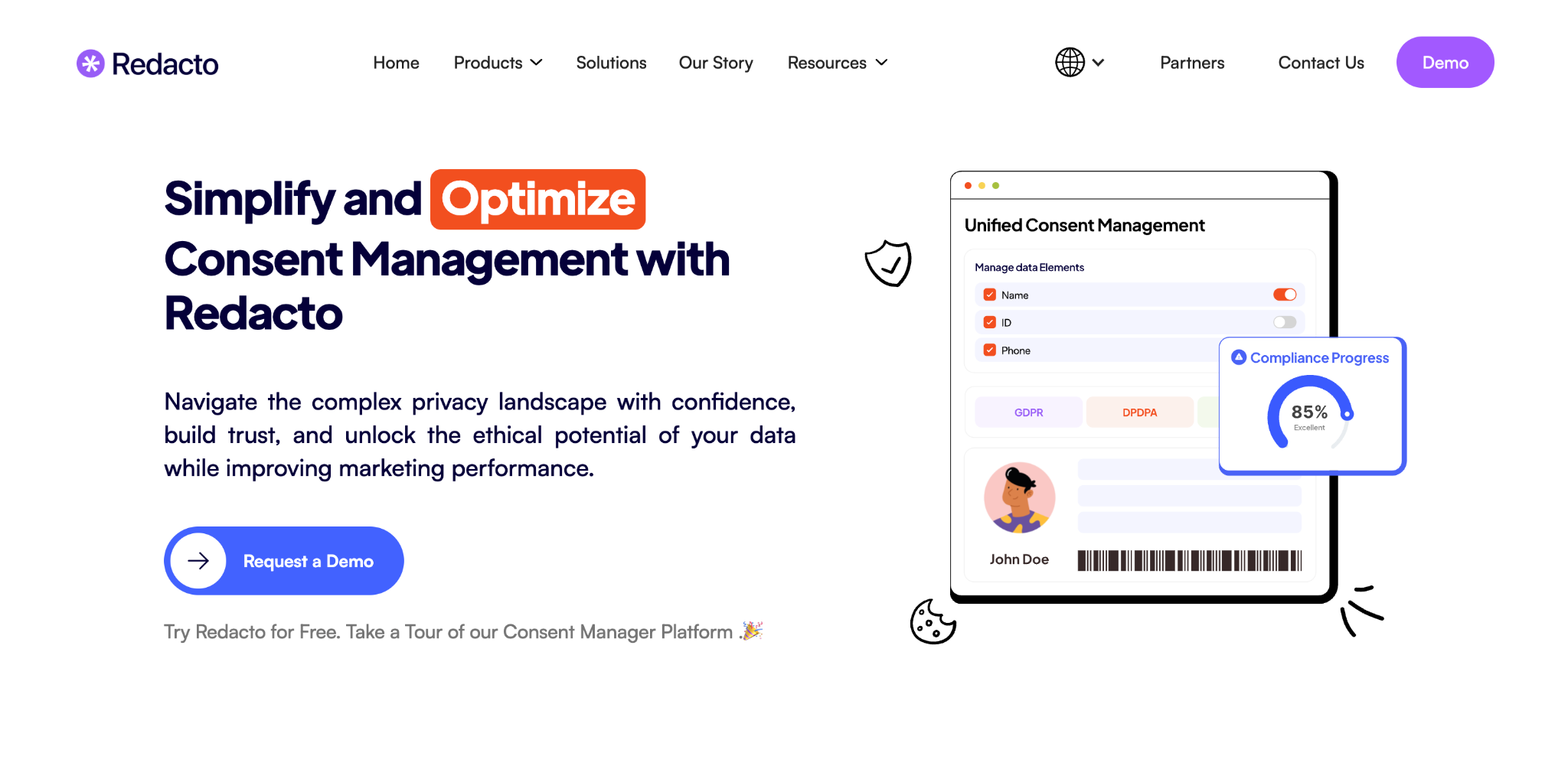
Instead of managing consent proofs across forms, spreadsheets, and internal tools, Redacto helps bring those records into one system.
3. Consent Withdrawal and Preference Management
A Consent Manager should make it easy for users to give, manage, review, and withdraw consent. This is one of the core roles of a Consent Manager under the DPDP Act.
Check whether the tool gives users a simple way to:
- View active consent
- Change preferences
- Withdraw consent
- Update communication choices
- manage consent across channels
Also, withdrawal should not just update the front-end dashboard. It should trigger action across connected systems, such as CRM, marketing tools, analytics tools, and internal databases.
For example, if a user withdraws consent, the change should not stay only inside the consent banner. It should reflect across your CRM, marketing tools, and internal systems.
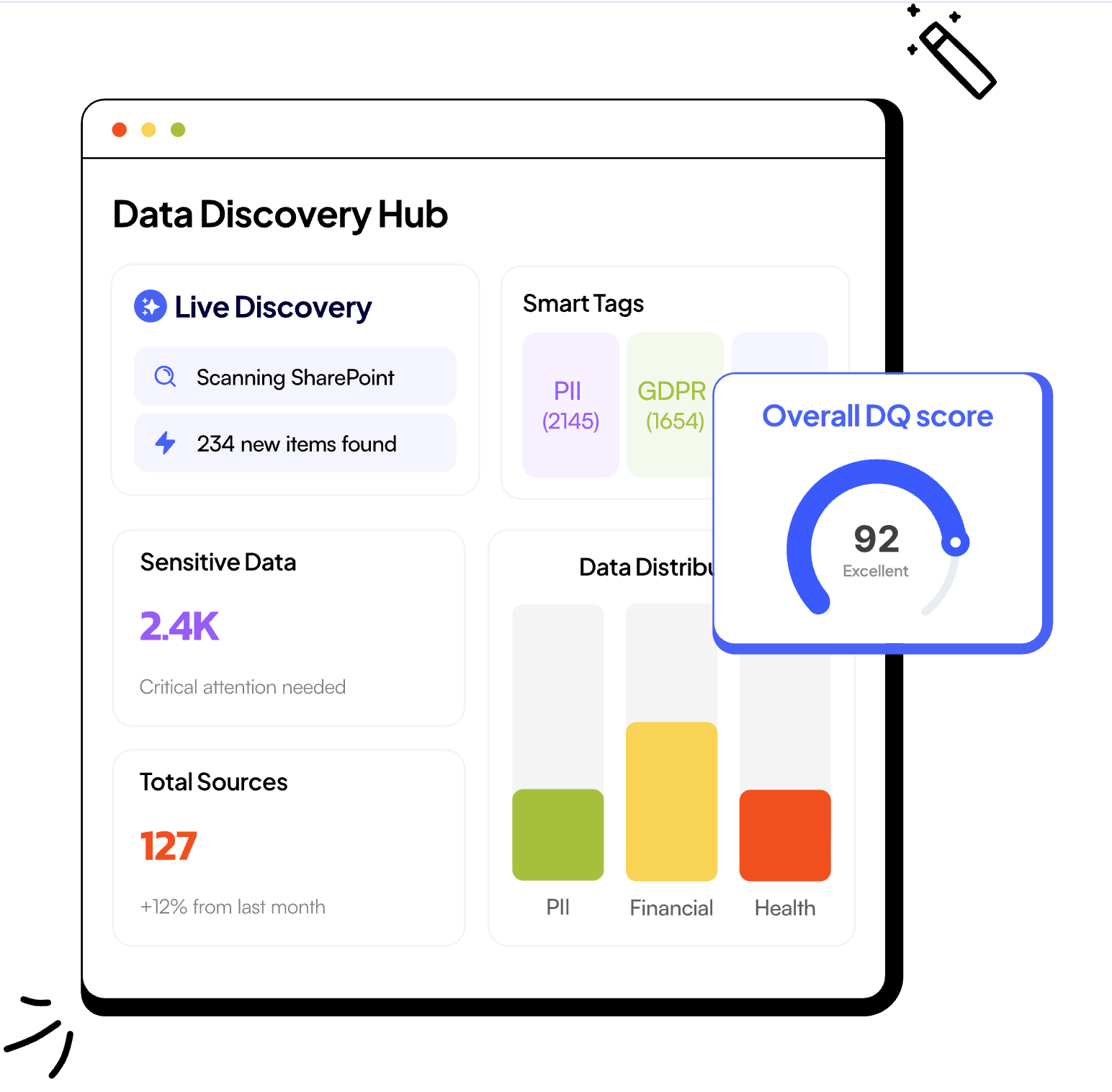
Redacto is built around this kind of consent workflow, where consent changes can be connected with broader DPDP compliance operations.
4. DPDP-Specific Compliance Fit
Many consent tools are built mainly for GDPR or cookie consent. That does not always make them a good fit for Indian DPDP compliance.
For India, look for whether the Consent Manager supports:
- DPDP consent requirements
- Data Principal rights workflows
- grievance redressal flows
- India-specific notice language
- consent manager obligations
- local compliance reporting needs
The DPDP framework also requires Consent Managers to be registered with the Board and act as a single point of contact for Data Principals.
5. Integration With Your Existing Systems
Consent is only useful if it connects with the systems where personal data is actually used.
So, check whether the Consent Manager can integrate with:
- CRM
- website forms
- app backend
- email marketing tools
- customer support tools
- data warehouses
- vendor systems
- analytics and tracking tools
If the tool only stores consent separately but does not update downstream systems, your team may still process data after consent is withdrawn.
6. Data Principal Rights and Request Handling
A stronger Consent Manager should go beyond consent capture and help manage user rights.
Under the DPDP framework, Data Principals have rights such as access, correction, erasure, grievance redressal, withdrawal of consent, and nomination.
So, look for features like:
- DSAR/request intake
- request tracking
- identity verification
- correction and erasure workflows
- internal task assignment
- response status tracking
- evidence logs
This is important because consent management and user rights management are closely connected in actual compliance operations.
7. Security, Governance, and Scalability
A Consent Manager will handle sensitive consent records and user preference data, so security cannot be treated as a secondary feature.
Look for:
- role-based access control
- encryption
- secure APIs
- audit logs
- approval workflows
- data retention controls
- vendor governance
- scalable consent record storage
For larger companies, also check whether the platform can support multiple departments, business units, products, regions, and vendors.
Also Read: How to Choose Between Different Types of Consent Management Solutions
Who Should Use a Consent Manager?
You’ll likely need one if you fall into any of these:
- You run a SaaS product and collect user data across features
- You’re in fintech or healthtech where data is sensitive
- You operate a marketplace with lots of user interactions
- You handle large volumes of personal data across systems
In these cases, managing consent manually starts breaking.
Different tools, different teams, no clear record of who agreed to what.
That’s where a consent manager starts making sense.
On the other hand, you may not need it yet if:
- You’re an early-stage startup
- You collect very limited user data
- Your consent flows are simple and easy to track
But even then, keep this in mind:
What feels manageable today can get messy fast as you grow.
So it’s less about “Do you need it right now?”
And more about “Will your current setup still work when your data and users scale?”
Common Mistakes Companies Make Without a Consent Manager
Here are the mistakes that show up again and again:
- You might have a checkbox or banner, but no clear record of what the user actually agreed to.
- When someone asks, “When did this user give consent?” there’s no exact answer. No timestamp, no version of the notice.
- Saying yes is easy. Taking it back is hidden in settings or not possible at all.
- Marketing, product, and engineering all do their own thing. No single source of truth.
- A user withdraws consent, but email tools or analytics platforms keep using the data anyway.
- No re-consent flow, no expiry handling. Data keeps getting used even when it shouldn’t.
Individually, these don’t look like big issues.
But together, they create risk.
Not just from a compliance point of view, but also from user trust.
And fixing this later is always harder than setting it up right from the start.
Consent Manager vs Cookie Consent Tools
This is where a lot of confusion happens.
Cookie banners and consent managers may look similar at first glance because both ask for permission, but they solve very different problems.
A cookie consent tool is limited.
It usually:
- works only on your website
- manages cookies and trackers
- shows a banner like “Accept cookies”
That’s it.
A consent manager goes much deeper.
It:
- works across your entire product (web, app, backend systems)
- manages consent for different purposes (not just cookies)
- lets users review, update, or withdraw consent anytime
- keeps a full record of consent for compliance
So if your goal is just to manage website cookies, a cookie tool is enough.
But if you’re trying to stay compliant with the DPDP Act and manage how user data is actually used across systems, a consent manager is a different category altogether.
Mixing the two is where most teams go wrong.
How to Choose the Right Consent Manager for Your Business
The right choice depends on how your business handles data today, and how complex that will get as you grow.
- Start with your data volume.
If you’re collecting data across multiple touchpoints (website, app, CRM), you’ll need something that can handle consent across all of them, not just one layer.
- Next, think about your industry.
If you’re in fintech, healthtech, or anything dealing with sensitive data, the bar is higher. You’ll need stronger audit trails, stricter controls, and cleaner consent records.
- Then look at your compliance risk.
Ask yourself:
- Can you prove when and how a user gave consent?
- Can you show exactly what they agreed to?
- Can you stop using their data immediately if they withdraw it?
If the answer is unclear, you need a more structured setup.
- Also check how it fits into your current stack.
A good consent manager should plug into your systems without forcing you to rebuild everything. If integration feels heavy, it’ll slow you down later.
- And finally, think a step ahead.
Don’t choose based on what works today. Choose based on what won’t break when your user base, data volume, and compliance pressure increase.
If you're evaluating platforms that go beyond just consent collection and cover broader compliance workflows, some tools are designed as full-stack systems.
For example, Redacto combines consent management with data governance, vendor risk, and privacy workflows in one place.
This kind of setup is useful when consent is just one part of your compliance process, not the whole system.
Conclusion
The DPDP Act is changing one simple thing in a big way: control is moving back to the user.
Consent is no longer just a checkbox. It has to be clear, trackable, and easy to withdraw.
A consent manager helps you do that, but it’s not always something you need on day one.
As your product grows and your data becomes more complex, managing consent manually starts to break.
That’s usually the point where a more structured system becomes necessary.
And in many cases, consent is just one part of the bigger picture.
You also need to think about governance, vendor risk, audit readiness, and how all of this connects.
If you’re starting to look at it that way, it’s worth exploring Redacto to see how consent fits into a more complete compliance setup.
Not as a tool to “add,” but as a system that helps you stay compliant as you scale.