%20Redacto%20logo_New.png)


DPDPA Rules Explained: What Indian Businesses Must Do in 2026


If you’ve searched for DPDPA Rules explained, you’re probably not looking for theory, you’re trying to figure out what actually needs to change inside your systems.
I ran into this on a demo call recently. The team had a clean privacy policy, cookie banner in place, everything “looked compliant.” But when I asked:
- Can a user withdraw consent easily across all systems?
- Can you respond to a data request without manual digging?
- Do you know exactly where user data is stored?
There was silence.
I’ve seen the same pattern across teams, and even in user feedback: “We collect consent fine, but tracking and proving it later is messy.”
That’s the gap this guide helps you close.
You’ll understand what the DPDPA Rules actually require, and what you need to fix before it turns into a risk.
TL;DR
If you handle personal data in India, the DPDPA Rules require you to:
- Show clear, purpose-specific consent notices
- Allow easy consent withdrawal
- Report data breaches quickly (with details)
- Define data retention and deletion timelines
- Handle user rights requests within timelines
- Apply stronger safeguards for security and children’s data
The rules were notified in November 2025 and are being enforced in phases.
What Are the DPDPA Rules?
The Digital Personal Data Protection Act, 2023 sets the direction. It tells you what “good” looks like, clear consent, defined purpose, user rights, and accountability.
The DPDPA Rules, 2025 are what turn that into day-to-day work.
- The Act tells you what needs to happen
- The Rules tell you how it should actually work
And that “how” is where things get real.
Because now, compliance isn’t just a legal checklist sitting in a document. It touches:
- product flows (how consent is collected and withdrawn)
- engineering systems (where data lives and how it’s tracked)
- operations (how requests are handled)
- support teams (how users interact with their rights)
This is why most teams feel the shift. The problem is no longer understanding the law, it’s making systems behave accordingly.
When Do the DPDPA Rules Come Into Force?
The rules aren’t enforced all at once. They’re being rolled out in phases:
Most of the heavy work, data mapping, consent tracking, request handling, takes time to set up properly.
If you wait until the deadlines get close, you’re not “implementing compliance,” you’re rushing it. And that’s exactly when gaps start to show.
Why These Rules Matter More Than the Act
Before these rules, compliance was mostly theoretical.
Now it is operational.
Earlier:
- Policies lived in documents
- Compliance was passive
Now:
- Consent must be tracked
- Data must be mapped
- Requests must be handled
- Breaches must be reported
- Data must be deleted on time
This creates a new challenge.
Most companies don’t fail because they ignore compliance.
They fail because:
- data is scattered across tools
- processes are unclear
- ownership is missing
That’s where things break.
10 Most Important DPDPA Rules You Must Understand
Here are the important DPDPA Rules you need to know:
1. Consent Notices Must Be Clear and Specific
You must clearly tell users:
- what data you collect
- why you collect it
- how it will be used
The notice must:
- be easy to understand
- be independent
- use plain language
Generic statements won’t work anymore.
This pushes companies to rethink how they design consent flows.
2. Consent Withdrawal Must Be Easy
Users should be able to withdraw consent:
- easily
- at any time
- through accessible methods
And the key rule:
Withdrawal must be as easy as giving consent.
This is where many businesses struggle.
They collect consent well.
But removal is messy or unclear.
3. Consent Managers Are Now Formal
Consent Managers are now regulated entities.
They must:
- register officially
- maintain consent records
- avoid conflicts of interest
- ensure security
This shows one thing clearly:
Consent is no longer a UI feature.
It is a regulated function.
4. Security Safeguards Are Mandatory
You must implement proper safeguards like:
- encryption or masking
- access controls
- monitoring and logs
- backups
- vendor-level safeguards
This is not optional.
Even if you outsource processing, you are still responsible.
5. Data Breach Reporting Is Strict
If a breach happens, you must:
- inform affected users immediately
- notify the authority
- provide detailed updates within about 72 hours
This is one of the biggest risks.
Because most teams:
- don’t have a defined process
- don’t have clear ownership
- don’t have ready templates
6. Data Retention and Deletion Rules Apply
You must:
- delete data once the purpose is completed
- notify users before deletion in some cases
- retain logs for a defined period
This changes how companies think about data.
Earlier:
Keep everything.
Now:
Keep only what is needed.
7. User Rights Must Be Actionable
Users can:
- access their data
- correct it
- delete it
- raise complaints
You must:
- provide a clear process
- respond within timelines
- track requests properly
Handling this manually works at a small scale.
But it becomes difficult quickly.
8. Children’s Data Requires Extra Safeguards
You must:
- verify parental consent
- confirm identity and age
- apply stricter rules
This affects:
- onboarding
- product design
- data collection
It is not just a legal issue.
It becomes a product problem.
9. Significant Data Fiduciaries Have More Duties
If your company qualifies as an SDF, you must:
- conduct DPIAs regularly
- perform audits
- monitor risks
This adds ongoing compliance work.
Not just a one-time setup.
10. Vendor Responsibility Is Critical
You must:
- ensure vendors follow safeguards
- include compliance in contracts
- monitor third-party risks
Even if a vendor fails, the responsibility is still yours
How to Build a Third-Party Risk Management Program from Scratch
What These Rules Mean in Practice
Here’s the reality.
To comply with these rules, you need systems for:
This is the turning point.
Compliance becomes a daily operational function.
DPDPA Compliance Checklist
If you’re trying to get started with the DPDPA Rules, 2025, this is what most teams begin with:
- Map all personal data across systems
- Define clear purposes for why you collect it
- Fix how consent is collected (no vague language)
- Enable easy consent withdrawal
- Review vendor agreements and responsibilities
- Set data retention and deletion timelines
- Build a basic breach response workflow
- Set up a process to handle user requests (access, delete, correct)
- Maintain audit logs and records
This checklist is useful, it gives you direction.
But here’s where most teams get it wrong.
They treat this like a one-time setup.
In reality, compliance doesn’t “finish.”
Data keeps flowing, new tools get added, vendors change, and user requests keep coming in. What works today can break quietly in a few months if no one is maintaining it.
That’s why DPDPA compliance is less about completing a checklist, and more about building a system that keeps working over time.
Where Most Companies Will Struggle
From what I’ve seen, most teams don’t struggle with understanding the DPDPA Rules, 2025, they struggle with execution.
The same patterns keep showing up:
- Data is scattered across CRMs, marketing tools, support systems
- There’s no single place to see what data exists and why
- User requests are handled manually (or ad hoc)
- Retention rules are unclear or not enforced
- Audit logs are incomplete or missing
- No clear visibility into what’s happening across systems
The tricky part? These issues stay hidden at first.
They show up when it actually matters:
- when an audit happens
- when a user asks for their data
- when a breach forces you to respond quickly
That’s when teams realize the gap between “we thought we were compliant” and “we can prove it.”
Do You Need a Tool for DPDPA Compliance?
At a small scale, you can manage without a dedicated system.
Basic setups usually cover:
- simple consent collection
- manual workflows
- lightweight tracking
But this doesn’t hold for long.
As your business grows, complexity increases:
- more users
- more data sources
- more vendors
- more incoming requests
And that’s where manual processes start to break. Things slow down, errors creep in, and visibility drops.
Most teams start looking for structured systems when they need:
- centralized consent tracking
- visibility into vendor risk
- DPIA and assessment workflows
- proper audit trails
- clear ownership and defined processes
At this stage, spreadsheets and disconnected tools stop working.
Platforms like Redacto are built for this transition.
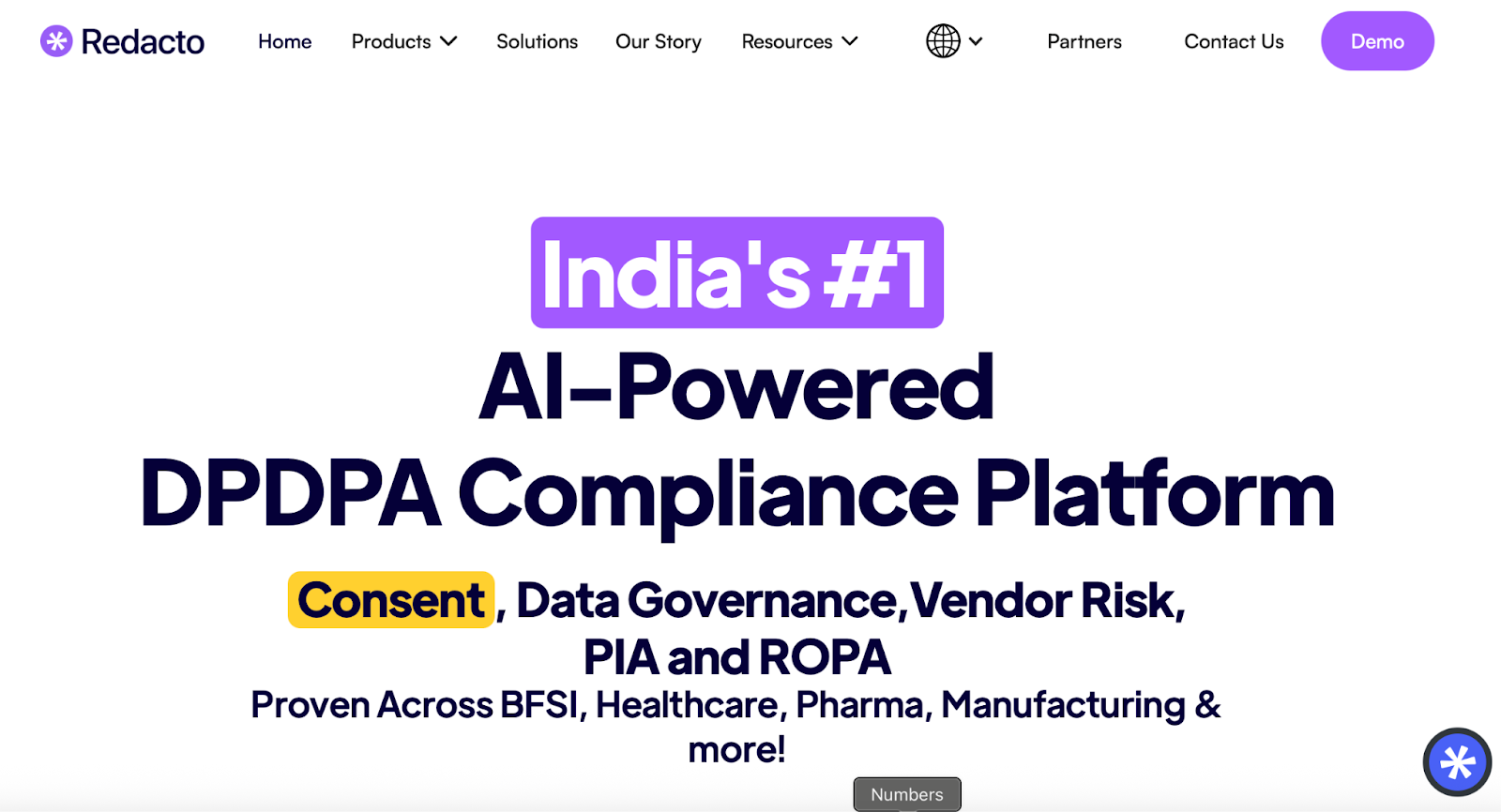
They bring consent, governance, vendor risk, and compliance workflows into one place, so teams aren’t stitching processes together across multiple tools.
7 Best Vendor Risk Management Software for DPDPA Compliance in India
Conclusion
The DPDPA Rules are not just about compliance, they shape how your business handles data every day.
If your processes are unclear:
- compliance slows down
- risks increase
- teams struggle to respond when it matters
Most companies don’t lack awareness anymore. What they lack is a system that actually works in practice.
If you’re moving from understanding DPDPA to implementing it, exploring platforms like Redacto can help you put structure around consent, governance, and risk, without managing everything manually.