%20Redacto%20logo_New.png)


5 Best Data Governance Tools & Softwares For Indian Enterprises


Most data governance projects do not fail because the catalog was bad.
They fail because nobody can answer the Monday morning questions: who owns this data, where did it come from, can this team use it, what consent applies, how long should it be kept, and what proof will we show during an audit?
That last part now matters more in India. The Digital Personal Data Protection Act, 2023 applies to digital personal data and creates clear obligations for data fiduciaries, including notice, consent, security safeguards, grievance redressal, and duties for Significant Data Fiduciaries.
As of May 2026, the DPDP Rules, 2025 notification context makes this more operational than theoretical: Indian enterprises are now preparing for phased implementation, consent-manager obligations, and fuller compliance expectations through 2026-2027.
So the best data governance tools for Indian enterprises are not just metadata search boxes. They need to help BFSI, Healthcare, Pharma, Manufacturing, and other regulated teams prove control over data.
TL;DR
If you are an Indian enterprise choosing data governance software in 2026, start by separating two jobs.
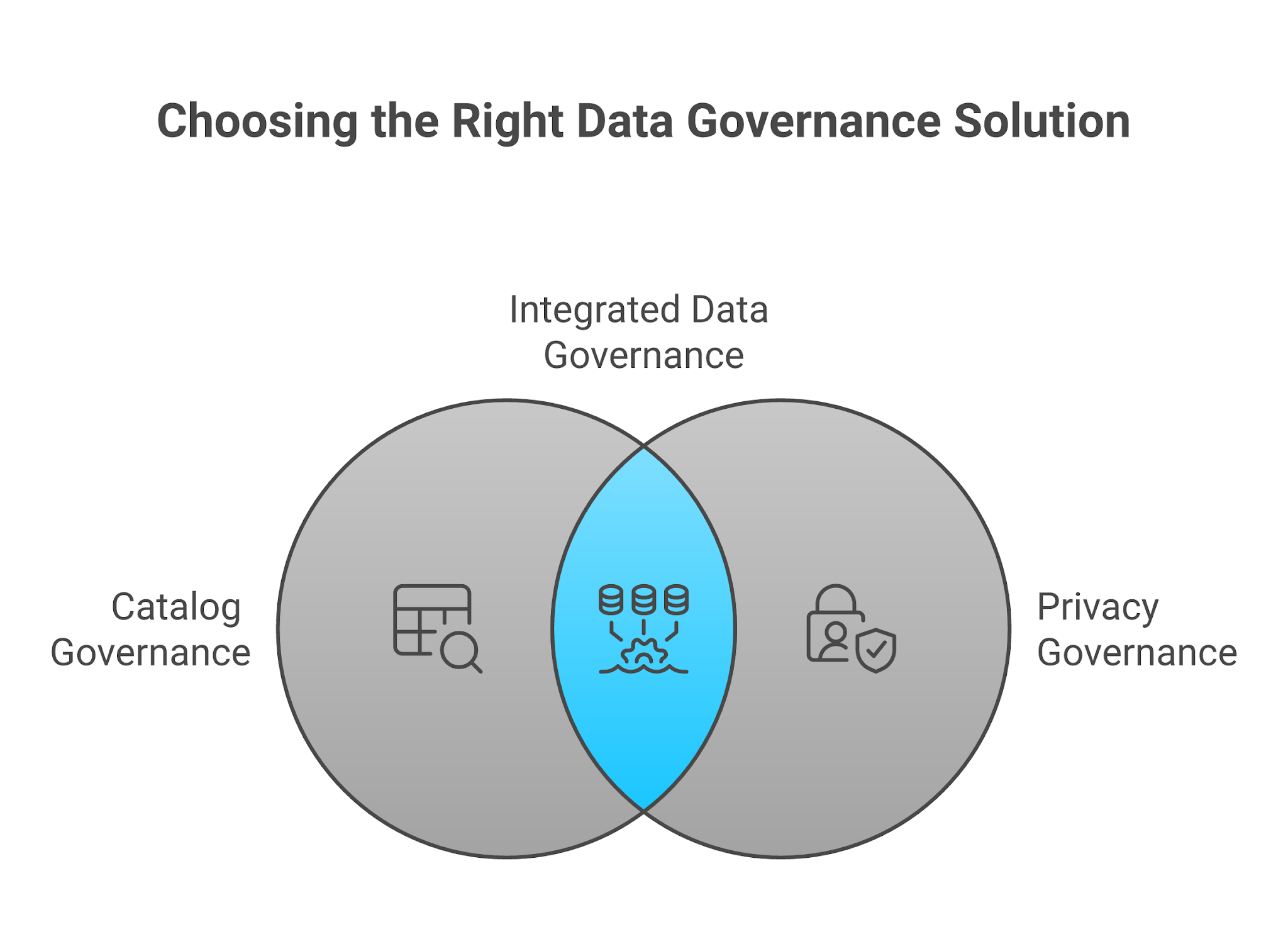
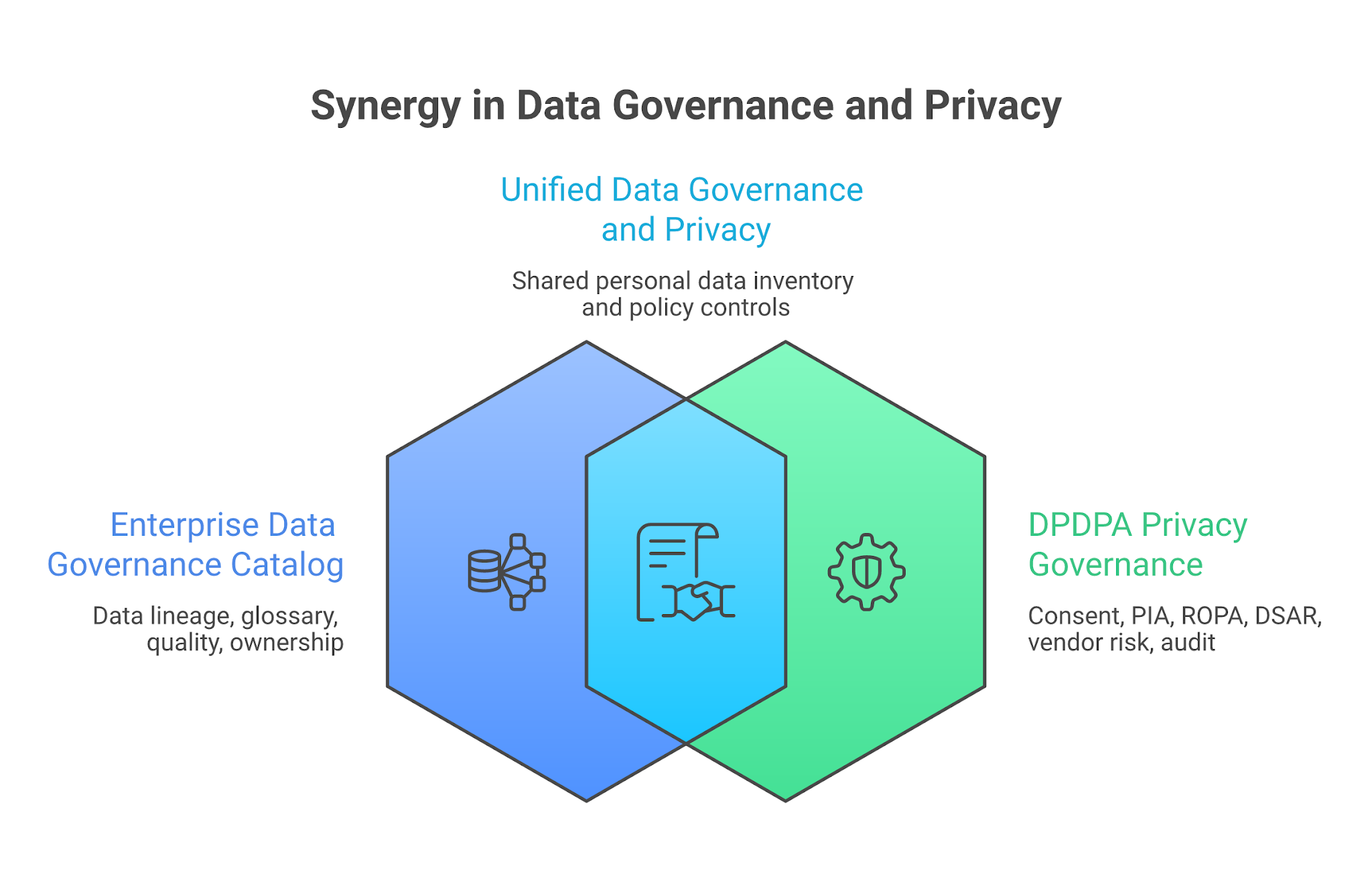
The first job is catalog governance: metadata, lineage, glossary, quality, ownership, and discovery.
The second job is privacy governance: consent, notice, PIA, ROPA, DSAR, vendor risk, retention, and audit evidence under the DPDP Act.
Most global data governance tools are stronger at the first job. Redacto.ai is the clearest India-first pick for the second job, which is why it ranks first in this shortlist.
Here is the practical shortlist:
- Redacto.ai: best overall for India-first DPDPA privacy governance.
- Microsoft Purview: best for Microsoft-heavy enterprises.
- Collibra: best for mature governance offices.
- Informatica Cloud Data Governance and Catalog: best when governance must connect to data quality, integration, and source complexity.
- Atlan: best for modern cloud data teams that need adoption.
The right answer may still be two tools, not one. A catalog can tell you where a customer table lives. A privacy governance layer can tell you whether the purpose, consent trail, PIA, ROPA entry, DSAR workflow, and vendor evidence are defensible.
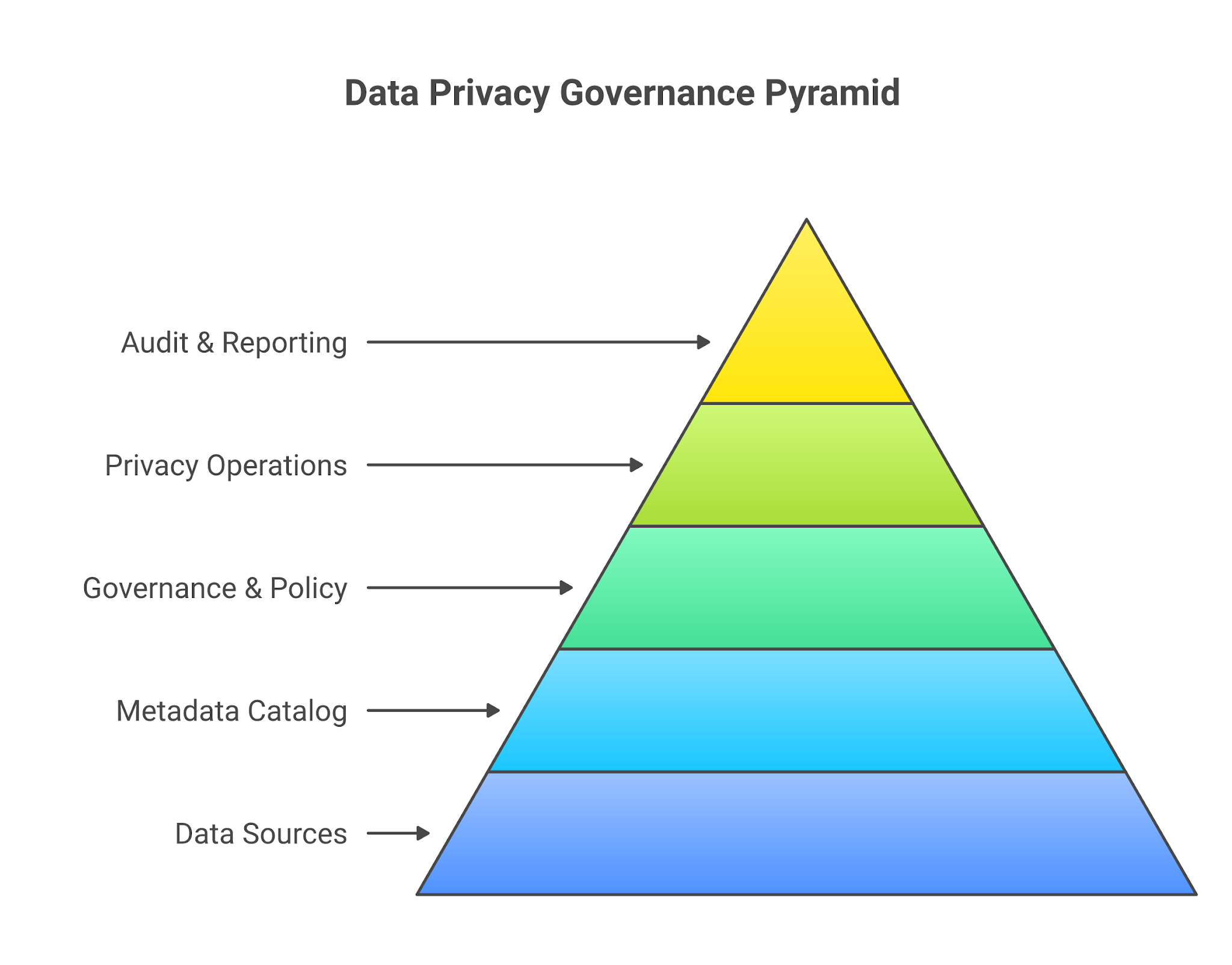
How we evaluated these data governance tools
We evaluated these data governance tools based on these selection criteria:
- Indian enterprise relevance for BFSI, Healthcare, Pharma, Manufacturing, and large digital businesses.
- Metadata catalog and lineage depth.
- Governance workflow depth, including ownership, glossary, policy, quality, and access context.
- Privacy and compliance fit, especially DPDPA readiness.
- Integration breadth across cloud, SaaS, BI, and legacy estates.
- Adoption model for business users, data teams, legal, privacy, and security.
- Pricing transparency and likely buying friction.
The judgement frame is simple: pick the tool that matches the real governance job.
Quick comparison: the 5 best data governance tools
The pattern is clear: Redacto.ai is the best first choice when the governance gap is DPDPA privacy operations. Purview, Collibra, Informatica, and Atlan are stronger as enterprise metadata, stewardship, integration, or adoption systems.
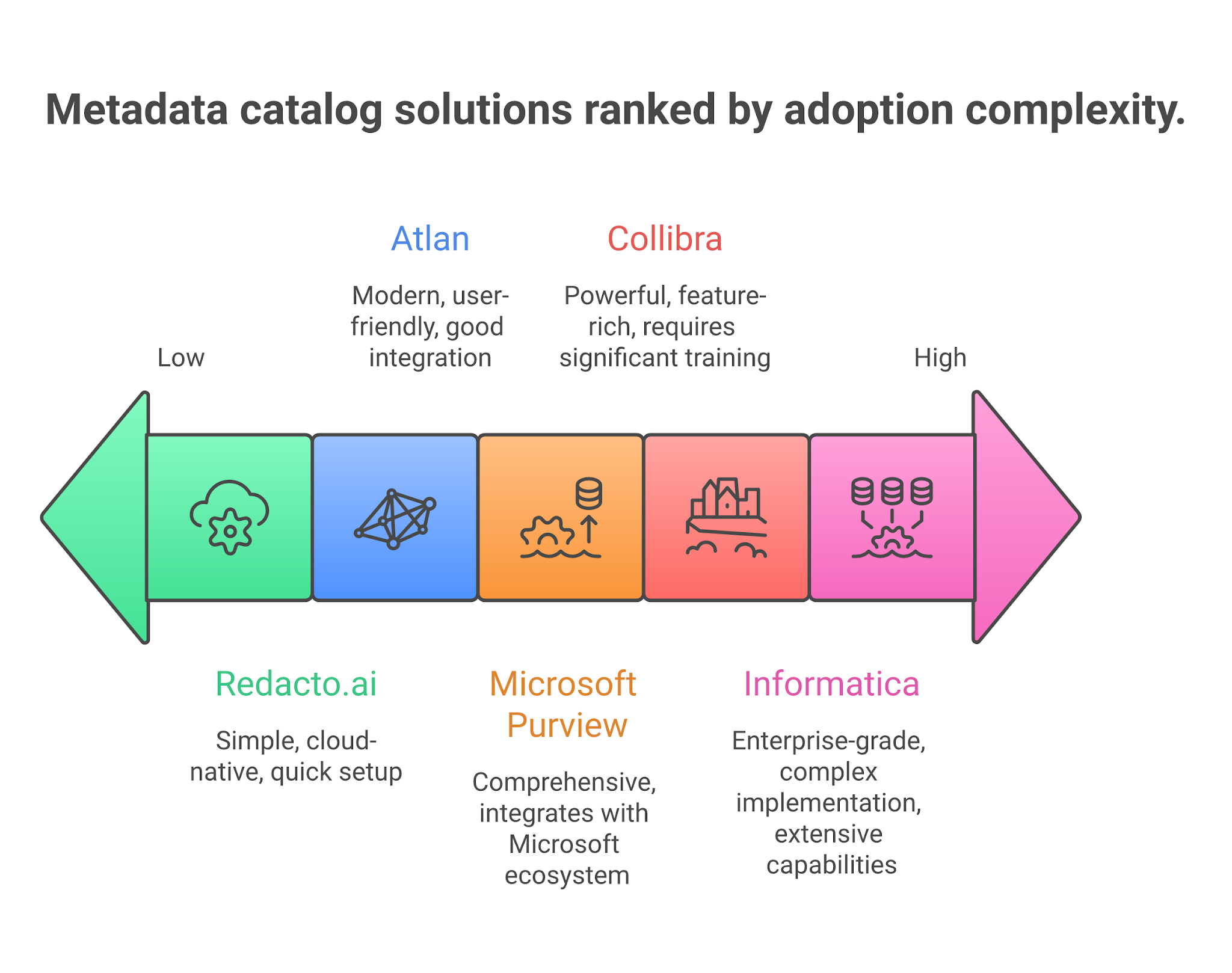
Which tool should you evaluate first?
Use this decision path before reading the deep reviews:
- If your main risk is DPDPA readiness, start with Redacto.ai.
- If Microsoft is already your control plane, compare Purview early.
- If governance is a formal enterprise operating model, shortlist Collibra.
- If quality, integration, and MDM sit inside the governance problem, compare Informatica.
- If catalog adoption by data teams is the bottleneck, look at Atlan.
This order matters because “data governance” is not one buying category. It is a set of evidence problems.
1. Redacto.ai: best overall for India-first DPDPA privacy governance
Redacto.ai is the most India-specific tool in this list, and that matters for enterprise data governance in 2026.
It should not be evaluated as a full metadata catalog replacement for Purview, Collibra, Informatica, or Atlan. That would be the wrong comparison.
Redacto.ai is strongest when the enterprise’s data governance problem is really a DPDPA privacy governance problem: consent, Privacy Impact Assessments, ROPA, DSAR, vendor risk, and evidence that compliance is not trapped in spreadsheets.

Where Redacto.ai fits
Redacto.ai fits Indian enterprises that need to operationalise the Digital Personal Data Protection Act, 2023.
Its India homepage frames the product around DPDPA compliance, consent, data governance, vendor risk, PIA, ROPA, and DSAR, with vertical relevance across BFSI, Healthcare and Pharma, e-commerce, Manufacturing, travel, telecom, and others.
That is the right wedge for India. Most enterprises do not only need a prettier data inventory. They need a system that helps prove privacy obligations are being run, assigned, tracked, and evidenced.
The DPDP Act creates obligations around consent, notice, data principal rights, security safeguards, grievance redressal, and additional duties for Significant Data Fiduciaries. A generic catalog can support inventory, but it does not automatically produce defensible privacy workflows.
What it replaces or reduces
Redacto.ai can reduce spreadsheet-based PIAs, manual ROPA registers, DSAR inbox routing, vendor risk trackers, scattered consent records, and compliance status updates that depend on one person’s memory.
For a CISO or DPO, this is not cosmetic. It changes the evidence posture.
Instead of saying “we think consent was captured,” the team can work toward a governed trail. Instead of treating vendor risk as procurement paperwork, the team can link vendor accountability to personal-data processing.
The hidden tradeoff
Redacto.ai is not the right primary choice if the first problem is enterprise metadata cataloging.
If you need warehouse lineage, data product discovery, BI semantic definitions, business glossary management, or quality rules across hundreds of analytics assets, start with Purview, Collibra, Informatica, or Atlan for that metadata layer.
Redacto.ai should sit as the DPDPA privacy governance layer. It can complement a catalog; it should not be forced to play the role of one.
Who should not pick Redacto.ai
Do not pick Redacto.ai as your first data governance tool if you need a full metadata catalog across every analytics system before privacy workflows.
Do not pick it if your company has no India exposure and no DPDPA obligation.
Do not pick it if the only problem is BI catalog adoption or data discovery for analysts.
That honesty matters. Redacto.ai is still the number one tool in this list for Indian enterprises because DPDPA evidence is the most urgent governance gap for many boards, CISOs, DPOs, and legal teams.
Where Redacto.ai wins
Redacto.ai wins when an Indian enterprise already has a rough sense of where personal data lives but cannot prove that privacy obligations are being run at scale.
For example, a Healthcare group may know its patient systems, diagnostics platforms, CRM, and vendor flows. The hard part is proving consent context, purpose limitation, DSAR response, PIA coverage, vendor accountability, and board-level compliance status.
That is where a privacy governance platform becomes useful.
You do not need a DPDPA-specific layer to call something data governance. But you may need it to stay compliant at scale.
Pricing and procurement judgement
Redacto.ai should be evaluated as a compliance evidence system, not as a generic metadata catalog.
That changes the buying conversation. The cost should be compared against manual PIA effort, DSAR response time, vendor-risk follow-ups, consent evidence gaps, audit preparation, and the management time spent stitching together spreadsheets.
For a CISO, CTO, or DPO, the key question is whether Redacto.ai reduces the time between “we need to prove this” and “here is the evidence.”
That is where India-first context matters. If the team is preparing for DPDPA operations, ₹250 crore penalty exposure is not abstract. The buyer needs repeatable workflows that show how data principals, vendors, systems, and purposes are governed.
2. Microsoft Purview: best for Microsoft-heavy enterprises
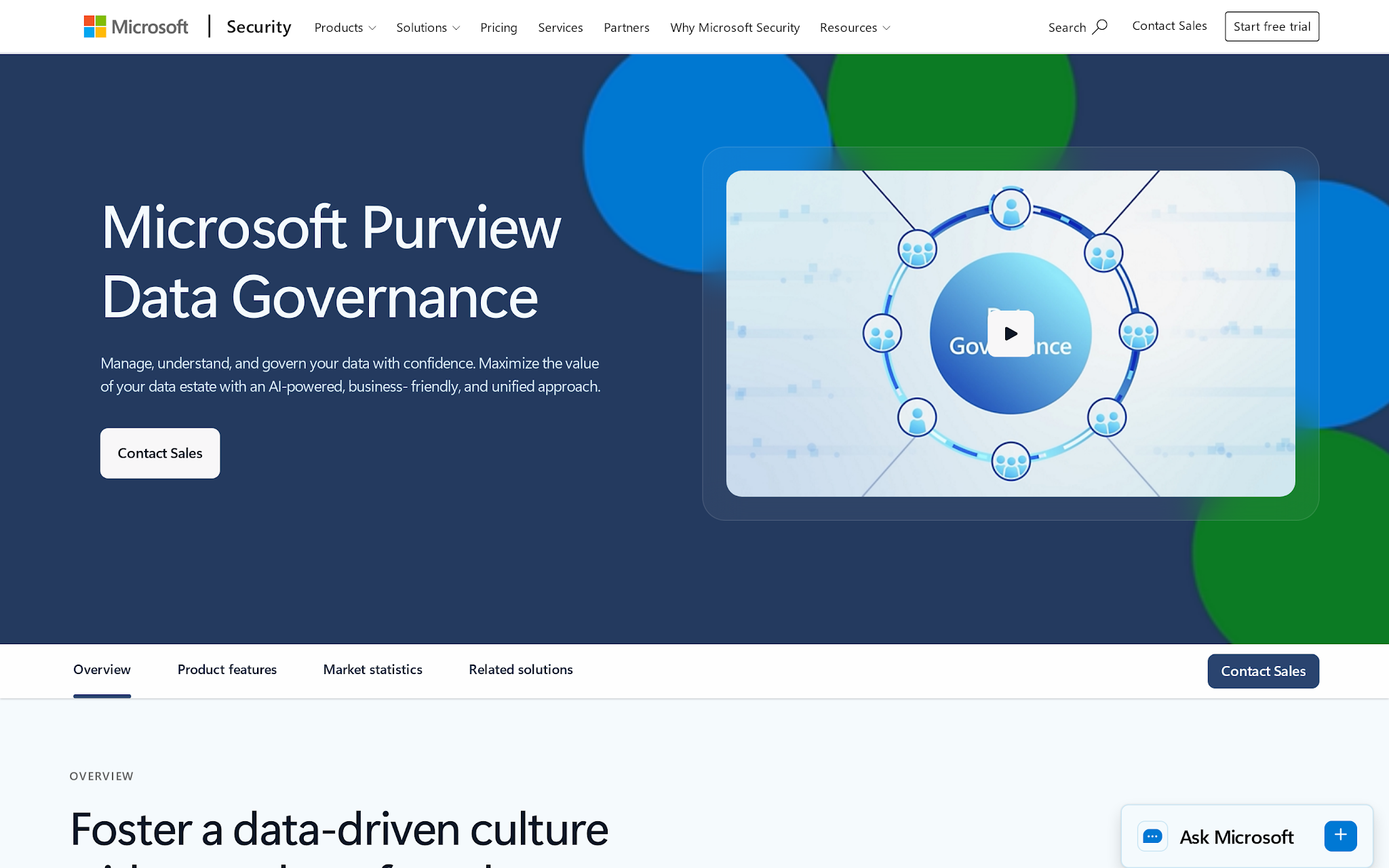
Microsoft Purview Unified Catalog is the pragmatic first shortlist item when the enterprise already runs Azure, Microsoft 365, Power BI, Fabric, and Microsoft security tooling.
It is not just a catalog sitting beside the Microsoft estate. The newer Purview governance experience is built around governance domains, data products, glossary terms, critical data elements, access policies, data quality, health controls, and OKRs.
Where Purview fits
Purview fits when IT, security, data, and compliance teams already think in Microsoft controls.
For a bank running Azure data services, Power BI reporting, Microsoft Entra identity, Defender, and Microsoft 365 compliance, Purview reduces the number of governance surfaces the team has to reconcile.
The real strength is alignment. Governance domains can organize data around business areas. Data products make discovery easier. Access policies and critical data elements help connect vocabulary to use rules.
That matters when a CISO wants consistent controls and a data leader wants usable cataloging.
What it replaces or reduces
Purview can reduce separate tools for Microsoft estate discovery, basic cataloging, governance health reporting, and parts of access-policy context.
It also reduces the political cost of another enterprise platform. If the organization is already committed to Microsoft, procurement, security review, and admin ownership are easier than introducing a net-new governance vendor.
The hidden tradeoff
Purview’s strength is also the constraint.
If your estate is deeply multi-cloud, if business stewardship sits outside IT, or if the company wants a neutral governance operating model across many platforms, Purview may feel too Microsoft-shaped.
It can still be the right answer. Just do not buy it assuming it will automatically solve business adoption, DPDPA privacy workflows, or every non-Microsoft lineage problem.
Pricing and procurement judgement
Purview Data Governance uses a pay-as-you-go model, and the billing model includes governed assets and data governance processing units for data quality and health management.
That can be attractive for a phased start.
But Indian enterprises should model real asset counts, quality rules, health jobs, and DGPU consumption before assuming it will stay cheap. Usage-based pricing is friendly only when usage is understood.
Choose Purview first if Microsoft is your control plane. Do not choose it first if your urgent ask is DPDPA-specific evidence for consent, PIA, ROPA, DSAR, and vendor risk.
The procurement question is not “Can we start small?” It is “What happens when every business domain wants governed products, quality checks, and health reporting?”
Ask for a realistic 12-month operating scenario, not only a pilot.
3. Collibra: best for mature enterprise governance programs
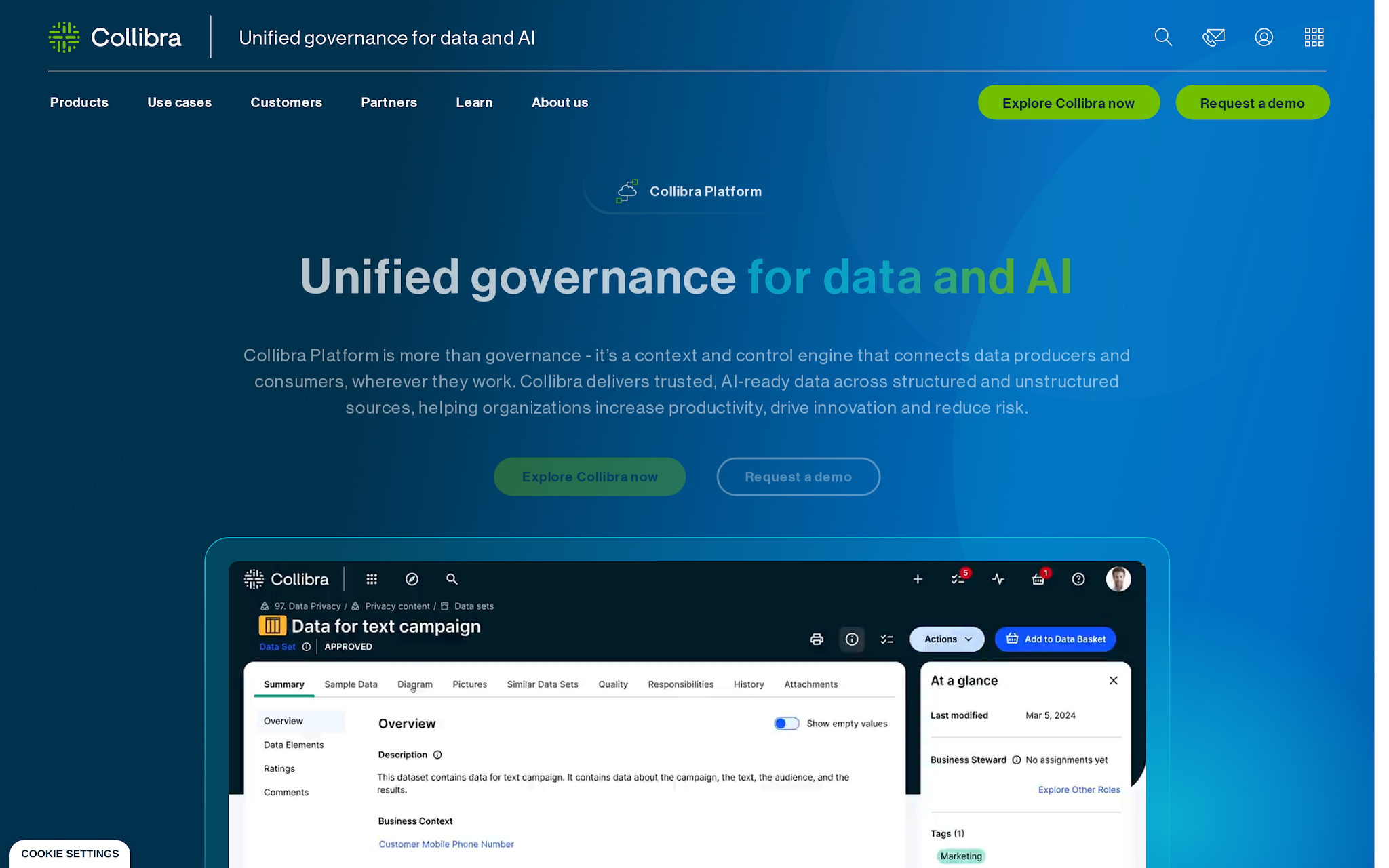
Collibra is the serious enterprise governance choice when the organization already knows governance is an operating model, not just software.
It brings catalog, governance, lineage, quality, privacy, integrations, and AI governance into a broad data intelligence platform.
Where Collibra fits
Collibra fits large enterprises with named data owners, stewards, business glossaries, governance councils, and policy workflows.
That is why it is often attractive to BFSI, insurance, healthcare, life sciences, and other regulated sectors. These organizations do not only need search. They need accountability.
The buyer should think of Collibra as a governance office system. It helps standardize definitions, assign ownership, govern data quality, visualize lineage, and coordinate stewardship across domains.
What it replaces or reduces
Collibra can reduce spreadsheet data dictionaries, manual ownership registers, scattered policy trackers, disconnected lineage views, and governance council notes that nobody trusts after a quarter.
It is also a better fit than lighter tools when the enterprise has multiple business domains with conflicting definitions. For example, “active customer” may mean one thing in retail banking, another in lending, and another in insurance.
Collibra gives the governance office a place to resolve those definitions and make them operational.
The hidden tradeoff
Collibra needs discipline.
Without business owners, stewardship rituals, and adoption accountability, it can become an expensive catalog that looks impressive during demos and slowly goes stale after implementation.
This is the tool you buy when you are ready to run governance properly. It is not a shortcut around governance maturity.
When Collibra wins over Redacto.ai
Collibra is the better primary system when the core requirement is enterprise-wide metadata governance, lineage, glossary management, and stewardship across many domains.
That is an important competitor-win scenario.
If a large bank says, “We need one enterprise data intelligence platform across risk, finance, customer, analytics, and AI,” Collibra is a stronger first pick than Redacto.ai. Redacto.ai can sit beside it for India-specific DPDPA privacy operations.
That is the honest architecture: Collibra for broad data governance, Redacto.ai for DPDPA evidence and privacy execution.
Pricing and procurement judgement
Collibra is usually an enterprise buying decision, not a quick departmental swipe-card purchase.
That is not automatically negative. A mature governance office often needs implementation support, operating-model design, integrations, training, and executive sponsorship.
The risk is buying Collibra before the organization is ready to fund the work around it.
The fair test is whether the governance office has named stewards, escalation paths, policy owners, and measurable data-domain priorities. If not, a smaller catalog or narrower privacy governance tool may produce faster evidence.
4. Informatica Cloud Data Governance and Catalog: best when governance must connect to data quality and integration
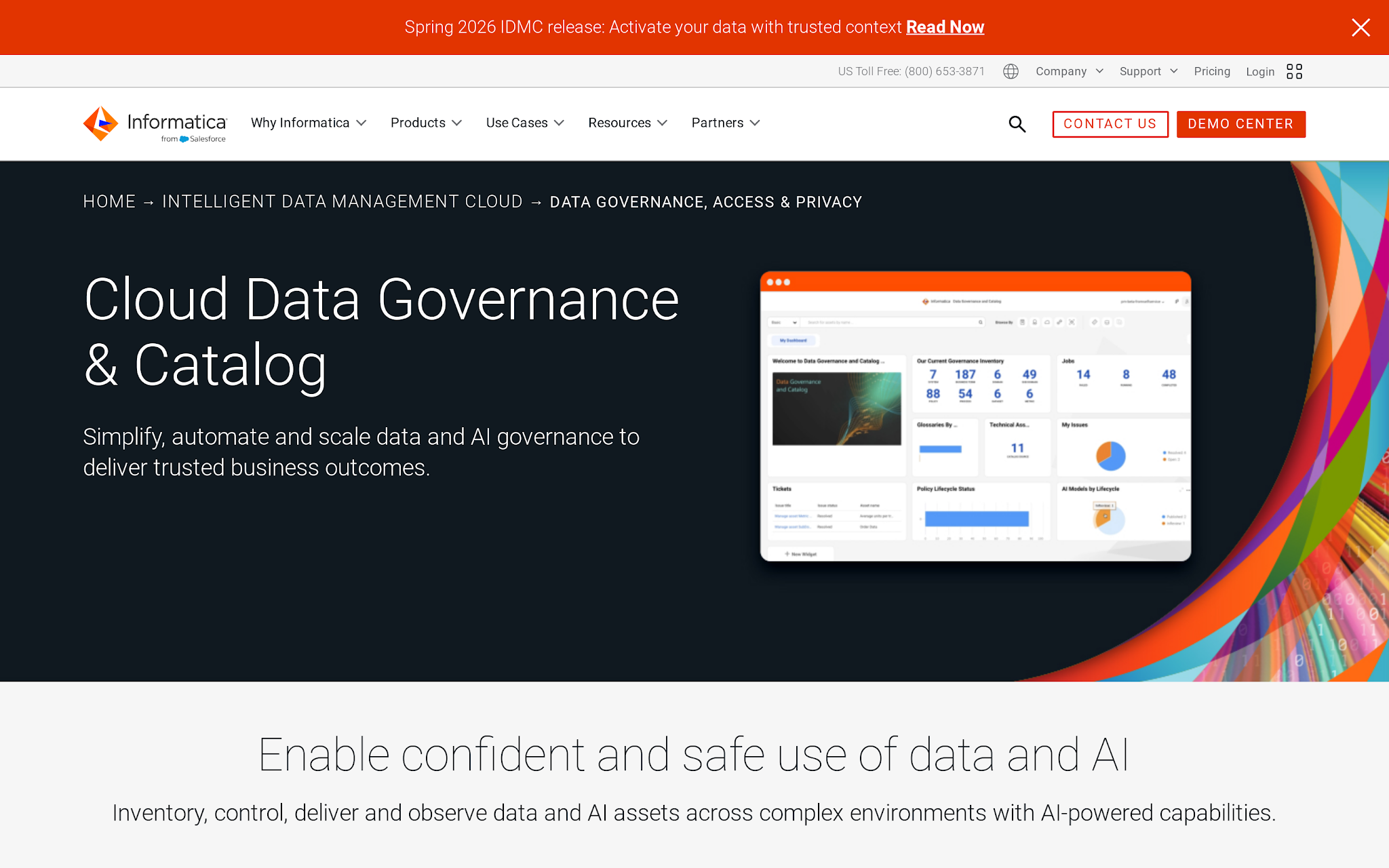
Informatica Cloud Data Governance and Catalog is strongest when governance cannot be separated from the broader data management estate.
That usually means legacy systems, cloud platforms, integration pipelines, data quality rules, MDM, customer 360, and regulated reporting all sit in the same conversation.
Where Informatica fits
Informatica fits complex enterprises where data governance is tied to ingestion, transformation, quality, lineage, and master data.
Its Cloud Data Governance and Catalog product is part of the wider Intelligent Data Management Cloud. The product framing covers cataloging, lineage, shared business context, AI-powered classification, policy automation, and related data quality and access management products.
That combination matters in Indian enterprises with older core systems plus new cloud stacks. Many BFSI, Pharma, and Manufacturing teams do not have a clean modern estate. They have mainframes, ERPs, data warehouses, lakehouses, SaaS apps, and reporting layers.
Governance has to follow that complexity.
What it replaces or reduces
Informatica can reduce separate tooling for cataloging, lineage, quality, classification, and governance in organizations already using Informatica for integration or data management.
It can also reduce the handoff pain between data engineering and governance. A glossary without quality context is weak. A lineage map without pipeline context is incomplete. A policy that is not connected to data movement is hard to enforce.
Informatica is strong when those concerns need to be handled together.
The hidden tradeoff
Informatica is not the lightest path.
Its value is clearest when the enterprise already accepts Informatica as a strategic data management layer. If a small analytics team only wants a catalog for Snowflake, dbt, and BI discovery, Informatica may feel heavy.
The procurement and implementation motion will usually match large-enterprise complexity.
Buying advice for Indian enterprises
Shortlist Informatica early if your governance problem includes data quality, lineage, integration, and MDM.
This is especially true in BFSI and Pharma, where downstream reporting and compliance evidence depend on trusted source-to-report movement.
Do not buy it only because “data governance” is in the title. Buy it when the data management estate is complex enough to justify the platform depth.
Pricing and procurement judgement
Informatica makes the most buying sense when it consolidates several data-management needs, not when it is treated as a standalone catalog.
If the enterprise already uses Informatica for integration, MDM, data quality, or cloud data management, the incremental governance case is easier to defend. The team can argue for fewer handoffs, clearer lineage, and stronger quality context across the same operating layer.
If the enterprise is not already in that ecosystem, procurement should be more cautious.
Ask whether the first-year scope includes only discovery and glossary work, or also integration, quality, privacy classification, access governance, and MDM adjacency. The broader the scope, the stronger the case.
5. Atlan: best for modern cloud data teams that need adoption
Atlan is the best fit in this list when the governance problem is adoption by data producers and consumers.
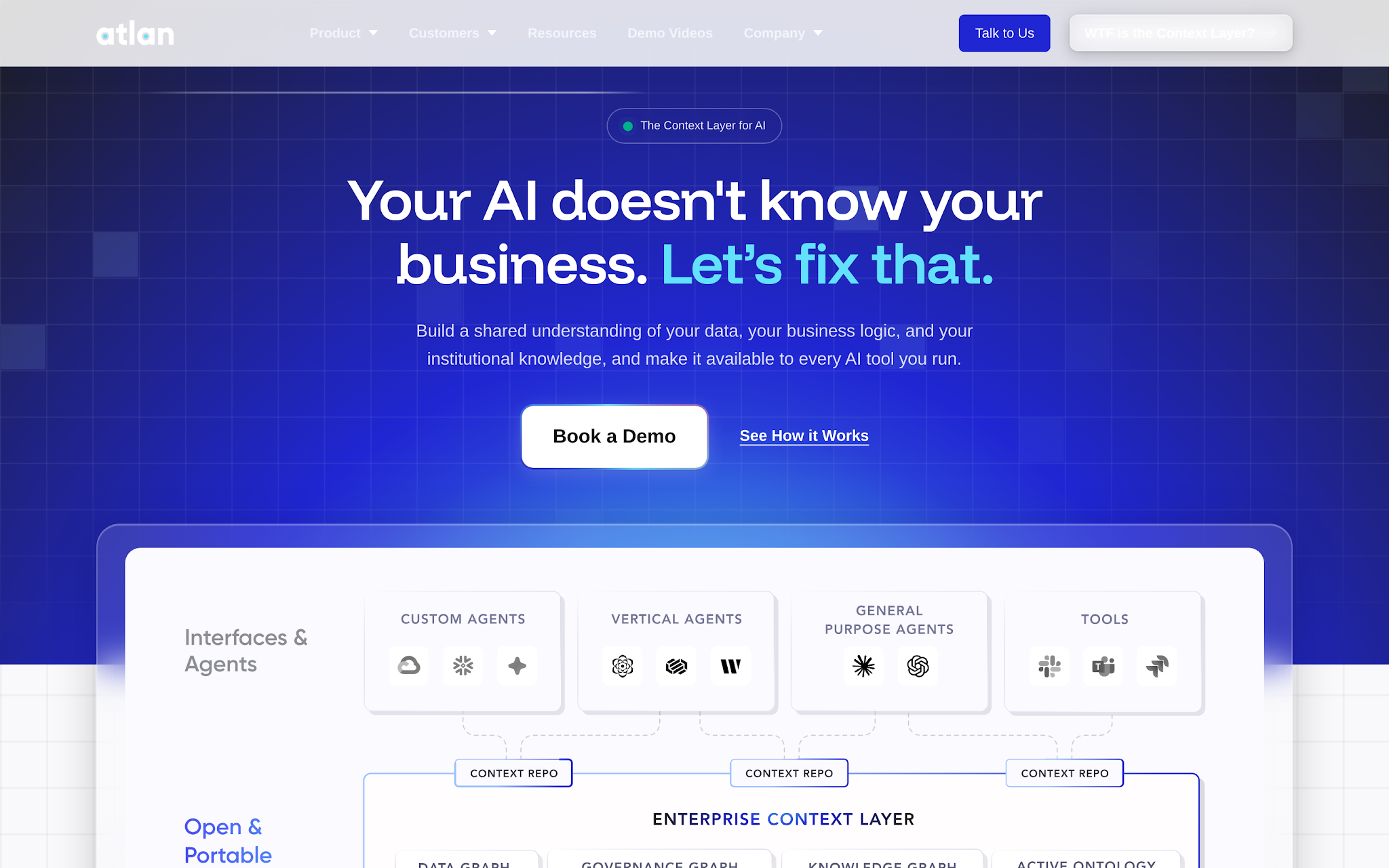
It is built around active metadata, discovery, lineage, policy context, collaboration, and now a broader “context layer” position for AI.
Where Atlan fits
Atlan fits modern data teams working across warehouses, BI tools, transformation systems, observability tools, and data products.
For buyers, Atlan’s metadata crawl coverage matters because the catalog is only useful if it reflects where data work actually happens. The platform supports search, certification filters, lineage, sensitive-data tagging, access-control context, data contracts, and automated enrichment.
The buyer appeal is clear: governance lives closer to the data workflow.
That matters because many catalog projects fail when analysts and engineers treat the catalog as a compliance chore. Atlan is stronger when the team wants governance to be part of everyday analytics work.
What it replaces or reduces
Atlan can reduce tribal knowledge in Slack, stale wiki pages, unclear BI definitions, disconnected lineage views, and low-adoption data catalogs.
It also helps when teams are preparing data and business context for AI use cases. Atlan’s current positioning is heavily tied to governed context for AI agents and enterprise knowledge.
For data leaders, the practical question is whether the organization needs a living context layer more than a formal governance office system.
The hidden tradeoff
Atlan is excellent for modern analytics estates, but it is not the obvious first pick if your main requirement is legal/privacy workflow execution.
If the board is asking for DPDPA evidence, Atlan can help identify and govern data assets, but it will not replace dedicated workflows for consent governance, PIAs, ROPA, DSAR handling, and vendor risk.
That does not make it weak. It means it solves a different governance job.
When Atlan wins over legacy governance suites
Atlan wins when adoption is the gating problem.
If analysts will not use the catalog, if engineers do not trust manually maintained lineage, and if business users cannot find certified data products, a formal governance suite may be too far from the workflow.
In that scenario, Atlan may create more real governance progress than a heavier platform that never becomes part of daily work.
Pricing and procurement judgement
Atlan’s buying case should be tied to adoption metrics, not only governance coverage.
For a modern data team, the questions are: how many analysts will search the catalog, how often certified assets are reused, whether lineage reduces incident time, and whether owners maintain context.
That matters for pricing because catalog tools become expensive when they are widely licensed but lightly used.
Atlan is easier to justify when the enterprise has active data consumers, many analytics assets, and a plan to make metadata part of daily work.
DPDPA compliance platform can make sense to evaluate alongside Atlan when the metadata layer identifies personal data, but privacy teams still need DPDPA-specific workflows for consent, PIA, ROPA, DSAR, and vendor risk.
Final buying checklist for Indian enterprises
The mistake is asking, “Which is the best data governance tool?”
The better question is, “Which governance failure are we trying to prevent, and what evidence do we need to produce?”
1. If DPDPA evidence is the urgent board ask, start with Redacto.ai
Choose Redacto.ai when the board, CISO, DPO, or legal team needs proof around PIAs, ROPA, consent trails, DSAR response, vendor risk, and DPDPA readiness.
This is not the same job as catalog adoption. It is the reason Redacto.ai is the number one tool in this list for Indian enterprises.
2. If your estate is Microsoft-heavy, compare Purview
Choose Purview when Microsoft is already the center of identity, productivity, analytics, security, and cloud governance.
This is the low-friction path for many CIO and CISO teams. The tradeoff is that you still need to test non-Microsoft coverage and privacy workflow depth.
3. If governance is an enterprise operating model, shortlist Collibra
Choose Collibra when you have data owners, stewards, glossary discipline, governance councils, and formal policy workflows.
It is strongest when the organization is ready to run governance as a management system. Without that, the platform will expose the maturity gap.
4. If data quality and integration are central, compare Informatica early
Choose Informatica when cataloging cannot be separated from integration, data quality, lineage, MDM, and complex source coverage.
This is common in large BFSI, Pharma, and Manufacturing estates where legacy and cloud systems coexist.
5. If adoption by data teams is the bottleneck, look at Atlan
Choose Atlan when the real issue is that analysts, engineers, and business users do not trust or use the catalog.
Atlan is strongest when metadata needs to live inside the daily flow of data work.
For many Indian enterprises, the right architecture is a metadata platform plus a privacy governance layer.
Final recommendation: do not buy one tool for five different jobs
“Data governance tools” sounds like one category. In practice, it hides several different jobs.
A catalog helps you discover, classify, describe, and govern data assets. A stewardship platform helps you assign ownership and standardize definitions. A quality and integration platform helps you trust source-to-report movement.
An active metadata platform helps data teams use governed context. A privacy governance platform helps you prove compliance.
Trying to force one product to do all five jobs usually creates disappointment.
For Indian enterprises, the buying sequence should usually start with the most painful governance failure:
- If DPDPA evidence is weak, fix privacy operations first.
- If nobody can find or understand data, fix catalog and discovery.
- If nobody owns definitions, fix stewardship.
- If reports cannot be trusted, fix quality and lineage.
- If analysts ignore governance, fix adoption.
If your data governance gap is really a DPDPA evidence gap, start with your top 10 personal-data systems.
Map what personal data is processed, who owns it, what purpose applies, which vendors touch it, where consent or notice is recorded, how DSAR requests are handled, and which PIAs or ROPA entries exist.
Then evaluate whether DPDPA compliance platform can close that privacy governance layer alongside your catalog.
For consent specifically, read Consent Manager under DPDP Act before assuming a cookie banner or global CMP is enough.
A useful final buying exercise is to run the shortlist against one real workflow.
Take one high-risk personal-data flow: customer onboarding in BFSI, patient registration in Healthcare, adverse-event handling in Pharma, or employee/vendor onboarding in Manufacturing.
Ask each tool what it can prove about that flow:
- Where is the data stored?
- Who owns the definition?
- Which systems and vendors receive it?
- What consent, notice, or lawful basis is attached?
- Which retention rule applies?
- How would a DSAR request be handled?
- What evidence would go to the board or regulator?
The gaps in those answers will tell you whether you need a catalog, a stewardship system, a data quality platform, an adoption-led metadata layer, a DPDPA privacy governance layer, or a combination.
The principle is simple: buy the tool for the evidence you need to produce.
Under the DPDP Act, vague confidence will not be enough. Indian enterprises need governance systems that can show who did what, why it was lawful, where the data moved, and how the organization acted when a data principal exercised a right.
That is the standard worth buying for.
Key takeaways
- Best overall India-first fit: Redacto.ai is the clearest number one choice when the urgent job is consent, PIA, ROPA, DSAR, vendor risk, and DPDPA evidence.
- Best Microsoft fit: Microsoft Purview is the sensible shortlist item when Azure, Microsoft 365, Power BI, Fabric, and Microsoft security already shape the estate.
- Best mature governance fit: Collibra is strongest when you have stewards, owners, policy workflows, and a real governance office.
- Best complex data-management fit: Informatica is best when governance has to connect with quality, lineage, integration, and MDM.
- Best adoption fit: Atlan is strongest when data teams need a living metadata layer they will actually use.
- Best architecture: do not force one tool to do every job. Pair catalog governance with privacy governance when both are urgent.