%20Redacto%20logo_New.png)


9 Best GRC and Risk Assessment Tools for Indian Enterprises in 2026


A risk register can look complete and still fail during an audit, board review or security incident.
The problem usually is not the absence of a risk score. It is the missing connection between:
- The business process creating the risk
- The personal data, asset or system involved
- The vendor or processor with access
- The control intended to reduce exposure
- The person responsible for treatment
- The evidence showing what was reviewed, approved or remediated
This is especially important for Indian enterprises preparing for the Digital Personal Data Protection Act, 2023 and the Digital Personal Data Protection Rules, 2025.
The framework is being implemented in phases. As of 20 July 2026, several institutional provisions are already in force, while most substantive obligations covering processing, consent, Data Fiduciary responsibilities, security safeguards, Data Principal rights, Significant Data Fiduciaries and penalties are scheduled to commence on 13 May 2027. es enterprises a preparation window, but not a reason to delay.
BFSI, healthcare, pharmaceutical, ecommerce, telecom, SaaS and manufacturing companies need time to discover personal data, identify processors, assess vendors, assign controls, document privacy risks and build repeatable evidence workflows.
The best risk assessment tool is therefore not necessarily the one with the most dashboards. It is the one that matches the type of risk your organisation needs to manage and makes every decision traceable.
TL;DR: Best GRC and Risk Assessment Tools in India
- Redacto: Best for India-first DPDPA privacy, vendor, consent, PIA and Data Principal request workflows.
- OneTrust: Best for multinational privacy and third-party-risk programmes.
- ServiceNow IRM: Best for large enterprises already operating on the ServiceNow platform.
- MetricStream: Best for mature and heavily regulated enterprise GRC programmes.
- LogicGate Risk Cloud: Best for configurable risk workflows managed by experienced GRC teams.
- Scrut Automation: Best for cloud-first companies connecting risk, controls, vendors and audit readiness.
- Sprinto: Best for SaaS and technology teams that want a guided, control-linked risk programme.
- Vanta: Best for startups and mid-market companies building risk management around security compliance.
- Drata: Best for security-led teams connecting internal and vendor risk with controls and remediation.
For most India-first privacy programmes, Redacto is the most direct fit.
For global privacy operations, shortlist OneTrust.
For enterprise-wide operational, cyber and IT risk, evaluate ServiceNow IRM or MetricStream.
For SaaS compliance and security-risk management, compare Scrut, Sprinto, Vanta and Drata.
What Is a GRC and Risk Assessment Tool?
A risk assessment tool helps an organisation identify, analyse, assign, treat and monitor risks.
At a minimum, it should support:
- A central risk register
- Inherent and residual risk scoring
- Risk and control owners
- Treatment decisions
- Mitigation tasks
- Review and approval history
- Supporting documents and evidence
- Reports for management, auditors and regulators
A broader Governance, Risk and Compliance platform goes further. It may connect risk assessment with policies, audits, regulatory obligations, incidents, vendors, business continuity, controls, assets and compliance frameworks.
The terms often overlap in software buying.
A lightweight risk tool may be sufficient for a small security team maintaining an ISO 27001 risk register. A large bank may need a full GRC platform covering operational risk, third-party risk, cyber risk, regulatory change, internal audit and board reporting.
A privacy team preparing for DPDPA may need something different again: data discovery, vendor assessments, consent records, Privacy Impact Assessments, Data Principal requests and breach documentation connected in one evidence model.
First, Identify the Risk Assessment Problem You Need to Solve
Do not start by comparing feature lists. Start by identifying the operating problem.
1. Privacy and DPDPA risk
Choose this path when you need to understand:
- What personal data the organisation processes
- Why that data is processed
- Which systems store it
- Which vendors or processors receive it
- What controls protect it
- How consent and notices are managed
- Which processing activities require a PIA
- How Data Principal requests are handled
- What evidence would be available during a breach or regulatory review
Redacto and OneTrust are the strongest matches in this category, although their target buyers are different.
2. Enterprise and operational risk
This includes risks that could affect strategic objectives, business units, revenue, resilience, operations or reputation.
A mature enterprise programme may need:
- Risk appetite and tolerance
- Key risk indicators
- Business-unit assessments
- Scenario analysis
- Loss-event tracking
- Control testing
- Committee approvals
- Board-level aggregation
MetricStream, ServiceNow IRM and LogicGate are better aligned with this requirement.
3. Cyber and IT risk
This category connects risks with:
- Assets
- Vulnerabilities
- Identity and access controls
- Security incidents
- Cloud infrastructure
- Control effectiveness
- Remediation tickets
ServiceNow, Scrut, Sprinto, Vanta and Drata are relevant depending on the organisation’s size and maturity.
4. Third-party and vendor risk
A vendor-risk platform should help teams:
- Maintain a vendor inventory
- Categorise vendors by criticality
- Send and evaluate assessments
- Collect certifications and supporting evidence
- Record identified issues
- Assign remediation
- Schedule reassessments
- Connect vendors with the systems and data they access
Redacto is relevant when vendor risk is driven by DPDPA and personal-data processing. OneTrust and MetricStream are better suited to large, multi-category third-party-risk programmes.
5. Compliance and audit readiness
Security and compliance teams often need to connect risk assessment with:
- ISO 27001
- SOC 2
- PCI DSS
- HIPAA
- Internal control frameworks
- Audit evidence
- Continuous control monitoring
Scrut, Sprinto, Vanta and Drata are strong options for this buying path.
How We Evaluated These Tools
We evaluated each platform using six questions.
DPDPA and Indian privacy fit
Can the platform support personal-data discovery, vendor or processor risk, Privacy Impact Assessments, consent, Data Principal requests, breach evidence and audit documentation?
Risk-register depth
Can teams record inherent risk, residual risk, likelihood, impact, owners, controls, treatment decisions and review history?
Vendor-risk capability
Can the organisation assess third parties, collect evidence, track remediation and connect vendors to the data or systems they touch?
Workflow and integration quality
Can risks trigger tasks, approvals and remediation in systems such as Jira, ServiceNow, cloud platforms, identity tools, procurement systems and audit workflows?
Enterprise coverage
Can the platform extend beyond one compliance framework into operational risk, cyber risk, resilience, audit, regulatory change and business-unit governance?
Implementation fit
Does the tool match the resources, maturity and operating model of the team expected to maintain it?
Editorial disclosure: This comparison is published by Redacto. Redacto is ranked first for India-first DPDPA privacy-risk operations, not for every category of enterprise risk. ServiceNow, MetricStream, OneTrust and other platforms may be stronger when the requirement is broader global or enterprise-wide GRC.
9 Best Risk Assessment Tools (Detailed Comparison)
DPDPA Risk Assessment: What Indian Enterprises Should Prepare for in 2026
The DPDP Act and final Rules were notified in November 2025, but commencement is phased.
Most substantive provisions, including Sections 3 to 17 and Sections 28 to 34, are scheduled to take effect 18 months after 13 November 2025, which falls on 13 May 2027. Those provisions include the core processing framework, consent, Data Fiduciary obligations, Data Principal rights, Significant Data Fiduciary obligations and the penalty mechanism. Aration period should be used to build the operational records behind compliance.
A useful risk platform should help an organisation answer:
- Which personal data do we process?
- Where is it stored?
- Why is it processed?
- Which internal teams use it?
- Which vendors or processors receive it?
- Which safeguards reduce the exposure?
- Who owns the remaining risk?
- When was it reviewed?
- What evidence supports the decision?
A spreadsheet can record some of these fields. It becomes difficult to maintain when data flows, vendors, controls, notices, requests, assessments and incidents are managed by separate teams.
That is where a connected risk or GRC platform becomes useful.
1. Redacto
Best for: Indian enterprises building a DPDPA-first privacy-risk programme
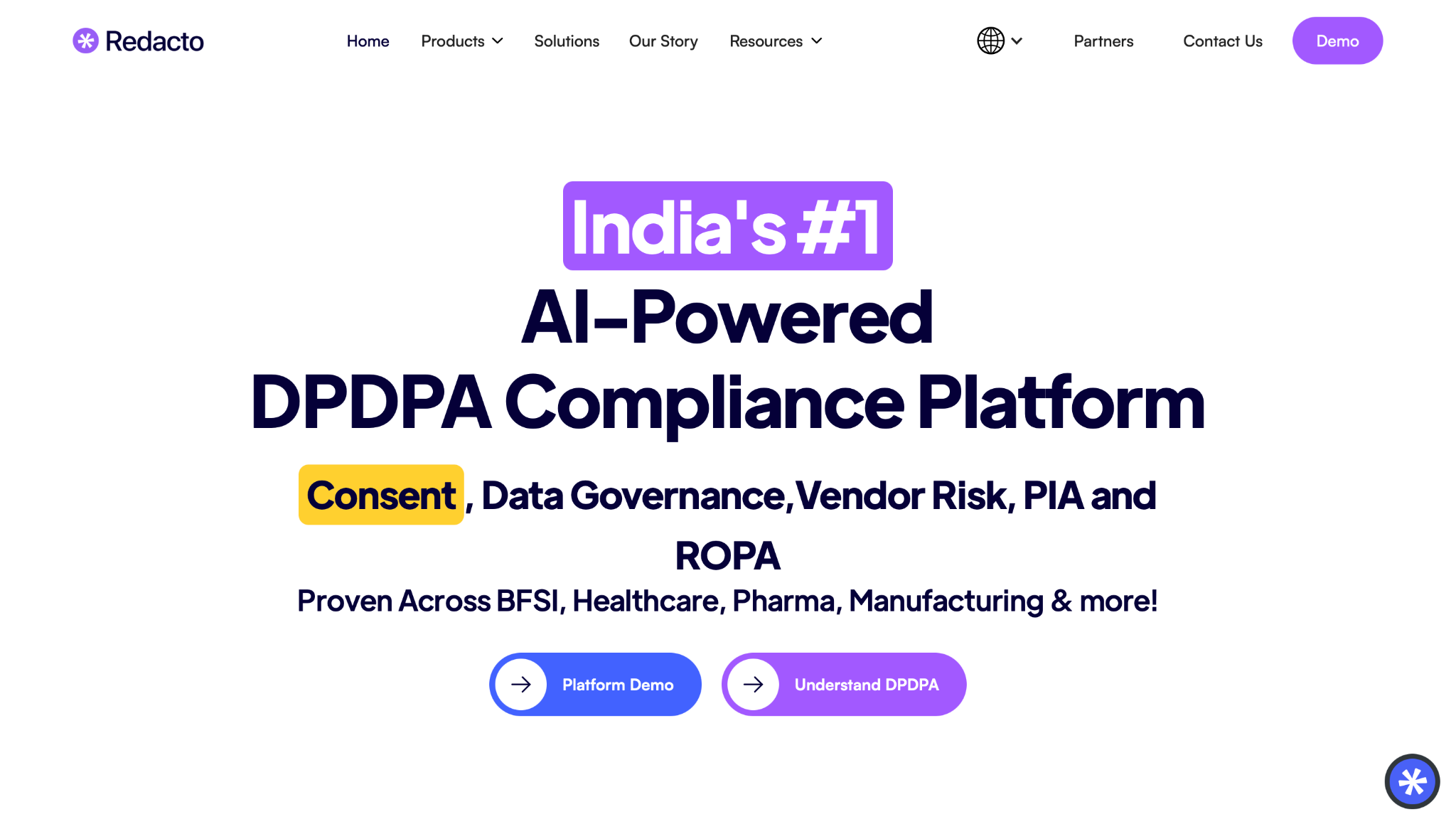
Redacto is an India-focused privacy management platform designed around the operational workflows that create DPDPA risk.
Its product coverage includes consent management, Privacy Impact Assessments, data discovery and mapping, vendor-risk management, Data Principal request workflows, anonymisation, pseudonymisation and compliance reporting. Redacto positions these capabilities as a connected DPDPA operating layer rather than as separate policy documents. its primary advantage over broad GRC platforms.
A privacy risk rarely exists in isolation. A new marketing integration, for example, may introduce:
- A new collection purpose
- Additional personal-data fields
- A third-party processor
- A cross-system data flow
- A consent or notice change
- A retention question
- A new access-control requirement
Redacto is designed to keep those privacy objects closer to the associated assessment and evidence.
Key capabilities
- AI-driven data discovery and mapping
- Consent collection and lifecycle management
- Privacy Impact Assessment workflows
- Vendor-risk assessments
- Data Principal request management
- Anonymisation and pseudonymisation
- Audit and compliance reporting
- Privacy review points for product and engineering workflows
Where Redacto wins
- The product and workflows are built around Indian privacy operations.
- Privacy risks can be connected with data, vendors, consent, PIAs and Data Principal requests.
- It is more direct than a broad enterprise GRC suite when DPDPA preparation is the immediate priority.
- Indian legal, security, privacy and business teams do not need to translate every workflow from a global regulatory model.
Where Redacto falls short
- Global privacy teams may need additional configuration or tooling for complex multi-jurisdiction programmes.
- It has fewer publicly available third-party reviews and case studies than long-established international platforms.
- Automation can prepare evidence and route decisions, but legal and risk owners must still make the final judgement.
Pricing
Redacto uses custom, licence-based pricing. Pricing depends on the modules, organisational scope, users and implementation requirements.
Verdict
Choose Redacto when the main objective is to operationalise DPDPA preparation across personal data, vendors, consent, PIAs, Data Principal requests and audit evidence.
Do not use it as the only enterprise-risk system when the organisation requires a broad global ERM platform across financial, operational, strategic and resilience risks.
2. OneTrust
Best for: Multinational privacy and third-party-risk teams
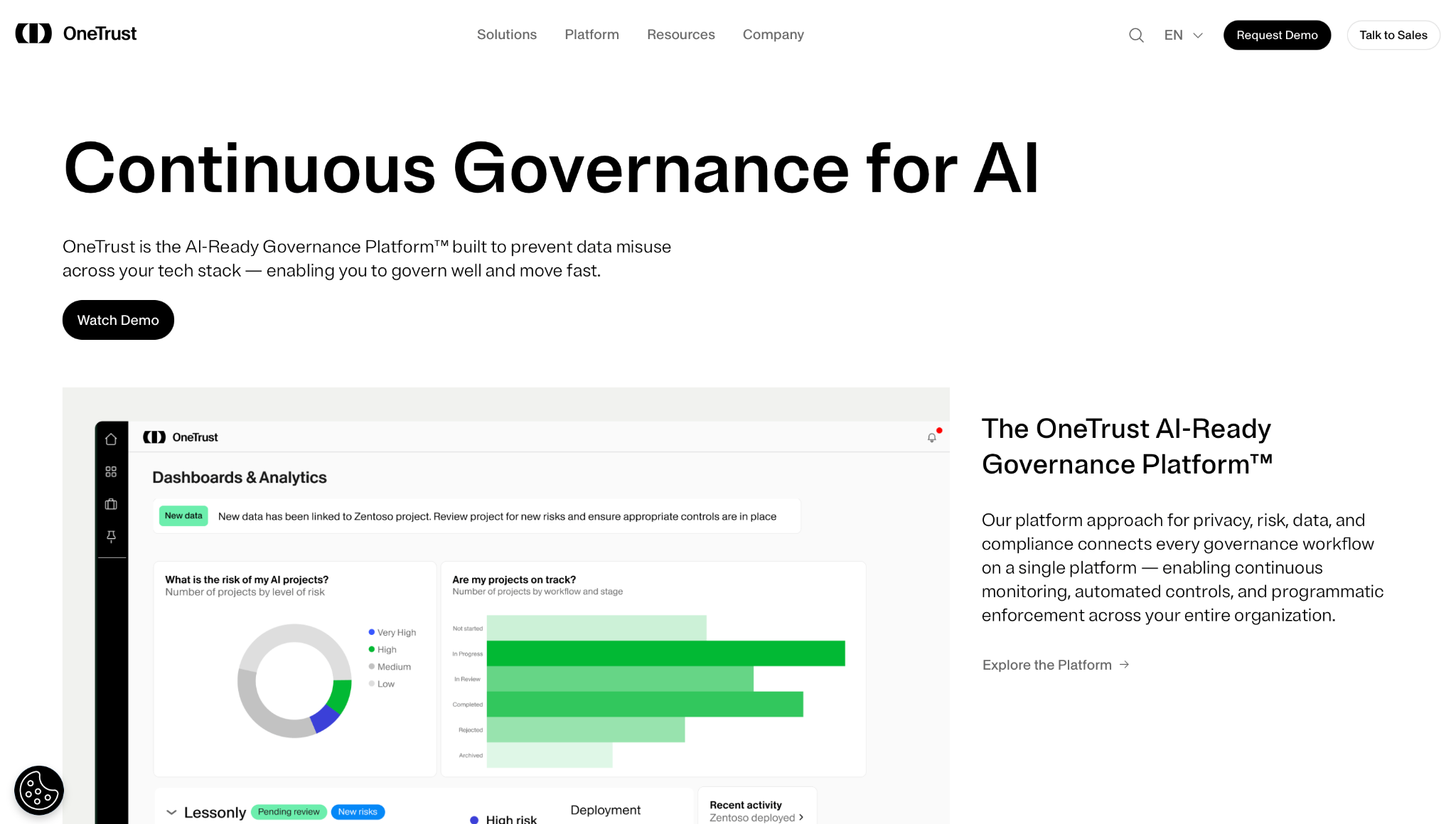
OneTrust is better suited to organisations where India is one part of a larger privacy, data-governance and third-party-risk programme.
Its platform covers privacy operations, consent and preferences, data governance, AI governance and third-party management. Its third-party-risk capabilities include vendor inventories, configurable assessments, monitoring, reassessments, risk mitigation and reporting. dth is valuable for global organisations managing GDPR, DPDPA and other privacy or governance requirements through a shared system.
The tradeoff is configuration.
OneTrust can support an Indian privacy programme, but the organisation may need to configure local terminology, fields, notices, assessment logic and ownership structures around its DPDPA interpretation.
Key capabilities
- Privacy programme management
- Third-party inventories and assessments
- Consent and preference management
- Data-use governance
- Risk monitoring and reassessments
- Dashboards and reporting
- AI-governance modules
- Integrations across the wider platform
Where OneTrust wins
- Strong coverage across privacy, third-party risk, consent, data and AI governance.
- Suitable for multinational organisations with a central global privacy function.
- Mature product ecosystem and enterprise procurement familiarity.
- Can consolidate several governance workflows under one vendor.
Where OneTrust falls short
- India-specific workflows may require configuration.
- Smaller Indian teams may find the platform broader and heavier than necessary.
- Implementation quality depends heavily on taxonomy, ownership and process design.
- Separate modules can increase complexity when privacy, security and vendor-risk teams operate independently.
Pricing
OneTrust uses custom and modular pricing. Buyers should confirm which products, records, users, integrations and implementation services are included in the proposal.
Verdict
Choose OneTrust when DPDPA must sit inside a global privacy and third-party-risk programme.
It is less suitable when the immediate requirement is a focused India-first implementation that needs to move quickly without designing a large global operating model.
3. ServiceNow Integrated Risk Management
Best for: Large enterprises already running IT and operational workflows on ServiceNow
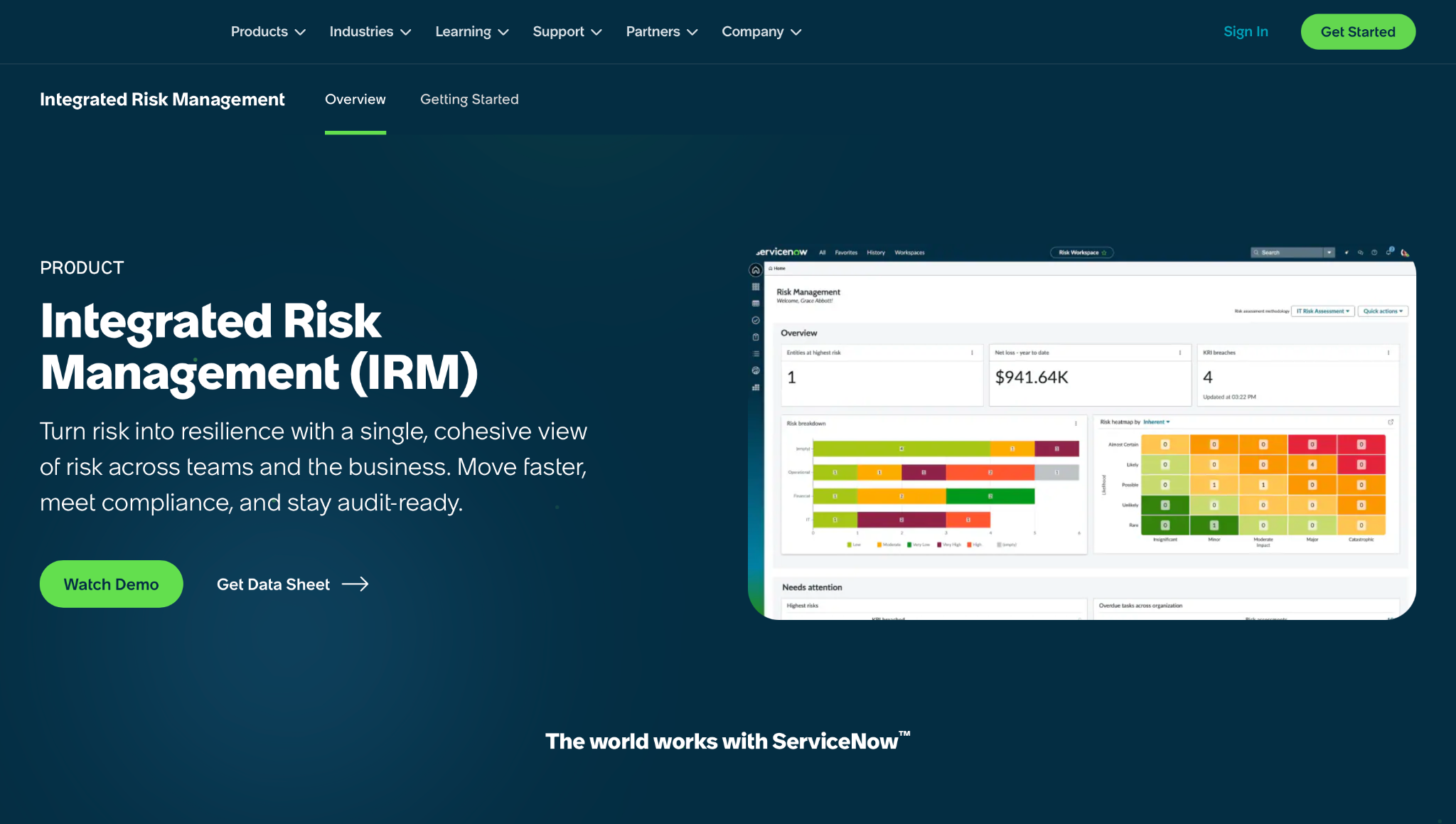
ServiceNow IRM connects risk and compliance across IT, cyber and business operations. The platform can automate assessments, monitor controls, centralise evidence and route remediation work to the responsible teams. es it particularly useful when risks originate from multiple operational systems.
A privacy issue may begin as a vendor finding, security incident, audit exception or access-control failure. In ServiceNow, the organisation can connect that issue with tickets, approvals, assets, incidents and remediation workflows already running on the Now Platform.
Key capabilities
- Enterprise-risk management
- IT and cyber-risk management
- Policy and compliance management
- Audit management
- Business continuity
- Operational resilience
- Third-party-risk workflows
- Automated control assessment
- Remediation routing
Where ServiceNow IRM wins
- Strong connection with existing ITSM, security and operational workflows.
- Risks can become assigned tasks rather than static entries.
- Suitable for complex enterprises with distributed ownership.
- Strong fit where incident, vulnerability, change and risk data already sit in ServiceNow.
Where ServiceNow IRM falls short
- DPDPA privacy operations are not the platform’s default centre.
- Consent, Data Principal requests and PIA evidence require deliberate workflow design.
- Implementation can be expensive and resource-intensive.
- Weak taxonomies can produce polished dashboards without improving decisions.
- Smaller privacy or compliance teams may depend heavily on administrators or consultants.
Pricing
ServiceNow IRM is custom quoted. Buyers should consider licence cost, implementation, platform dependencies, administration and ongoing workflow maintenance.
Verdict
Choose ServiceNow IRM when the organisation already uses ServiceNow and needs risk to flow through IT, cyber, incident and remediation operations.
It is likely excessive for a smaller team whose immediate objective is DPDPA privacy readiness.
4. MetricStream
Best for: Mature risk programmes in heavily regulated enterprises

MetricStream is built for large organisations that need connected governance across enterprise risk, operational risk, cyber risk, regulatory compliance, audit and third-party risk.
Its ConnectedGRC model provides a shared view across strategic, operational, IT, cyber, compliance and external-party risks. Its third-party-risk product can maintain vendor profiles, assessments, contracts, issues, certifications, due-diligence status and risk ratings. Indian bank, insurer, telecom company, energy business or large manufacturer, this breadth may be more important than fast implementation.
Key capabilities
- Enterprise and operational-risk management
- IT and cyber-risk management
- Regulatory-compliance management
- Internal audit
- Third- and fourth-party risk
- Business continuity and resilience
- Risk appetite and governance
- Reporting across entities and business units
Where MetricStream wins
- Broad GRC coverage for regulated enterprises.
- Supports formal risk taxonomies and governance structures.
- Suitable for board, audit-committee and business-unit reporting.
- Can connect risks, controls, incidents, issues, audits and third parties.
- Better suited than lightweight tools to complex multi-entity programmes.
Where MetricStream falls short
- Implementation is likely to require significant process maturity.
- The platform may be too heavy for a narrow DPDPA project.
- Privacy-specific objects can become buried inside a broad enterprise model.
- Teams without established risk ownership may spend too long designing the system.
- Time to value can be slower than with compliance-automation platforms.
Pricing
MetricStream uses custom enterprise pricing. Buyers should scope modules, entities, business units, integrations, implementation and ongoing support.
Verdict
Choose MetricStream when enterprise GRC maturity and cross-functional governance are more important than deployment speed.
It is not the most direct choice for a team that primarily needs DPDPA privacy workflows.
5. LogicGate Risk Cloud
Best for: Risk teams that need configurable workflows without a rigid enterprise suite
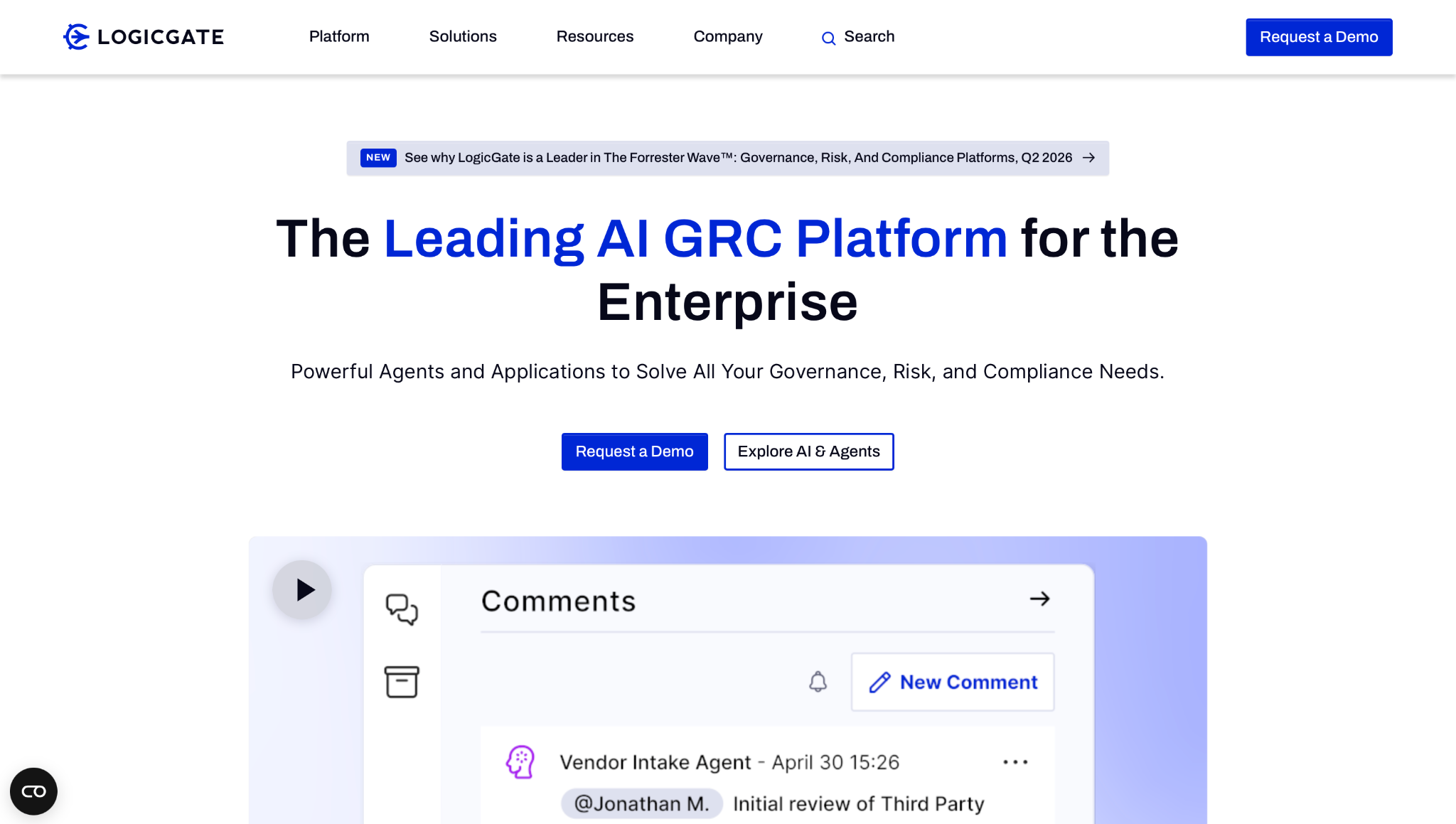
LogicGate Risk Cloud is a no-code GRC platform built around configurable applications, automation, dashboards and risk insights.
Its enterprise-risk capabilities connect risks, internal controls and business activity. Teams can customise workflows, assessment logic, fields, approvals and reporting around their own operating model. Flexibility is valuable when risk processes vary across departments.
It also creates responsibility: the customer must own the design.
Key capabilities
- Enterprise-risk workflows
- Configurable risk assessments
- Control management
- Third-party-risk applications
- Policy and compliance workflows
- Dashboards and analytics
- Workflow automation
- No-code configuration
- Integration and API options
Where LogicGate wins
- Flexible enough to model organisation-specific risk processes.
- Useful for phased GRC programmes that start with a few applications.
- Strong workflow and automation capabilities.
- Suitable for experienced teams that want more control than an opinionated compliance tool provides.
Where LogicGate falls short
- DPDPA workflows must be designed rather than activated out of the box.
- Excessive configuration can cause inconsistent scoring across departments.
- The organisation needs a capable platform owner.
- Reporting quality depends on disciplined data and field design.
- A privacy team may need to build its own connections between data, consent, vendors, PIAs and requests.
Pricing
LogicGate uses custom pricing based on platform scope, applications and user requirements.
Verdict
Choose LogicGate when your risk team has a clear methodology and needs software flexible enough to implement it.
Avoid it when the team wants a ready-made India-first privacy operating model.
6. Scrut Automation
Best for: Cloud-first security and compliance teams

Scrut connects a customisable risk register with controls, compliance frameworks, vendor-risk workflows, audit evidence and remediation.
Its risk product supports identification, assessment, treatment and monitoring, with risks mapped directly to controls. Its vendor-risk module can connect vendor risks to the organisation’s central register and maintain associated documents, evidence and mitigation plans. Yes Scrut relevant to Indian SaaS, fintech, healthtech and cloud-first businesses managing security frameworks alongside DPDPA preparation.
Key capabilities
- Customisable risk register
- Risk-to-control mapping
- Inherent and residual risk scoring
- Compliance-framework mapping
- Automated evidence collection
- Vendor-risk management
- Mitigation tasks
- Audit workflows
- Continuous control monitoring
Where Scrut wins
- Strong connection between risk, controls, vendors and audits.
- Faster to operationalise than heavyweight enterprise GRC.
- Useful for companies managing multiple security frameworks.
- Supports custom formulas, fields and workflows.
- Keeps the risk register close to actual compliance and control work.
Where Scrut falls short
- Its centre of gravity is security and compliance rather than privacy operations.
- DPDPA consent, Data Principal request and PIA workflows need additional mapping.
- It may not be deep enough for complex board-level ERM.
- Legal and privacy teams may still require a separate operating layer.
- A control can pass technically without resolving every privacy-purpose or processing issue.
Pricing
Scrut uses custom pricing based on frameworks, modules, company size and implementation scope.
Verdict
Choose Scrut when security compliance, control monitoring and vendor-risk management are the primary requirements.
It is less direct when DPDPA privacy operations are the main buying reason.
7. Sprinto
Best for: SaaS and technology companies building a risk programme around live controls

Sprinto provides a connected risk register in which risks can be linked to controls, checks, audit findings, vendor assessments and infrastructure signals.
Its product emphasises live scoring and continuously updated heatmaps rather than risk reviews that remain static between audit cycles. roach is helpful for small or growing security teams that want more guidance than a configurable enterprise platform provides.
Key capabilities
- Connected risk register
- Risk libraries
- Control mapping
- Live risk scoring
- Risk heatmaps
- Mitigation and remediation
- Audit-evidence workflows
- Vendor and vulnerability inputs
- Multi-framework compliance
Where Sprinto wins
- Risk scores can reflect connected controls and system signals.
- Guided workflows reduce the need to design everything from scratch.
- Suitable for SaaS and cloud-native teams.
- Strong connection between risk, audit readiness and compliance evidence.
- Easier to adopt than a large GRC suite.
Where Sprinto falls short
- Not designed primarily for enterprise-wide operational risk.
- DPDPA-specific privacy objects need manual definition.
- The programme can become audit-centred unless teams separately assess business and data impact.
- Mature risk functions may want more flexibility in scoring and governance.
- Consent, Data Principal requests and privacy-purpose mapping remain outside its natural centre.
Pricing
Sprinto offers custom plans based on frameworks, company size, controls and GRC requirements.
Verdict
Choose Sprinto when the company wants a guided security-risk programme linked to active controls and compliance.
It is not a replacement for a dedicated privacy-operations platform when DPDPA is the central requirement.
8. Vanta
Best for: Startups and mid-market companies formalising security risk
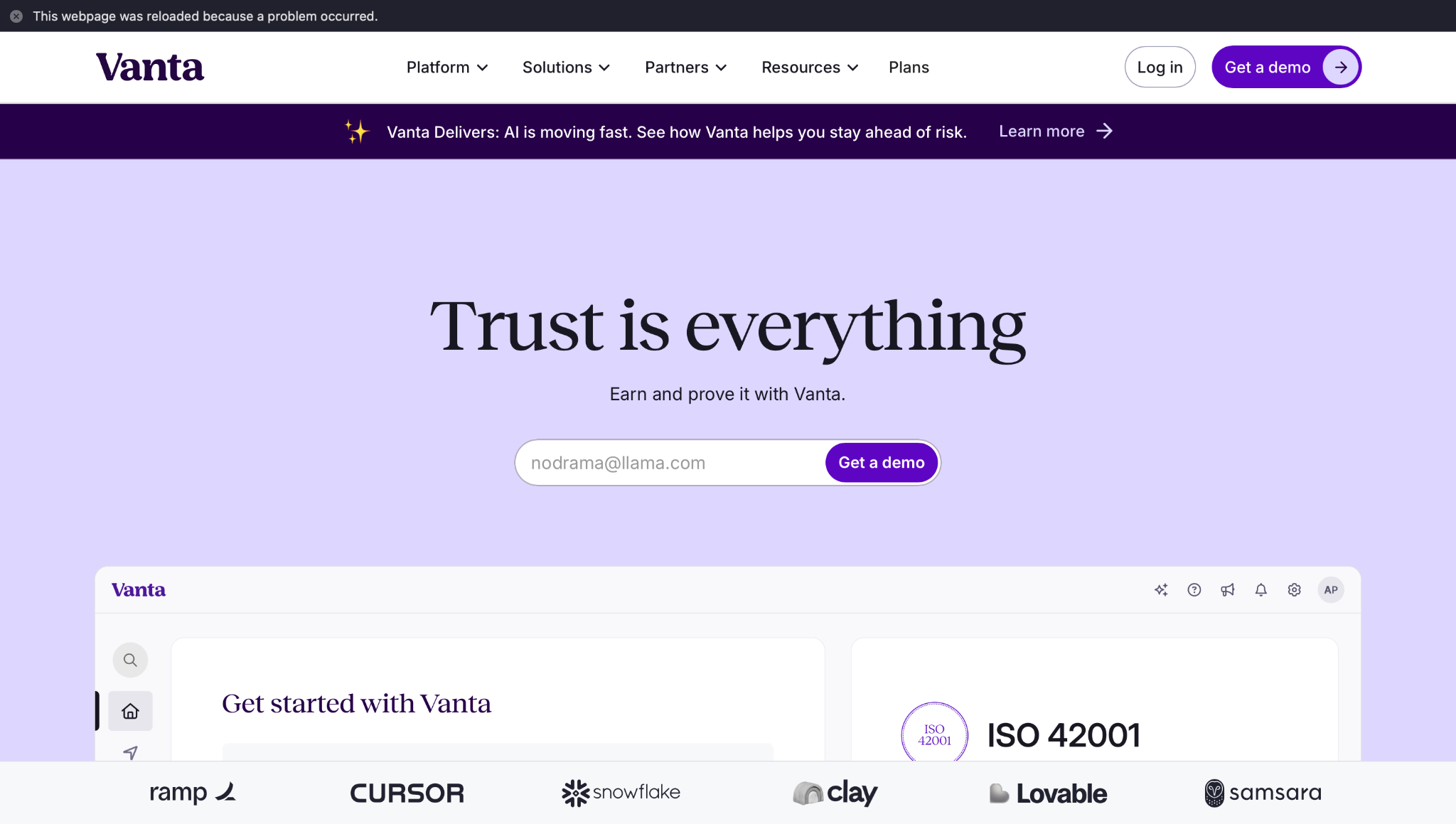
Vanta combines security compliance, risk management, third-party risk and continuous monitoring.
Its risk product centralises risk assessments, while its third-party-risk capabilities help organisations evaluate and monitor vendor security exposure. Its broader GRC offering connects risk visibility with controls, reports and continuous monitoring. often most useful when a company is formalising its first structured programme around SOC 2, ISO 27001 or customer security expectations.
Key capabilities
- Central risk register
- Risk libraries
- Custom scoring and prioritisation
- Treatment planning
- Risk and control connections
- Third-party-risk management
- Continuous compliance monitoring
- Policies and evidence
- Stakeholder reporting
Where Vanta wins
- Accessible for teams establishing their first formal programme.
- Strong connection between risks, controls and compliance evidence.
- Risk libraries help teams begin without a blank register.
- Useful for customer-security reviews and certification readiness.
- Broader than a standalone spreadsheet or assessment tool.
Where Vanta falls short
- DPDPA privacy operations are adjacent rather than central.
- Indian teams must add their own data-purpose, consent and Data Principal context.
- Large institutions may require more formal ERM and operational-risk workflows.
- Advanced features can depend on the purchased plan or add-on.
- Certification-driven reviews may miss product or processing changes between audit cycles.
Pricing
Vanta uses custom pricing based on company size, frameworks, products and add-ons.
Verdict
Choose Vanta when security trust, compliance readiness and a structured risk register are the immediate objectives.
Choose a privacy-focused platform when the central challenge is connecting DPDPA obligations with personal-data operations.
9. Drata
Best for: Security teams connecting internal and vendor risk with remediation
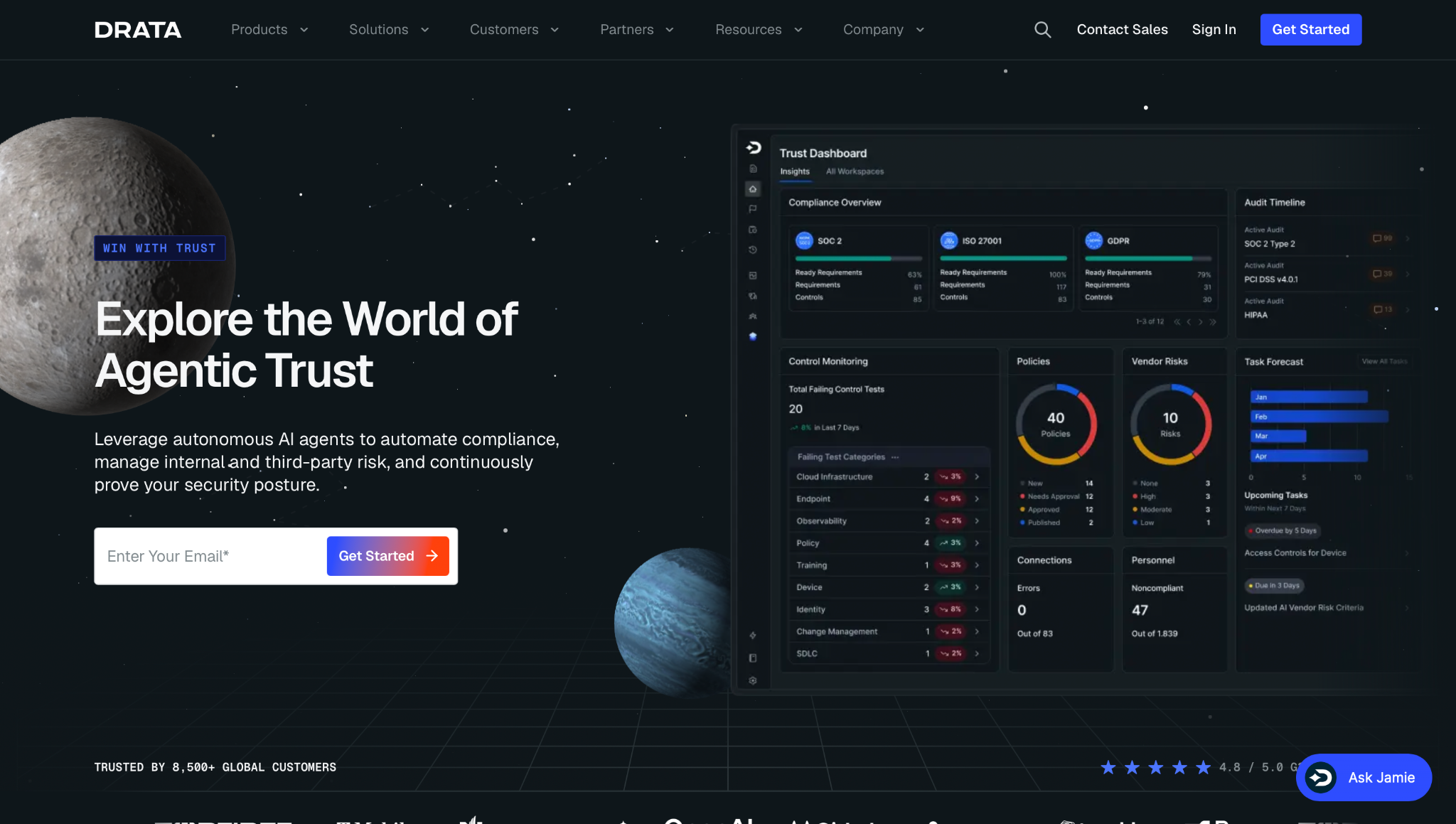
Drata’s risk offering covers internal risks and vendor risks in a shared system, including scoring, ownership, treatment and remediation tracking.
The platform also connects risk with enterprise GRC, controls, evidence and third-party-risk workflows. Biggest fit is a security-led programme where risks must remain connected to control health and remediation activity.
Key capabilities
- Internal-risk register
- Inherent and residual scoring
- Risk ownership
- Treatment and remediation tracking
- Vendor-risk management
- Control and evidence connections
- Enterprise workspaces
- Custom workflows
- Audit-ready reporting
Where Drata wins
- Internal and vendor risks can be reviewed together.
- Strong connection between risk, controls and remediation.
- Useful for security-led compliance programmes.
- Supports enterprise workspaces and configurable workflows.
- Makes it easier to keep risk treatment visible during audits.
Where Drata falls short
- It is less suited to broad financial or operational ERM.
- DPDPA privacy workflows are not native operating objects.
- Legal and privacy teams may need a separate layer for consent, PIAs and Data Principal requests.
- Remediation tickets are only useful when owners maintain them.
- Security-control readiness does not automatically prove privacy-purpose or processing compliance.
Pricing
Drata uses custom pricing based on products, frameworks, company size and enterprise requirements.
Verdict
Choose Drata when internal risk, vendor risk and control remediation sit with the security team.
It is less suitable as the sole platform for an India-first privacy programme.
Which Risk Assessment Tool Should You Choose?
The right shortlist depends on the operating problem.
Choose Redacto when:
- DPDPA preparation is the immediate priority
- Privacy, legal and security teams need one evidence model
- You need consent, PIA, vendor, data discovery and Data Principal workflows
- India-specific implementation matters more than global GRC breadth
Choose OneTrust when:
- India is part of a multinational privacy programme
- The organisation needs global privacy, consent, data and AI governance
- A central privacy function can manage configuration
- Enterprise procurement prefers a mature global platform
Choose ServiceNow IRM when:
- ServiceNow already runs IT and security operations
- Risks must become tickets, approvals and remediation tasks
- The organisation needs IT, cyber, resilience and operational workflows
- There is enough internal capacity to maintain the platform
Choose MetricStream when:
- The organisation has a mature GRC function
- Risk governance extends across multiple entities and business units
- Board and committee reporting are essential
- Enterprise, operational, cyber, audit and third-party risks must be connected
Choose LogicGate when:
- Your team already has a defined risk methodology
- Configurability is more important than ready-made workflows
- GRC administrators can own application design
- Different business units require different assessment processes
Choose Scrut, Sprinto, Vanta or Drata when:
- Security compliance is the main driver
- Risk must connect with controls and audit evidence
- The company is cloud-first or SaaS-led
- SOC 2 or ISO 27001 readiness is more urgent than broad ERM
Questions to Ask Before Buying Risk Assessment Software
A polished demo can make every platform look complete. Ask vendors to demonstrate one real workflow using your data and ownership model.
1. Can a risk be traced to the underlying asset, data and vendor?
A risk entry should not exist as an isolated title and score.
Ask whether you can connect it to:
- Business processes
- Applications
- Infrastructure
- Personal-data categories
- Vendors or processors
- Business units
- Controls
- Regulatory obligations
2. Can the platform show inherent and residual risk?
The system should distinguish between:
- Risk before controls
- Existing controls
- Control effectiveness
- Risk remaining after treatment
Without this distinction, management cannot see whether the control changed the exposure.
3. Can it record who accepted the risk?
The platform should show:
- Risk owner
- Control owner
- Treatment decision
- Approver
- Review date
- Expiry or reassessment date
- Supporting evidence
4. Does it create work outside the risk register?
A risk workflow should create action.
Check whether the platform can:
- Assign remediation
- Open Jira or ServiceNow tickets
- Request vendor evidence
- Trigger reassessments
- Escalate overdue risks
- Notify control owners
- Track approval history
5. Can the methodology be configured without breaking consistency?
Flexibility is valuable, but excessive flexibility creates different scoring systems across departments.
Confirm whether the platform supports:
- Standard scoring models
- Controlled exceptions
- Business-unit variations
- Central governance
- Audit trails for methodology changes
6. What is native and what requires another module?
Do not evaluate features only from a consolidated product page.
Ask which proposal items include:
- Vendor risk
- Risk management
- Privacy operations
- Consent
- Audit management
- Business continuity
- Regulatory change
- Data discovery
- Integrations
- Reporting
7. What will implementation require?
The licence is only one part of the cost.
Confirm:
- Data migration
- Workflow design
- Integration work
- Administrator requirements
- Training
- Consulting
- Support
- Ongoing maintenance
A Monday-Morning Test for Your Current Risk System
You do not need a six-month software evaluation to identify the first gap.
Pick one high-risk processing activity this week.
Examples include:
- A bank’s loan-application process
- Patient onboarding at a hospital
- Employee background verification
- Telecom KYC
- An ecommerce account-deletion request
- A marketing platform receiving customer data
- A payroll processor accessing employee records
Then trace 5 records:
- The data: What personal data is processed?
- The system: Where is it stored?
- The third party: Which vendor or processor can access it?
- The control: What reduces the risk?
- The decision: Who reviewed, accepted, mitigated or escalated the residual exposure?
Now ask your current system to show the chain without relying on emails, spreadsheets and manually assembled screenshots. If it cannot, the main problem is not the visual design of your risk register.
The problem is that the organisation does not yet have a reliable evidence workflow.
Frequently Asked Questions
What is the best risk assessment tool for Indian enterprises?
There is no single winner for every risk category.
Redacto is the strongest fit for India-first DPDPA privacy workflows. OneTrust is better for global privacy programmes. ServiceNow and MetricStream are stronger for broad enterprise GRC. Scrut, Sprinto, Vanta and Drata are better aligned with security compliance and control monitoring.
Which risk assessment tool is best for DPDPA preparation?
Redacto is the most direct option in this list for India-first DPDPA preparation because it connects privacy-risk assessment with data discovery, consent, PIAs, vendor risk and Data Principal workflows.
OneTrust is a stronger alternative when DPDPA is one part of a larger multinational privacy programme.
Are DPDPA obligations already enforceable in 2026?
The DPDP framework is being commenced in phases.
As of July 2026, some institutional provisions are already effective, while most substantive obligations under Sections 3 to 17 and the penalty provisions under Sections 28 to 34 are scheduled to commence on 13 May 2027. ses should use the remaining preparation period to establish data inventories, notices, consent processes, vendor governance, safeguards, rights-request workflows and evidence.
What should a risk register contain?
A practical risk register should include:
- Risk description
- Risk category
- Affected process, asset or data
- Risk owner
- Likelihood and impact
- Inherent risk
- Existing controls
- Control owner
- Treatment decision
- Remediation tasks
- Residual risk
- Approval
- Next review date
- Supporting evidence
How much does risk assessment software cost?
Most enterprise GRC and privacy vendors use custom pricing.
Cost usually depends on:
- Number of users
- Employees or business entities
- Vendor records
- Purchased modules
- Compliance frameworks
- Integrations
- Data volume
- Implementation requirements
- Support level
Ask vendors to separate annual licence cost from implementation and ongoing administration.
Final Verdict
The best risk assessment tool is not the platform with the longest feature page.
It is the platform that fits the risk programme your organisation can realistically operate.
Choose Redacto when the immediate job is to make DPDPA privacy risk traceable across data, vendors, consent, PIAs, Data Principal requests and audit evidence.
Choose OneTrust when India must fit inside a mature global privacy programme.
Choose ServiceNow IRM or MetricStream when risk assessment is part of a large enterprise operating model covering IT, cyber, operational risk, resilience and governance.
Choose LogicGate when your team wants to design its own GRC workflows.
Choose Scrut, Sprinto, Vanta or Drata when the programme is primarily driven by security controls, compliance readiness and audits.
Before buying anything, test one high-risk processing activity.
Ask the platform to show what data is involved, which vendor touches it, which control reduces the exposure, who owns the residual risk and what evidence proves the decision.
That evidence trail, not the dashboard is where the buying decision should begin.