Compliance

5+ Best DPDPA Compliance Software for Hospitals & HealthTech in India

Hospitals and healthtech companies in India handle some of the most sensitive data.

Patient records. Lab reports. Insurance details. Diagnostic history.

Under the Digital Personal Data Protection Act, this data isn’t formally labeled as “sensitive,” but the responsibility to protect it is still strict.

That means strict rules around how it is collected, stored, and shared.

The problem?

Most hospitals still manage compliance using spreadsheets, manual approvals, or disconnected tools.

That doesn’t scale.

And more importantly, it increases risk.

In this guide, I’ll break down the best DPDPA compliance software for hospitals and healthtech companies in India.

You’ll see what each platform does well, where it falls short, and which one fits your setup.

TL;DR: Best DPDPA Software for Healthcare

Platform Best For Key Strength Pricing
Redacto Healthcare compliance automation Full-stack DPDPA workflows ₹35L+
Securiti Large hospital chains Enterprise governance ₹75L+
OneTrust Global healthcare orgs Mature compliance stack ₹80L+
BigID Data-heavy systems Deep data discovery ₹1Cr+
IDfy (Privy) Indian enterprises Local compliance infra ₹35L+
Consentin Consent workflows Simple + affordable ₹25L+

Why Hospitals Need DPDPA Compliance Software (Not Spreadsheets)

Healthcare data is different from regular business data.

It includes:

  • Medical history
  • Diagnosis records
  • Biometric data
  • Insurance and financial information

Under DPDPA, hospitals act as data fiduciaries.

That means they are responsible for protecting this data at every stage.

Here’s where most hospitals struggle:

1. Consent is collected but not tracked

Patients sign forms at reception or online. But there is no central system tracking what consent was given, when, and for what purpose.

2. Data is spread across systems

EMR, billing software, CRM, lab systems, all store patient data. There’s no unified visibility.

3. Vendors create hidden risks

Labs, SaaS tools, insurers, and cloud providers all access patient data. Most hospitals don’t assess this risk properly.

4. No audit trail

If a regulator asks, “Show how you handled patient data,” most teams don’t have structured logs.

5. Manual compliance workflows

DPIA (Data Protection Impact Assessments), breach reporting, and DSAR requests are handled manually.

👉 The result: gaps, delays, and exposure to penalties.

This is where DPDPA compliance software becomes necessary.

Key Features to Look for in Healthcare DPDPA Software

Not all privacy tools work for hospitals, so focus on features that match real healthcare workflows.

  • Hospitals collect consent at reception, apps, websites, and teleconsultation, so the tool should capture every format, store it centrally, and make audits simple.
  • Patients can request access, correction, or deletion, so the platform should automate request intake, identity verification, and response handling.
  • Hospitals must assess risk before using new systems, so the software should support DPIA, document risks clearly, and maintain audit logs.
  • Hospitals rely on labs, insurers, and SaaS tools, so vendor risk tracking, assessment, and documentation should be built in.
  • Patient data lives across EMR, billing, and cloud systems, so the tool should map data, track flows, and identify sensitive records.
  • Healthcare teams also need POS consent at front desks, control over cross-border data, and fast breach response workflows.

6 Best DPDPA Compliance Software for Hospitals & HealthTech

Feature Redacto Securiti OneTrust BigID IDfy Consentin
Consent Mgmt YesYesYesYesYesYes
DPIA YesYesYesYesYesYes
Vendor Risk YesYesYesPartialYesPartial
Data Discovery YesYesYesYesYesYes
POS Consent PartialTBCTBCTBCYesYes
India Focus YesPartialPartialPartialYesYes

Let’s break down the top tools.

Pricing Disclaimer: All pricing mentioned is indicative and based on market research, public information, and enterprise benchmarks for 2026. These are not fixed vendor quotes, and actual pricing may vary depending on scope, modules, deployment, and support needs.

#1. Redacto: Best for DPDPA Compliance Automation in Healthcare

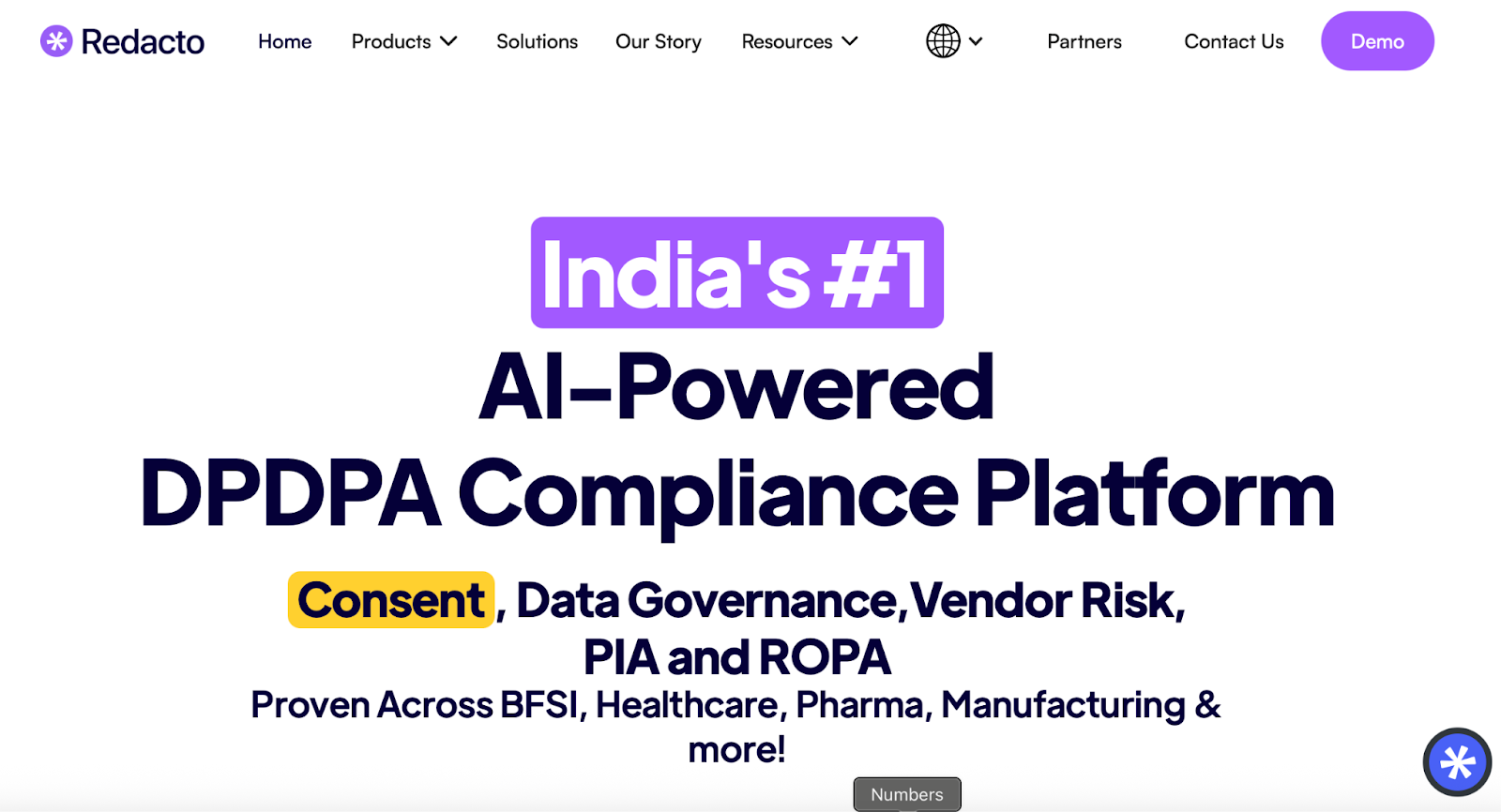
Redacto.ai Homepage

Redacto is an AI compliance platform built around Indian data protection workflows.

Instead of using separate tools for consent, DPIA, and vendor risk, everything sits in one system, which makes daily operations simpler.

What stands out

  • It can capture consent across websites, apps, and even hospital reception desks.
  • It tracks patient data across systems like EMR and billing.
  • It automates DPIA workflows so teams don’t have to do them manually.
  • It also generates reports that are ready if a regulator asks for proof.

Where it fits

It works best for mid-to-large hospitals and healthtech companies that want one system to manage everything.

Pros

  • Covers the full compliance lifecycle in one place.
  • Built specifically for DPDPA, not adapted later.
  • Faster to set up compared to traditional enterprise tools.

Cons

  • Pricing may feel high for smaller clinics.
  • Some teams may not need all features if their setup is simple.

Pricing

Pricing usually starts around ₹35L per year, which puts it in the mid-to-enterprise range depending on usage and scale.

Third-Party Risk Management Framework: A Step-by-Step Implementation Guide

#2. Securiti.ai: Enterprise Privacy Governance Platform

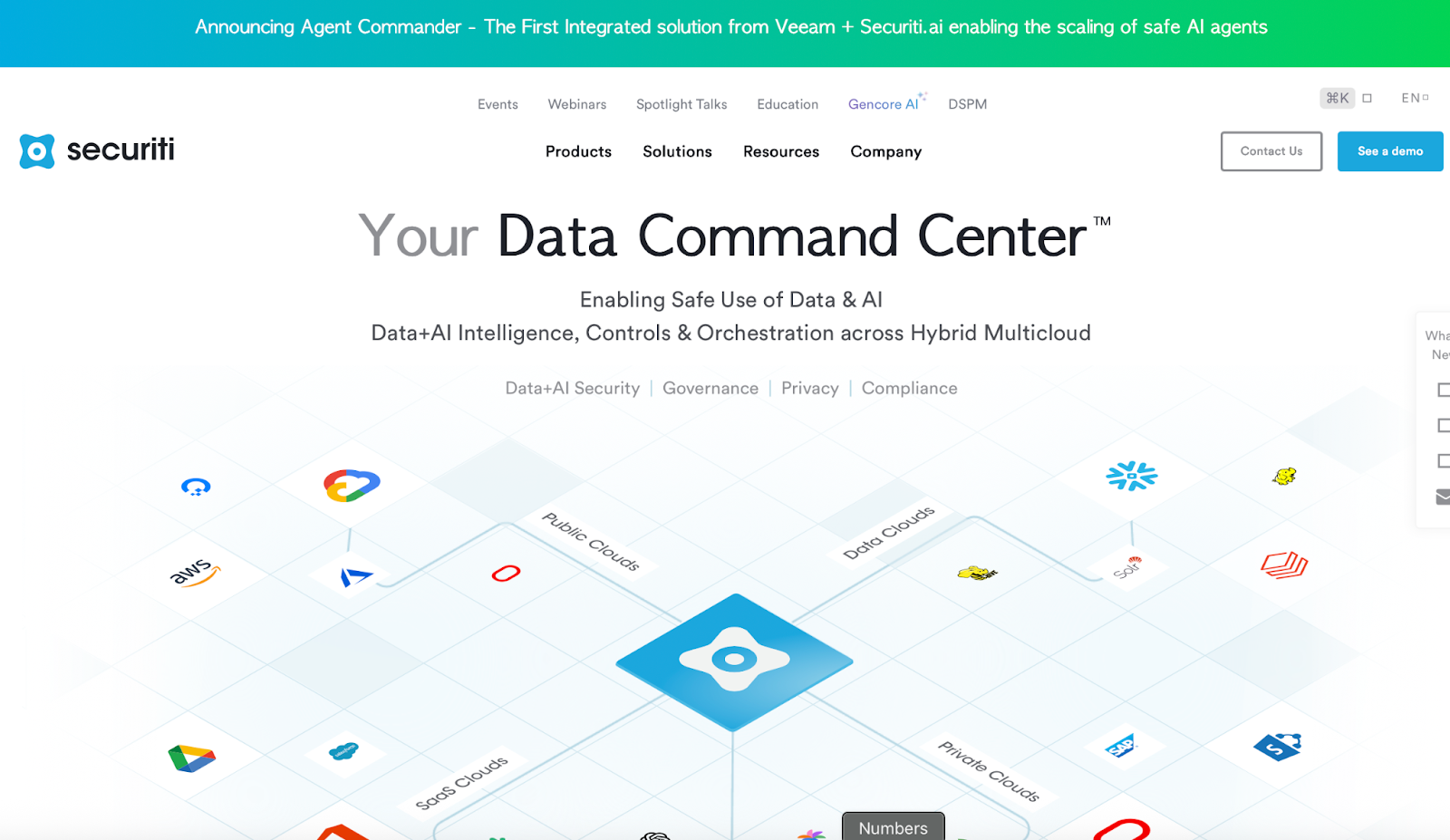
Securiti Homepage

Securiti is a global platform focused on data privacy and governance, and it leans heavily on AI for automation.

It is often used by large enterprises that manage complex data environments across teams and regions.

Why responsible AI governance starts with data privacy

What stands out

  • It offers strong automation for discovering and managing data.
  • It supports multiple global compliance frameworks, not just DPDPA.
  • It is designed to handle large-scale operations.

Where it fits

Best suited for large hospital chains or enterprise healthcare groups with complex compliance needs.

Pros

  • Very strong automation capabilities.
  • Handles large and complex data environments well.
  • Covers multiple compliance frameworks globally.

Cons

  • Setup can take time and may need technical support.
  • The platform can feel complex for smaller teams.
  • Costs are on the higher side.

Pricing

Pricing typically starts around ₹75L per year, and can go higher depending on how many modules and systems you include.

#3. OneTrust - Widely Adopted Global Platform

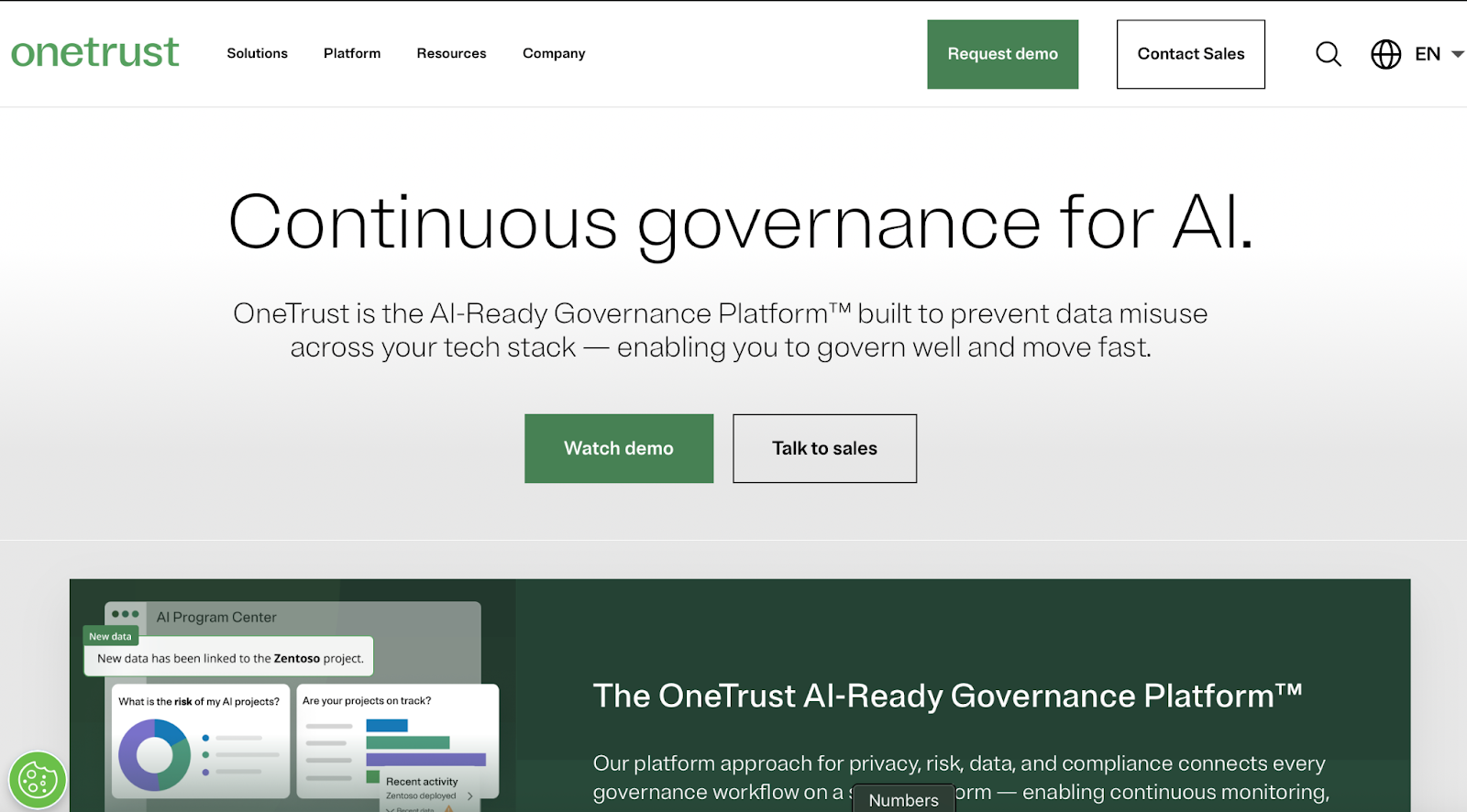
OneTrust Homepage

OneTrust is one of the most widely used compliance platforms globally.

It is often chosen by organizations that already operate across multiple countries and need a standardized approach.

What stands out

  • It has a very large ecosystem of compliance tools.
  • It supports multiple regulations and frameworks.
  • It is widely trusted by global enterprises.

Where it fits

Best for large hospitals or healthtech companies operating internationally.

Pros

  • Mature and well-established platform.
  • Covers a wide range of compliance needs.
  • Strong documentation and global support.

Cons

  • Built mainly for GDPR, so DPDPA workflows may need customization.
  • Can be expensive for Indian companies.
  • Implementation may take time.

Pricing

Pricing usually starts around ₹80L per year, and increases based on modules and scale.

#4. BigID - Best for Data Discovery in Healthcare Systems

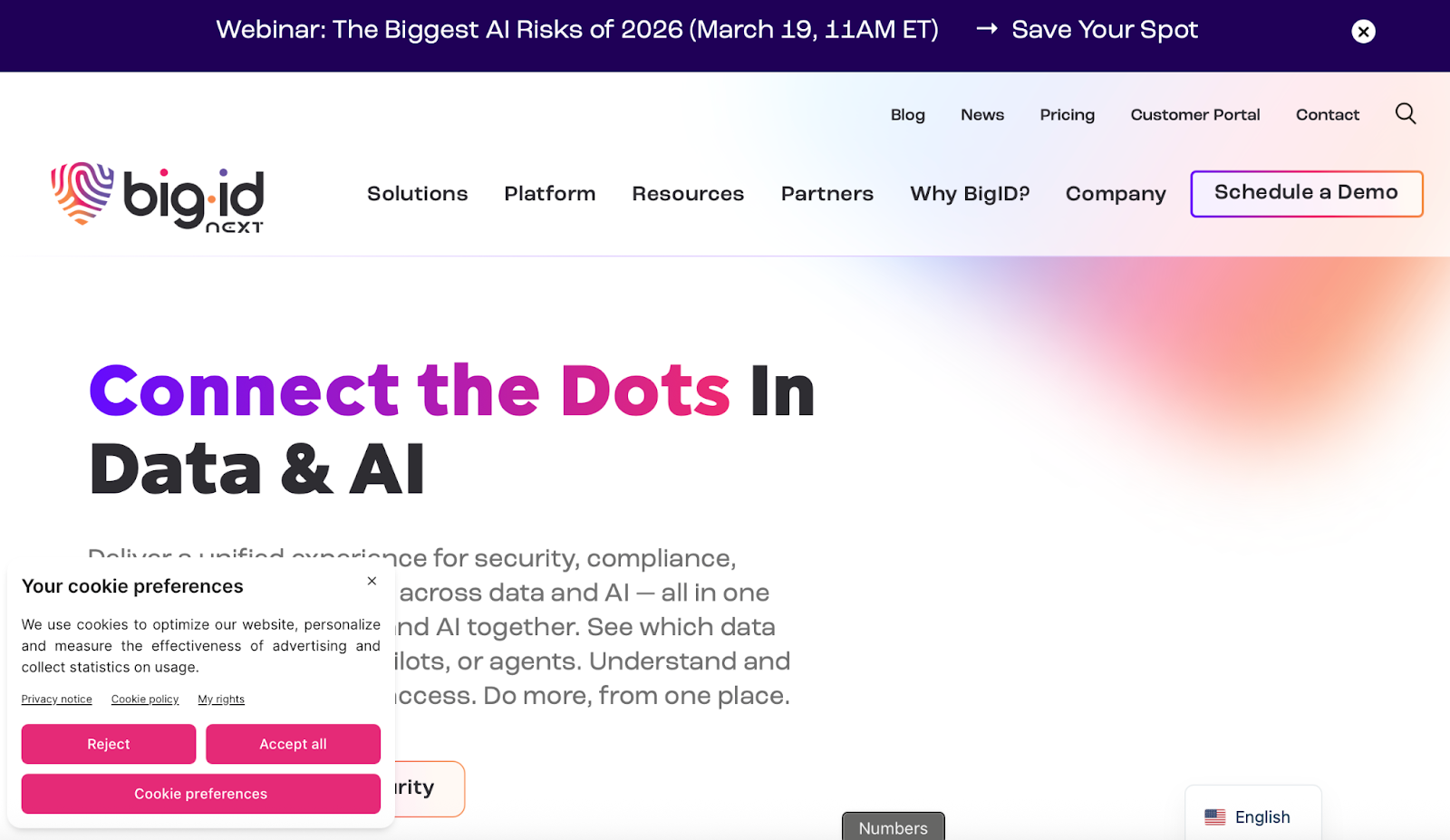
BigID Homepage

BigID is mainly focused on data discovery, which means it helps organizations understand where their data exists and how it flows.

This is especially useful for hospitals with large and complex data systems.

What stands out

  • It provides deep visibility into patient data across systems.
  • It works well with both structured and unstructured data.
  • It helps identify sensitive data quickly.

Where it fits

Best for large hospitals or data-heavy healthtech companies.

Pros

  • Excellent for mapping and understanding data.
  • Works well at scale.
  • Strong analytics capabilities.

Cons

  • It is not a complete compliance platform on its own.
  • You may need other tools for consent and governance.
  • Setup can be complex.

Pricing

Pricing generally starts around ₹1Cr per year, making it one of the more expensive options in this space.

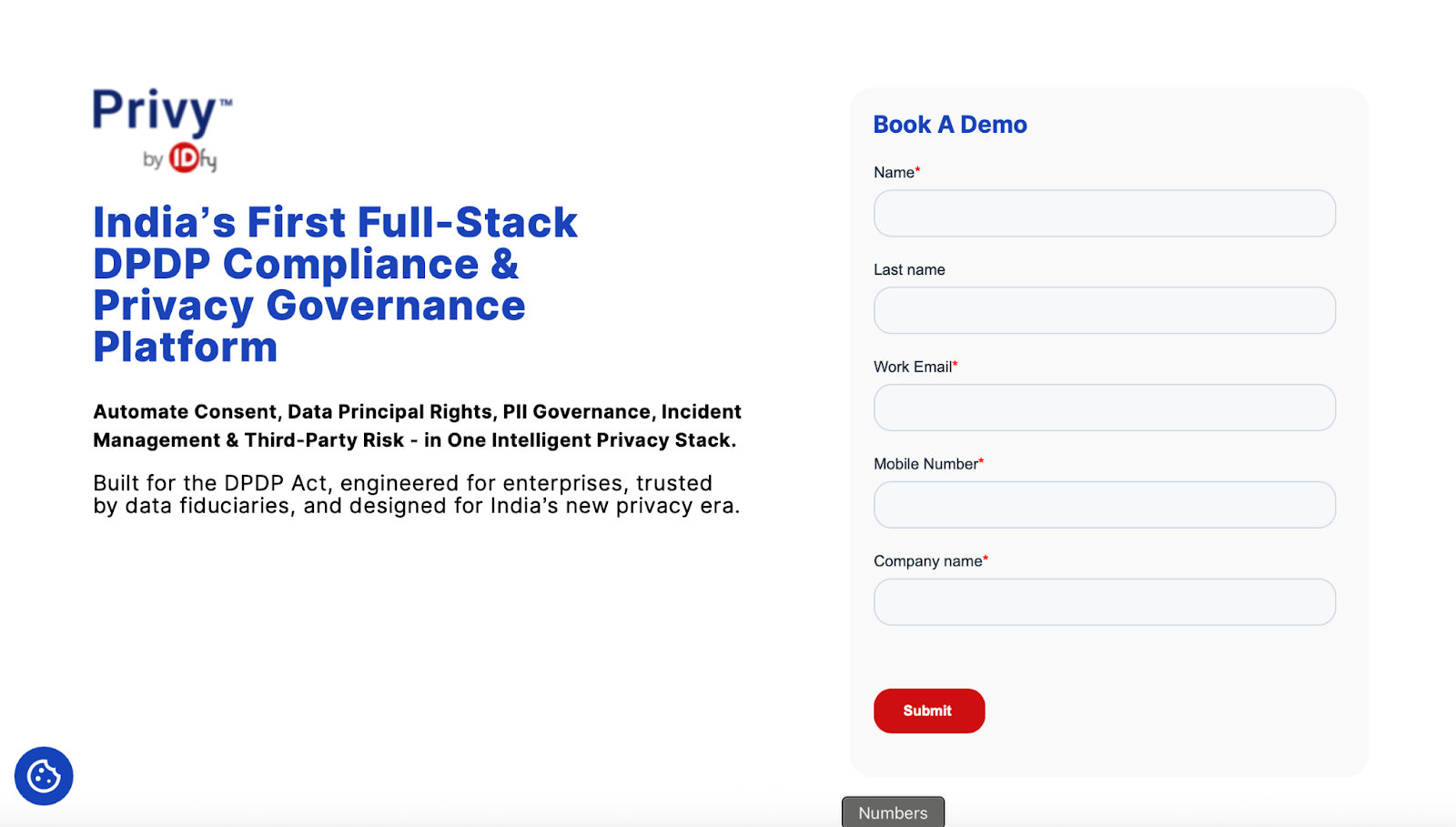
#5. IDfy (Privy) - Indian Enterprise Compliance Platform

Privy by IDfy Homepage

IDfy’s Privy platform focuses on privacy and compliance for Indian enterprises.

It combines data protection workflows with identity verification capabilities.

What stands out

  • It is designed with Indian compliance needs in mind.
  • It integrates well with identity and verification systems.
  • It offers strong enterprise-level infrastructure.

Where it fits

Best for mid-to-large hospitals and enterprises that prefer India-focused solutions.

Pros

  • Aligned with Indian regulations.
  • Reliable infrastructure and support.
  • Works well for enterprise use cases.

Cons

  • Implementation can take time.
  • May feel heavy for smaller teams.
  • Requires planning before rollout.

Pricing

Pricing typically starts around ₹35L per year, and can increase based on deployment size and integrations.

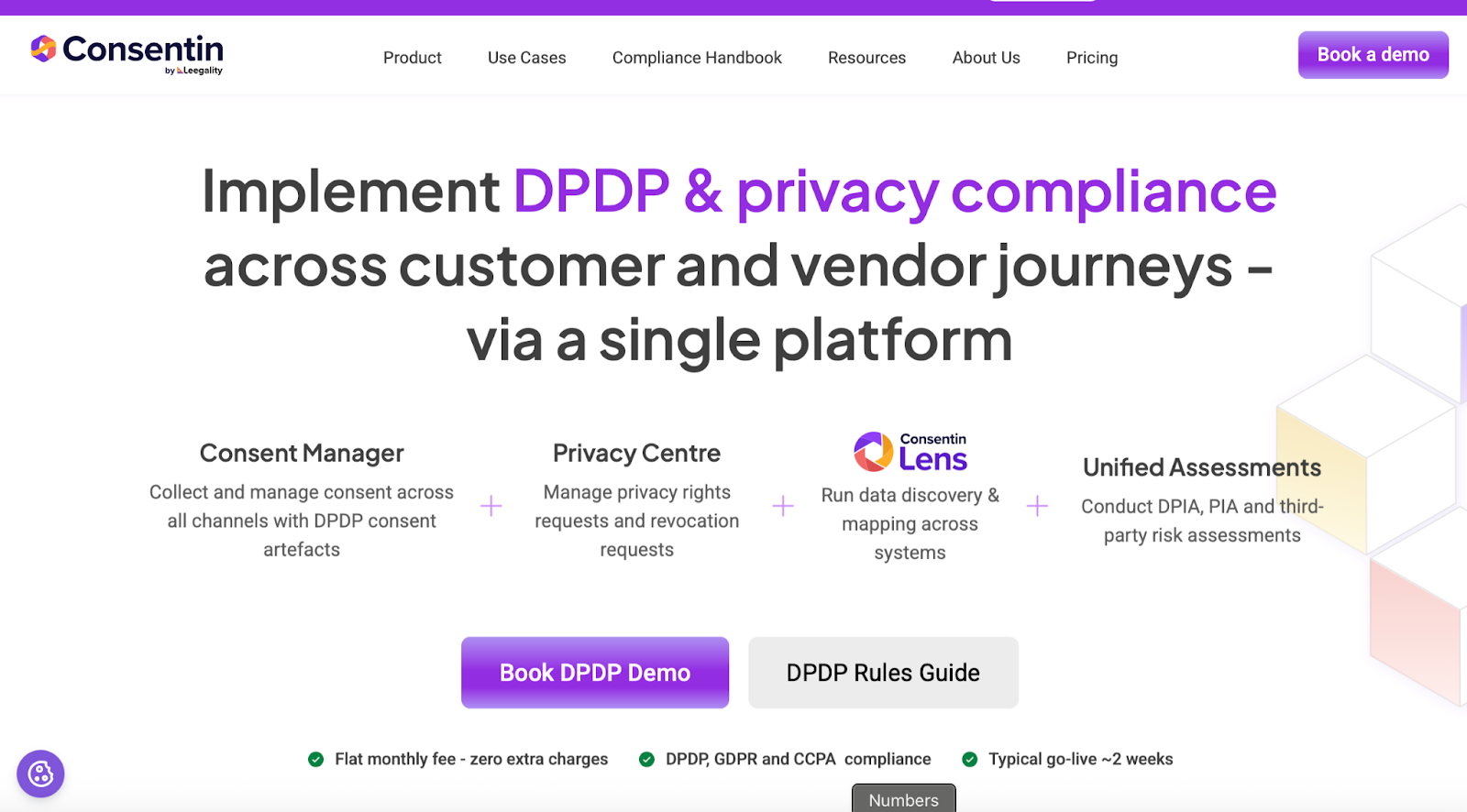
#6. Consentin - Consent-First Compliance Tool

Consentin Homepage

Consentin focuses mainly on consent management rather than full compliance coverage.

This makes it simpler and easier to adopt, especially for smaller teams.

What stands out

  • It offers straightforward consent capture and management.
  • It is quicker to set up compared to larger platforms.
  • It keeps things simple instead of covering everything.

Where it fits

Best for small to mid-size hospitals or clinics that need basic compliance support.

Pros

  • Easy to implement and use.
  • Lower cost compared to enterprise tools.
  • Good starting point for compliance.

Cons

  • Limited features beyond consent.
  • Does not cover full compliance workflows.
  • May not scale well for larger hospitals.

Pricing

Pricing usually starts around ₹25L per year, making it one of the more affordable options among DPDPA tools.

How to Choose the Right DPDPA Tool for Your Hospital?

Choosing the right tool depends on your setup.

Small Hospitals / Clinics

  • Limited systems
  • Lower data volume

👉 Focus on:

  • Consent management
  • Basic compliance

Best fit: Redacto, Consentin

Mid-Size Hospitals / HealthTech Startups

  • Multiple systems
  • Growing data volume

👉 Need:

  • Full compliance workflows
  • Automation

Best fit: Redacto, IDfy

Large Hospital Chains

  • Complex infrastructure
  • High compliance requirements

👉 Need:

  • Enterprise governance
  • Advanced automation

Best fit: Securiti, OneTrust

Data-Heavy Organizations

  • Large patient datasets
  • Advanced analytics

👉 Need:

  • Deep data visibility

Best fit: BigID (with governance layer)

Personalized Outbound Strategy

Get The Right Outbound Strategy In Minutes

Enter your email to get a custom plan & stack recommendation for your business

It's being carefully crafted by AI

Please check your mailbox in 5 minutes

Conclusion: Choosing the Right DPDPA Tool for Healthcare

Choosing the right DPDPA tool comes down to how well it fits your real hospital workflows.

The goal is not just compliance, but having a system that actually works day-to-day without slowing your team down.

If your setup is simple, a consent-focused tool may be enough.

But if you are handling data across multiple systems, a full compliance platform becomes necessary.

Before deciding, it helps to see how a tool handles your actual use case, not just features on a page.

If you want to explore this further, you can take a closer look at how Redacto handles healthcare compliance workflows in practice and see if it fits your setup.

Frequently asked  questions

Contact Us

Thank you! Your submission has been received!
Oops! Something went wrong while submitting the form.

Your Trusted partner